
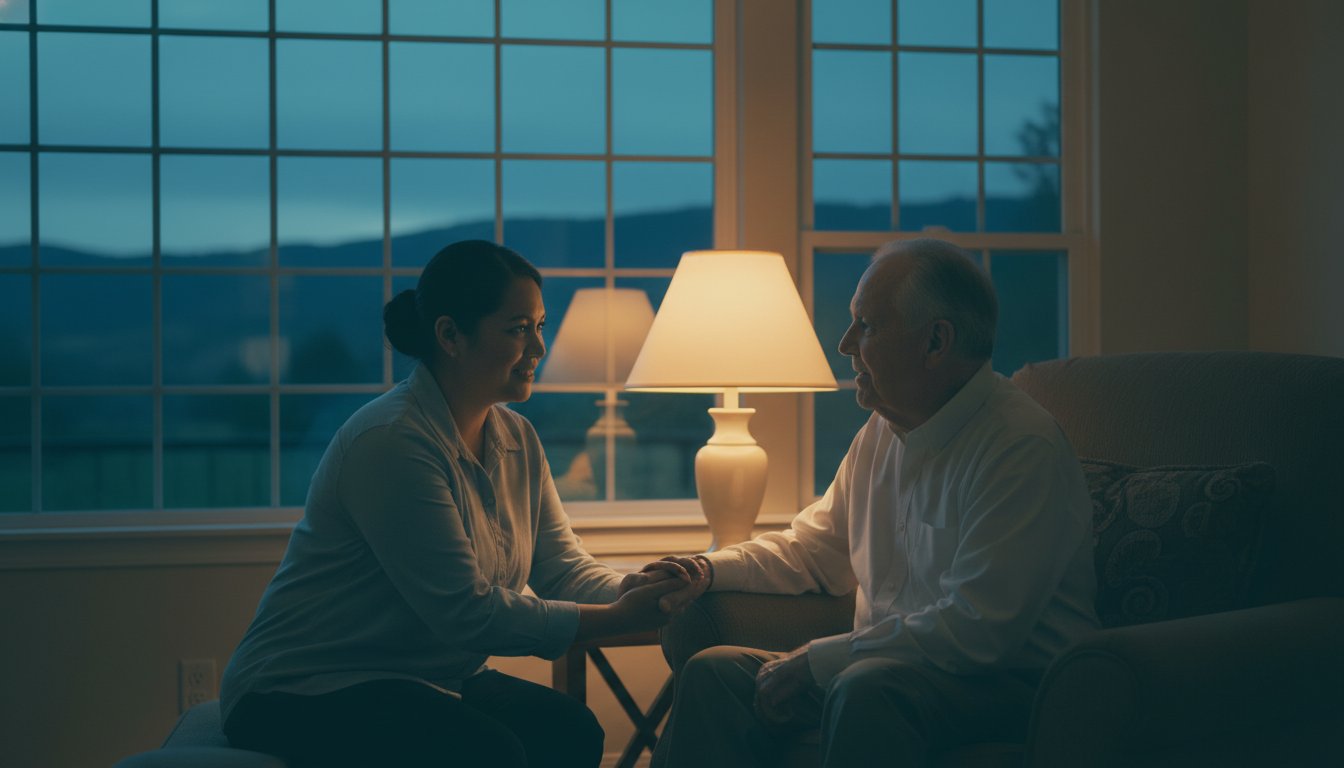
At three o’clock this morning, a daughter in Santa Rosa sat upright in bed, heart racing as she heard the familiar creak of a floorboard that meant her father was wandering again. It’s a moment of pure, silent exhaustion that many families face when the demands of memory loss begin to outpace their own strength. Seeking 24-hour dementia care Sonoma County services isn’t an admission of defeat; it’s a courageous step toward ensuring your loved one is watched over with the high regard, protection, and tenderness they deserve.
We understand the heavy weight of guilt and the foggy lens of sleep deprivation that comes with being a primary caregiver. You want your parent to remain in the domestic sanctuary they’ve built, yet the fear of a midnight fall or a missed medication is constant. This guide will show you how continuous, compassionate in-home support allows seniors with dementia to live safely and with dignity in the comfort of their Sonoma County homes. We’ll explore how to balance professional management with emotional connection, navigate complex California labor laws, and create a supportive kinship that keeps your loved one safe, cherished, and respected.
Key Takeaways
- Discover how continuous, compassionate support ensures your loved one’s safety while allowing them to remain in the familiar comfort of their own home.
- Understand the logistical differences between live-in and shift models to select the most effective 24-hour dementia care Sonoma County solution for your family.
- Learn about the Fijian approach to senior kinship, where caring for elders is a sacred honor rooted in deep affection and reverence.
- Identify local resources in Santa Rosa, Petaluma, and Windsor that supplement professional in-home care with essential community support.
- Explore our personalized matching process designed to connect seniors with caregivers who share a compatible personality and a commitment to dignity.
What is 24/7 Dementia Care and How Does it Benefit Sonoma County Families?
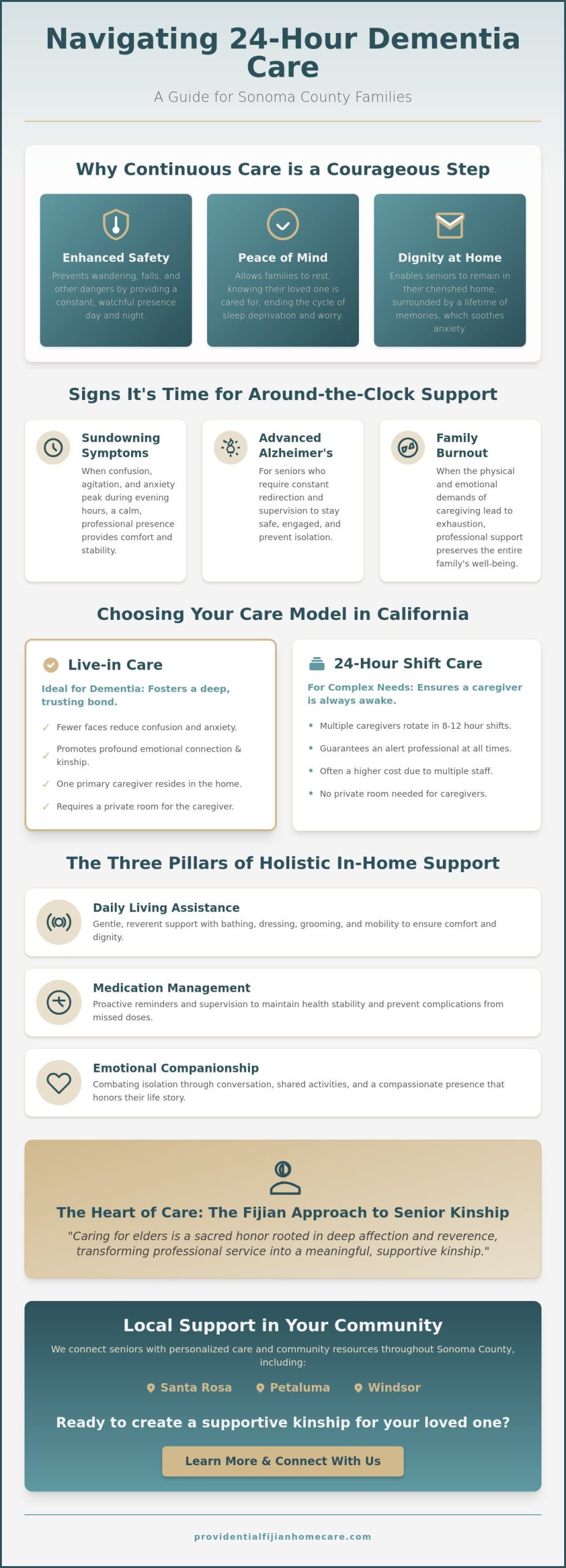
Choosing 24-hour dementia care Sonoma County is a decision rooted in deep affection and a desire for the highest level of safety. It’s much more than a simple rotation of staff; it’s the establishment of a continuous, compassionate presence within the home. This level of support ensures that a watchful eye is always present, providing a steady anchor for seniors who may feel untethered by the progression of memory loss. By having a dedicated professional awake and alert through every hour of the day and night, families can finally find the peace they’ve been missing.
A primary goal of this constant supervision is the prevention of dangerous incidents that often lead to hospital stays. When a senior has a professional companion by their side, the risks of wandering out into the night or suffering a devastating fall are significantly reduced. Gaining a deeper perspective by understanding dementia helps families realize that the condition doesn’t just impact memory; it affects spatial awareness and judgment. A caregiver acts as a protective shield, managing these vulnerabilities so that the domestic sanctuary remains a place of total security rather than a source of hidden hazards.
Staying within the familiar embrace of Santa Rosa or Petaluma neighborhoods offers an emotional stability that no facility can replicate. There’s a profound sense of dignity in waking up in one’s own bed, surrounded by the sights and sounds of a lifetime of memories. This continuity of environment helps soothe the anxiety often associated with cognitive decline, allowing the senior to feel grounded in their own history while receiving the specialized care they need to thrive.
The Core Pillars of Continuous In-Home Support
Our approach to 24-hour dementia care Sonoma County focuses on holistic well-being through three vital pillars. First, we provide hands-on assistance with activities of daily living, ensuring that bathing, dressing, and grooming are handled with the utmost reverence and gentleness. Second, we manage proactive medication reminders to maintain health stability and prevent the complications of missed doses. Finally, we offer deep emotional companionship, using conversation and shared activities to combat the isolation that so often shadows the lives of seniors in the North Bay.
Who Needs 24-Hour Dementia Care?
While every journey is unique, certain signs indicate that around-the-clock support has become a necessity. Seniors with advanced Alzheimer’s often require constant redirection to stay safe and engaged. Those experiencing “sundowning” symptoms, where confusion and agitation peak during the evening hours, find great comfort in a calm, professional presence. Most importantly, this service is for the families themselves. When the physical and emotional demands of caregiving lead to total exhaustion, bringing in a professional team is an act of benevolence that preserves the health of the entire kinship network.
Live-In Care vs. 24-Hour Shift Care: A Comparison for California Families
Choosing the right structure for 24-hour dementia care Sonoma County is a deeply personal step that requires balancing technical logistics with the warmth of a home environment. Many families find themselves confused by the industry terms, yet the distinction between live-in and shift-based care is simple. Live-in care centers on a primary caregiver who resides in the home for a set period, while shift care involves multiple professionals rotating to provide constant, awake supervision. Understanding these differences helps ensure your loved one receives the most stable and nurturing support possible.
For a senior experiencing cognitive decline, the presence of fewer faces is often a blessing. It allows for the development of a profound emotional bond, turning a professional service into a meaningful kinship. When a caregiver understands the subtle nuances of a senior’s personality, they can provide dementia caregiving support that feels instinctive rather than clinical. This continuity of care is vital; it reduces the anxiety that often comes with meeting new people and helps maintain a calm, predictable atmosphere in the home.
The Logistics of the Live-In Model
In a live-in arrangement, the caregiver becomes a temporary member of the household, requiring a private room and board within the home. California labor regulations protect these workers by mandating specific rest periods and sleep requirements. If a senior’s condition requires frequent nighttime attention, preventing the caregiver from getting at least five hours of uninterrupted sleep, the model must be adjusted. We prioritize these regulations not just for legal compliance, but because a well-rested caregiver provides the highest level of reverence and safety for your loved one.
The 24-Hour Rotating Shift Alternative
Shift care is often the better path for seniors with high-acuity needs or those who wander frequently at night. By choosing this version of 24-hour dementia care Sonoma County, you ensure that someone is fully awake and vigilant through every hour of the darkness. While this provides a higher level of active supervision, it does mean more people entering and exiting the domestic sphere. Families should consider the cost implications, as California labor laws require overtime pay of 1.5 times the regular rate after nine hours of work in a single day. If you’re unsure which path fits your situation, we invite you to reach out for a gentle dialogue about your family’s unique needs.
The Heart of Care: The Fijian Approach to Senior Kinship
In our tradition, the elderly are held in the highest esteem, viewed as the keepers of wisdom and the soul of the family. This cultural heritage is the foundation of our 24-hour dementia care Sonoma County services, where we move beyond clinical checklists to offer something far more profound: reverence. We don’t see caregiving as a series of tasks to be completed, but as a sacred privilege to serve those who have spent their lives serving others. This philosophy transforms the domestic space into a sanctuary of warmth, patience, and deep affection, ensuring that every senior feels seen and valued.
Many agencies focus on the technical aspects of care, but we focus on the emotional connection. When a caregiver enters a home in Santa Rosa or Petaluma, they bring with them a legacy of service-oriented respect. This isn’t about simply monitoring a patient; it’s about honoring a human being’s legacy while they navigate the challenges of memory loss. For families getting help with caregiving, this distinction makes all the difference. It’s the difference between a house with a worker and a home with a heart.
Respect as a Professional Standard
Our caregivers view their role as a sacred duty to the Sonoma County community, not just a job. This nurturing presence provides a stabilizing force for the mental well-being of seniors in Santa Rosa, who may otherwise feel lost in the fog of cognitive decline. We integrate Fijian warmth into every moment of the day, from the rhythmic preparation of a nutritious meal to the gentle, unhurried pace of morning hygiene care. Each action is performed with high regard, ensuring the senior feels cherished rather than managed. This approach is particularly vital in hospice and memory support, where a steady, loving hand provides the ultimate comfort.
Building Trust Through Emotional Intelligence
Trust is built in the quiet moments of connection. For those living with Alzheimer’s or dementia, the world can become a confusing and frightening place. Our approach utilizes the art of gentle redirection, using emotional intelligence to guide a senior back to a place of calm without causing distress or shame. By fostering a sense of safety and belonging within the client’s own home, we help maintain their dignity through every stage of the journey. Kinship acts as the bridge between professional service and family-oriented care, creating a supportive environment where 24-hour dementia care Sonoma County feels like a natural extension of the family circle.
Navigating Care Logistics in Santa Rosa, Petaluma, and Windsor
Living in the North Bay means enjoying specific landscapes, from the rolling hills of Petaluma to the quiet, tree-lined streets of Windsor. When arranging 24-hour dementia care Sonoma County, choosing a local, family-owned agency ensures that your support system understands these nuances intimately. Unlike distant national franchises that follow rigid, corporate scripts, we are deeply rooted in this community. We view our neighbors with the high regard and benevolence that only a local presence can offer, ensuring that the care provided feels like a natural extension of your own family’s love.
A vital part of our service involves conducting safety assessments tailored to the unique architecture and terrain of Sonoma County homes. Whether your loved one resides in a historic Petaluma bungalow or a more modern Santa Rosa residence, we identify potential hazards that could lead to falls or confusion. This proactive approach transforms the domestic environment into a secure sanctuary, allowing seniors to navigate their familiar spaces with confidence while being watched over by a protective, nurturing presence.
Coordinating with Local Health Providers
We don’t work in isolation; instead, we act as a supportive anchor for your loved one’s entire medical team. Our caregivers work alongside hospice teams in Windsor and Healdsburg to provide seamless end-of-life support, ensuring that comfort and dignity are always the priority. We also integrate medication reminders with prescriptions from local Santa Rosa pharmacies, managing the technical details of health stability so you can focus on emotional connection. For more detailed advice on navigating these local health systems, please explore our guide on Dementia Care in Sonoma County.
Community Engagement for Home-Bound Seniors
Memory care shouldn’t mean being confined to the indoors. We believe in the healing power of our local environment and the importance of maintaining a sense of belonging. Our caregivers facilitate safe, escorted outings to beautiful local spots like Spring Lake or Howarth Park, allowing seniors to enjoy the refreshing North Bay air under a watchful eye. We also provide transportation for errands and medical appointments at Petaluma Valley Hospital or local clinics, ensuring every journey is handled with patience and high-level care. You can find essential safety checklists for aging in place in our article on In-Home Help for Seniors in Santa Rosa.
If you’re ready to see how local, community-focused support can change your family’s life, we invite you to reach out for a gentle conversation about your needs today.
Transitioning to 24/7 Care with Providential Fijian Home Care
Transitioning to a full-time care presence is a significant emotional shift for any family. We approach this milestone with the high regard it deserves, focusing on a personalized matching process that goes beyond a simple list of skills. We look for a harmony of personalities, ensuring the caregiver’s temperament and spirit align with your loved one’s unique life story. This deep commitment to dignity and respect creates a foundation where professional 24-hour dementia care Sonoma County feels like the arrival of a trusted friend rather than a stranger in the home.
During the first 48 hours of care, our focus is on observation, adjustment, and the gentle establishment of a daily rhythm. It’s a time for the caregiver to learn the senior’s specific preferences, from how they like their morning tea to the environmental cues that provide them the most comfort. We understand that this period can be anxious for family members. That’s why we maintain regular, empathetic communication to provide updates and reassurance. By supporting the family as much as the client, we ensure that the entire kinship network feels the relief of this new, protective embrace.
Our Comprehensive Memory Care Services
Our services are designed to address the holistic needs of seniors while honoring their importance within the domestic sphere. We provide specialized Alzheimer’s and dementia support that emphasizes cognitive engagement and physical safety. Beyond memory care, we offer compassionate non-medical hospice support and post-surgical recovery assistance for those returning home from local hospitals. Our daily operational help includes several key components of well-being:
- Nutritious meal preparation tailored to dietary needs and preferences.
- Light housekeeping and laundry to maintain a serene, clean environment.
- Personal care and hygiene assistance performed with high esteem and gentleness.
- Medication reminders to ensure health stability through every hour of the day.
Taking the First Step Toward Peace of Mind
We believe that every journey begins with an unhurried, low-pressure dialogue. This allows us to understand your family’s specific needs and cultural values without any commercial pressure. Whether you are in Santa Rosa, Petaluma, Windsor, Healdsburg, or anywhere else in Sonoma County, our team is ready to provide the reverent attention your loved one deserves. For those still researching their options in the North Bay, we recommend exploring our Essential Guide to Home Care Givers for helpful agency selection tips. When you’re ready to secure your loved one’s safety, we are here to walk this path with you, bringing a legacy of warmth and kinship into your home.
Honoring Your Loved One’s Legacy with Compassionate Support
Choosing the right path for a parent or spouse living with memory loss is one of the most significant acts of love a family can perform. You’ve learned how specialized 24-hour dementia care Sonoma County allows for a seamless blend of professional safety and the emotional warmth of home. By understanding the logistical differences between live-in and shift models, and embracing the deep reverence of the Fijian approach to kinship, you can move from a place of exhaustion to one of total peace. Our team, founded in 2016, specializes in Alzheimer’s and dementia care, ensuring that every senior is treated with the high regard they deserve.
We are here to provide a protective, nurturing presence that feels like family. If you’re ready to explore how our traditional Fijian cultural values of respect can transform your domestic sanctuary, we invite you to Request a Compassionate Care Consultation today. Let us help you navigate this season with benevolence and grace, keeping your loved one safe, cherished, and respected within the community they love. You don’t have to walk this path alone.
Frequently Asked Questions
Is 24/7 live-in care more affordable than an assisted living facility in Sonoma County?
The value of live-in care lies in the dedicated, one on one attention your loved one receives within their own domestic sanctuary. While facility costs vary across Santa Rosa and Petaluma, home care allows a senior to avoid the emotional trauma of relocation. This personalized approach often proves more sustainable for families who prioritize a high level of reverence and individual safety over a communal clinical setting.
Can a live-in caregiver help with medication management for dementia patients?
Our caregivers provide proactive medication reminders to ensure health stability and peace of mind. While we don’t provide skilled nursing or clinical administration, we act as a vigilant anchor for your loved one’s daily routine. We ensure they follow the schedule set by their healthcare providers, helping to prevent the confusion or missed doses that often lead to hospital visits.
What happens if the live-in caregiver needs time off or gets sick?
We maintain a loyal and dedicated network of caregivers to ensure that your loved one’s care is never interrupted. Our team manages every transition with high regard for the senior’s need for continuity and familiar faces. If a primary caregiver needs rest or falls ill, we provide a seamless introduction to another nurturing professional who understands your family’s specific kinship needs.
Do I need to provide a separate bedroom for a live-in caregiver in Santa Rosa?
Yes, providing a private bedroom is a legal requirement under California labor laws for any live-in arrangement. This space allows the caregiver to have the necessary rest periods required to remain alert and compassionate during their active hours. Creating a welcoming domestic space for the caregiver ensures they can provide the highest level of service oriented respect to your loved one.
How does 24-hour care support someone with advanced Alzheimer’s or dementia?
24-hour dementia care Sonoma County provides a protective shield against the risks of wandering, falls, and the agitation of sundowning. By having a professional companion present through the night, seniors receive gentle redirection and emotional grounding during their most vulnerable hours. This constant vigilance transforms a potentially hazardous environment into a place of total safety and deep respect.
Is live-in care available for short-term post-surgical recovery in Petaluma?
We offer specialized post-surgical care for seniors who need extra support as they transition back to their Petaluma homes. This short term assistance focuses on hygiene, meal preparation, and mobility support to ensure a nurturing recovery process. Having a professional presence during the initial weeks after surgery prevents complications and allows the senior to heal with dignity in their own bed.
What is the difference between non-medical home care and skilled nursing?
Non-medical home care focuses on the essential activities of daily living, emotional companionship, and domestic support. We don’t provide clinical treatments like wound care or physical therapy, which are the hallmarks of skilled nursing. Our role is to act as a compassionate extension of the family, managing the daily memory care needs that keep a senior grounded and safe.
How do you vet and train your caregivers for 24/7 dementia assignments?
Every caregiver is a registered Home Care Aide in California, which includes thorough background checks and fingerprinting. We look for individuals who embody our heritage based warmth and view caregiving as a sacred privilege rather than a chore. Beyond state requirements, our team receives specialized training in memory care and the Fijian values of reverence, ensuring they are prepared for the unique challenges of dementia.