
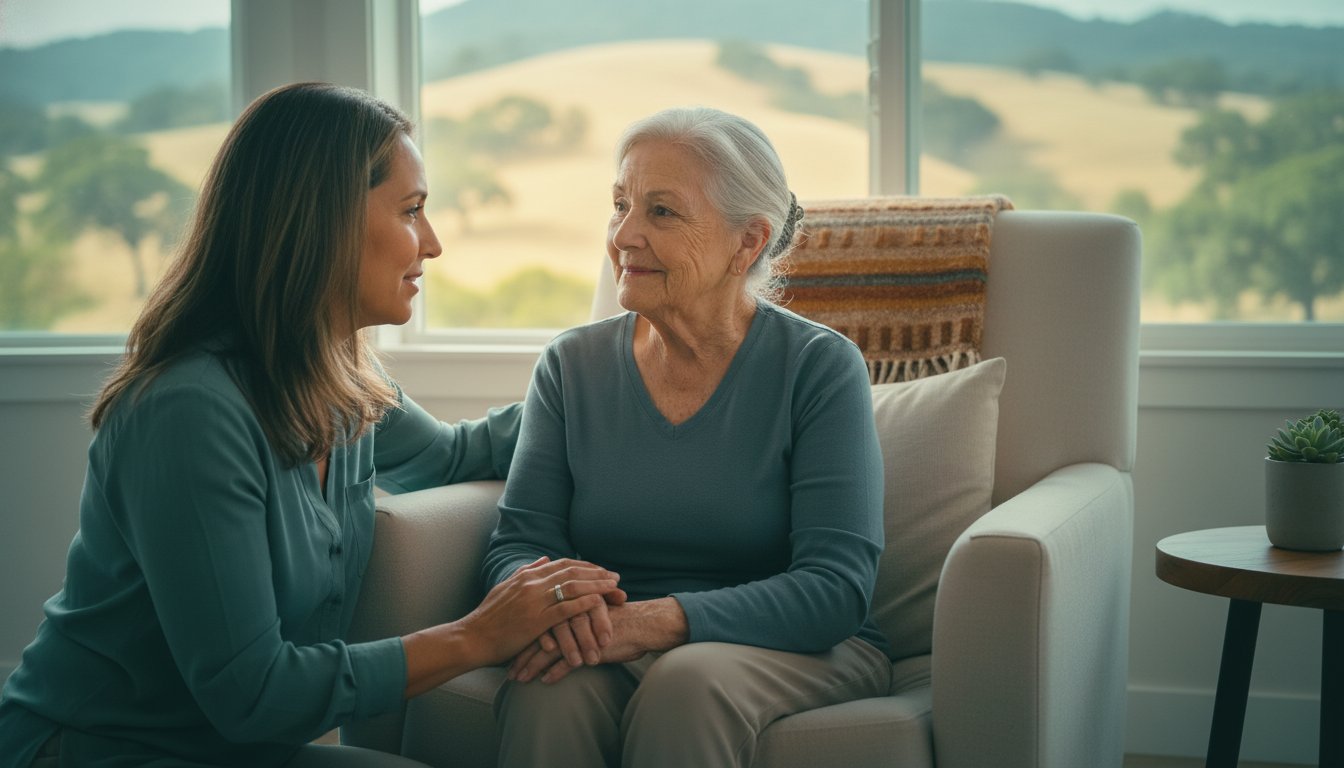
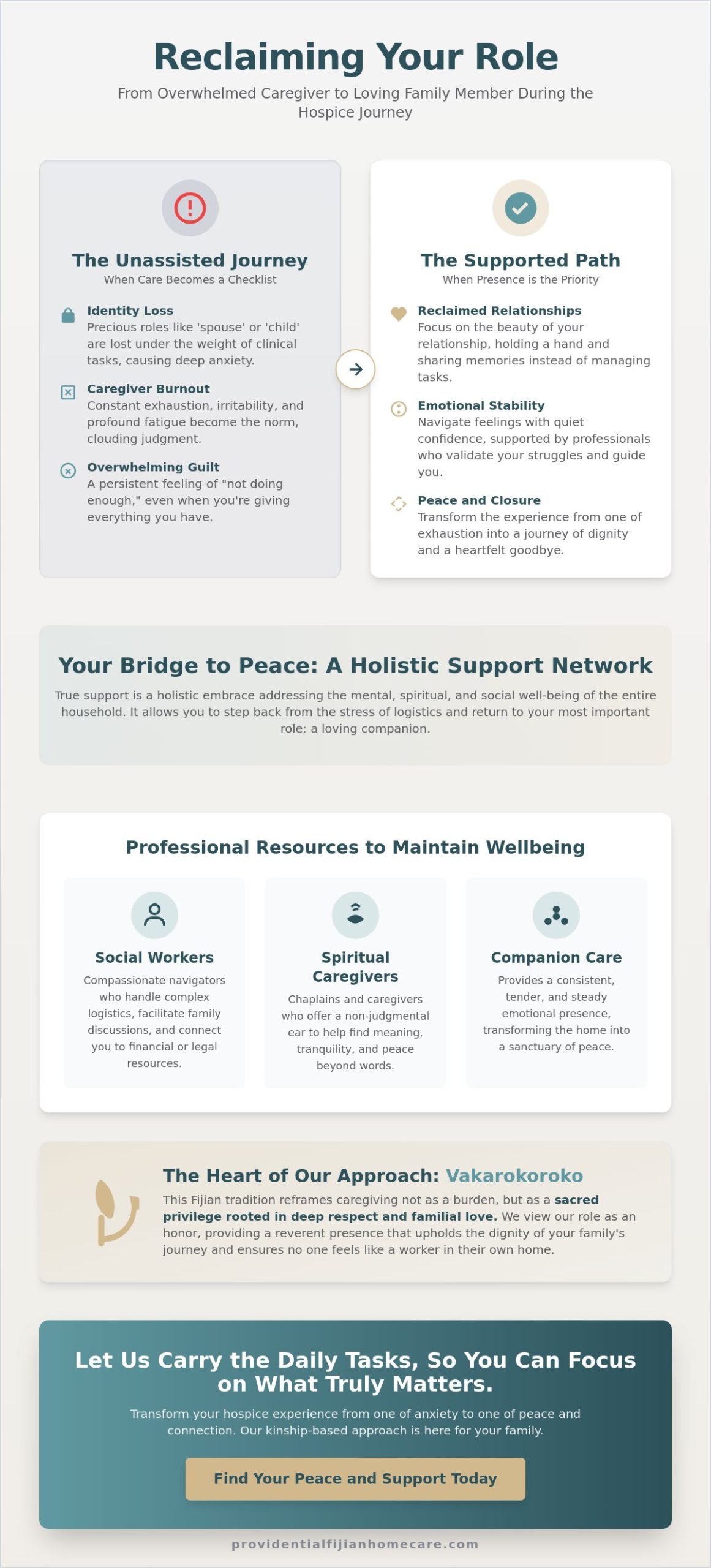
The most profound act of love during a terminal illness isn’t mastering a medical checklist; it’s simply being present to hold a hand and share a memory. Many families in Sonoma County find themselves thrust into the role of a clinical worker, losing the precious identity of a spouse or child under the weight of caregiver burnout and anxiety. It’s natural to feel the sting of guilt, the weight of exhaustion, and the fear of the unknown. We believe that this journey is sacred, and you shouldn’t have to walk it alone while feeling overwhelmed by the technicalities of daily care.
Our guide provides a path toward emotional stability by highlighting the essential emotional support for families during hospice available right here in our community. You’ll discover how professional resources and the healing power of kinship can transform your experience from one of exhaustion to one of peace and closure. We’ll explore local support networks in Santa Rosa and beyond, alongside practical relief strategies like respite and companion care. By letting a supportive network carry the daily tasks, you can finally focus on the beauty of your relationship and the dignity of a heartfelt goodbye.
Key Takeaways
- Understand why a holistic approach to mental and spiritual well-being is essential for the entire family, not just the patient, during the hospice journey.
- Discover how to access professional emotional support for families during hospice, utilizing social workers and chaplains to find peace and clarity.
- Learn how reframing assistance as a way to reclaim your role as a spouse or child can alleviate the heavy burden of caregiver burnout.
- Identify local Sonoma County support networks and serene public spaces that offer a sanctuary for reflection and community connection.
- Explore the Fijian tradition of vakarokoroko, which views the act of caregiving as a sacred privilege rooted in deep respect and familial love.
Understanding Emotional Support for Families During Hospice
True caregiving is a sacred bridge between the technical and the tender. When we speak of hospice care, we aren’t just discussing medical comfort; we’re honoring the deep emotional bonds that hold a family together during their most vulnerable hours. Emotional support is a holistic embrace that addresses the mental, spiritual, and social well-being of the entire household. It’s the difference between a clinical intervention and a compassionate presence that provides safety, warmth, and high esteem for the journey ahead.
Dedicated emotional support for families during hospice is vital because the household experiences this transition as a single unit. While the patient receives attentive physical care, the family often navigates a turbulent sea of anticipatory grief. This unique form of mourning begins before the final goodbye, often clouding judgment and complicating daily decision-making. We believe that professional support should act as a steady anchor, allowing family members to step back from the stress of logistics and return to their most important roles as loving companions.
There’s a significant distinction between clinical psychological support and a companion-based emotional presence. While clinical models focus on diagnosis, our approach is rooted in the Fijian value of vakarokoroko, or deep respect. We view caregiving as a privilege that requires a tender, steady, and reverent heart. By providing a consistent emotional presence, we help transform the home from a place of clinical anxiety into a sanctuary of peace. This kinship based approach ensures that no one feels like a solitary worker in their own living room.
The Psychological Impact of the Hospice Transition
The shift from curative treatments to palliative care often triggers a wave of helplessness and caregiver guilt. You might feel as though you aren’t doing enough, even when you’re doing everything. This emotional exhaustion often manifests as irritability or profound fatigue. Recognizing these signs is the first step toward healing. We help families navigate these feelings by providing hospice support that validates their struggles and offers a path toward emotional stability and quiet confidence.
The Role of the Support Network
Building a resilient support network involves identifying both your inner circle of family and an outer circle of professional helpers. Professional emotional support is a proactive way to prevent long term bereavement complications by addressing trauma as it happens. We encourage families to maintain cherished traditions, whether it’s a Sunday meal or a specific evening prayer. These rituals of kinship provide a sense of continuity and domestic importance that clinical models often overlook, ensuring the family’s heritage remains the heartbeat of the home.
Professional Resources for Maintaining Family Wellbeing
While the love of a family is the foundation of end-of-life care, professional resources provide the essential scaffolding that keeps that foundation from crumbling under pressure. Accessing dedicated emotional support for families during hospice isn’t a sign of weakness; it’s a profound commitment to the health of the entire kinship network. These resources are designed to carry the heavy weight of logistics, spiritual questioning, and future planning, allowing you to remain anchored in the present moment with your loved one. For many, the first step is understanding the breadth of care available, as detailed in these Frequently Asked Questions About Hospice Care.
The Vital Role of Social Workers
Hospice social workers serve as compassionate navigators during a time that often feels like an emotional storm. They specialize in reducing family stress by handling the complex logistics of legacy planning and end-of-life discussions. Beyond paperwork, they facilitate difficult conversations between family members, ensuring that every voice is heard and respected. By connecting families to financial or legal resources, they remove the external stressors that often interfere with the quiet, domestic importance of the hospice journey.
Spiritual and Holistic Approaches
Emotional regulation often requires more than just words. Many families find deep peace through integrative therapies like music or art, which help process feelings that are too complex for conversation. Chaplains and spiritual caregivers provide a non-judgmental ear, focusing on finding meaning and tranquility regardless of a family’s religious affiliation. They help create a sacred space within the home, a sanctuary where reflection and quiet companionship can flourish. This holistic approach ensures that the atmosphere remains one of high esteem and reverent calm.
In Sonoma County, the power of shared experience is a vital tool for healing. Local bereavement counselors and support groups offer a safe harbor where you can connect with others walking a similar path. These community networks remind us that we aren’t alone in our grief. They provide practical strategies for preparing for the future while staying grounded in the beauty of today. This collective wisdom is a cornerstone of maintaining emotional stability throughout the long transition of hospice.
Giving yourself permission to rest is perhaps the most difficult yet necessary part of this journey. To serve your loved one with a steady and joyful heart, you must occasionally step back to recharge your own spirit. Our respite care offers a supportive presence that allows you to take those essential breaks, knowing your family is held in an atmosphere of safety and deep affection. By delegating the daily tasks of care, you reclaim the energy needed to focus on the emotional bonds that matter most.
How Companion Care Relieves the Emotional Burden
Many families view the decision to bring in outside help as a surrender of their personal responsibilities. We invite you to reframe this choice. Accepting assistance isn’t an admission of weakness; it’s a strategic act of love that preserves your ability to be a present, compassionate family member. When you’re drowning in the technicalities of care, you lose the capacity for the deep emotional connection your loved one needs most. True emotional support for families during hospice often begins with the simple realization that you don’t have to carry the entire world on your shoulders alone.
Reclaiming Your Role as a Family Member
It’s easy to slip into a “nurse mode” where your interactions are defined by medication schedules and physical monitoring. This shift can create an unintended emotional distance. By inviting professional home care givers into your domestic sphere, you allow them to handle the clinical rhythms while you return to being a daughter, a son, or a spouse. Understanding What hospice and palliative care are involves recognizing that these services provide a necessary emotional buffer. This support ensures that your loved one is never alone, granting you the psychological relief to rest, reflect, and return with a heart full of patience and high esteem.
Reducing Daily Stressors
The “invisible labor” of hospice—the constant cleaning, the preparation of specialized meals, and the management of hygiene—is often what leads to sudden caregiver burnout. Providing in-home help for seniors targets these specific friction points. A clean, organized environment naturally lowers family anxiety levels, creating a sanctuary of peace rather than a place of chaotic labor. When we manage meal preparation and laundry, we aren’t just performing tasks; we’re removing the obstacles that stand between you and a meaningful conversation. We provide gentle medication reminders so your mind can stay focused on sharing stories and creating final memories.
You might tell yourself, “I can handle this alone.” It’s a noble sentiment, but the reality of 24-hour care is often more taxing than anyone anticipates. Burnout doesn’t mean you don’t love your family enough; it simply means you’re human. Real emotional support for families during hospice means acknowledging your limits before they are reached. Our presence in the home is steady, calm, and unhurried. We act as a compassionate extension of your own support network, ensuring that the atmosphere remains one of reverence and deep affection rather than exhaustion and resentment. By letting us carry the weight of the day, you reclaim the gift of time.
Local Support Networks in Santa Rosa and Sonoma County
Sonoma County is more than just a place; it’s a tapestry of interconnected lives and shared history. When a family enters the hospice journey, the surrounding community often steps forward to offer a collective embrace. Finding authentic emotional support for families during hospice means looking toward the local organizations and natural sanctuaries that define our region. Whether you’re in the heart of Santa Rosa or the quiet outskirts of Windsor, you’re part of a local village that values the dignity and domestic importance of every resident. We believe that no family should have to navigate these waters without a steady, supportive presence by their side.
Community Resources and Bereavement Groups
Several non-profit hospice organizations in Santa Rosa provide a safe harbor through free counseling and specialized workshops. These groups allow you to share the weight of your journey with neighbors who truly understand the local landscape of care. It’s a space where shared strength replaces solitary struggle. For families with younger members, finding age-appropriate support for children and teens is a vital step in preventing long-term emotional trauma. Additionally, many families find that navigating dementia care in Sonoma County during a hospice transition requires a unique set of tools. Local workshops provide the specific guidance needed to manage the cognitive and emotional complexities of these overlapping challenges with high esteem and patience.
Self-Care for the Sonoma Caregiver
We often forget that the healer also needs healing. Taking a “micro-break” is a small but sacred act of self-preservation that allows you to return to your loved one with a renewed spirit. Sonoma County offers an abundance of quiet spaces for reflection and mental clarity:
- Helen Putnam Regional Park (Petaluma): Offers serene ridge-top views and quiet trails for a peaceful escape.
- The Town Green (Windsor): A gentle place for a short walk and a breath of fresh air amidst community life.
- Spring Lake Regional Park (Santa Rosa): Provides tranquil water views that encourage a sense of calm and perspective.
Utilizing local respite services is another practical way to ensure you don’t neglect your own medical or mental health appointments. It’s about building a sustainable “village” of support through neighbors, community centers, and professional helpers. True emotional support for families during hospice is found when you allow the community to carry you, just as you carry your loved one. By accepting help with transportation or meal preparation, you create the space necessary for your own emotional stability. If you’re feeling overwhelmed by the daily demands of care, we’re here to help you find your footing. Explore our hospice support services to see how we can provide a compassionate extension of your family’s care network.
A Legacy of Kinship: The Providential Fijian Approach
In our culture, the elderly are the heartbeat of the home. They’re the keepers of history and the anchors of our families. We don’t see caregiving as a series of clinical tasks to be checked off a list; we view it as a sacred privilege. This perspective is rooted in the Fijian value of vakarokoroko, which represents a deep, unwavering respect for those who’ve paved the way before us. When we provide emotional support for families during hospice, we bring this heritage of warmth into your domestic sphere, creating an atmosphere where your loved one is held in the highest esteem.
This “Fijian warmth” isn’t something that can be taught in a textbook. It’s a way of being that treats professional service as a natural extension of kinship. Our caregivers don’t just enter your house as workers; they arrive as supportive presences dedicated to preserving the peace of your sanctuary. By integrating these values, we help families navigate the complexities of end-of-life care with a sense of security and profound affection. We believe that a nurturing environment is built on the small, quiet moments of connection that clinical models often overlook. It’s about being a loyal companion during a time that requires immense emotional fortitude.
Our Philosophy of Reverent Care
Cultural heritage deeply shapes how we provide end-of-life emotional support. In a fast-paced healthcare world, we prioritize “unhurried care.” This means we take the time to sit, to observe, and to listen with the heart rather than just the ears. We understand that emotional stability comes from feeling truly seen and heard during your most vulnerable times. Our caregivers are trained to recognize the subtle shifts in the household’s energy, offering a steady hand and a calming voice that honors the sacred nature of the hospice journey. We focus on benevolence, high regard, and the domestic importance of the family unit.
Partnering with Your Family
While we provide the emotional and domestic scaffolding, we work in close harmony with your existing medical hospice team. This collaboration ensures a seamless experience where every need, from medication reminders to spiritual comfort, is met with benevolence and skill. The process of finding a compassionate caregiver agency in Santa Rosa often feels overwhelming, but it should feel like finding a new branch of your own family tree. We invite you to begin a gentle dialogue with us today to see how our values align with yours.
We’re here to listen to your story and understand your family’s unique emotional needs. By choosing a path of kinship-based care, you aren’t just hiring a service; you’re inviting a legacy of respect and love into your home. Let’s talk about how we can help you find peace, closure, and the strength to focus on what truly matters: saying goodbye with the dignity your loved one deserves. Our approach ensures that you aren’t just surviving this transition, but honoring it with the highest level of care and emotional support for families during hospice.
Reclaiming Your Peace Through the Gift of Kinship
Navigating the transition to end-of-life care is one of life’s most profound challenges, but you don’t have to walk this path alone. By embracing professional resources and the steady presence of companion care, you can finally set aside the exhausting role of a clinical worker. This shift allows you to return to the domestic importance of being a present, loving family member. We’ve explored how local Sonoma County networks and a heritage of reverent care can provide the essential emotional support for families during hospice, ensuring your home remains a sanctuary of high esteem and tranquility.
Since 2016, our Fijian-owned and operated team has served families across Sonoma and Marin counties with deep cultural values of respect and love. We specialize in non-medical hospice and dementia support, viewing every act of caregiving as a sacred privilege rather than a chore. Our mission is to bridge the gap between professional service and personal connection, treating your loved ones as our own kin. Let us carry the burden so you can focus on family. Contact us for a compassionate dialogue today. You deserve the space to focus on your relationships while we hold the rest in our steady, caring hands. There is peace to be found in this journey, and we’re honored to help you find it.
Frequently Asked Questions
What is the most important type of emotional support for families in hospice?
The most vital form of support is the gift of presence and the validation of your unique feelings. True emotional support for families during hospice focuses on reclaiming your role as a loved one while professionals manage the heavy lifting of daily tasks. This shift allows for a sanctuary of peace where shared memories and quiet companionship take center stage, ensuring the home remains a place of high esteem.
How can I support a family member who is the primary caregiver for someone in hospice?
You can best support a primary caregiver by offering practical, tangible relief that creates space for their own rest. Instead of asking what they need, step in to handle meal preparation, light housekeeping, or essential errands. These acts of benevolence allow the caregiver to focus on their emotional bond with their loved one without being constantly overwhelmed by domestic chores and “nurse mode” responsibilities.
Does hospice care include emotional support for the family after the loved one passes?
Yes, bereavement support is a core component of the hospice journey that continues long after a loved one passes. Most programs provide counseling, support groups, and check-ins for at least a year to help families navigate their grief. This ongoing kinship ensures that you aren’t left to process your loss in isolation but are held by a community of care that values your long term well-being.
Can non-medical caregivers provide emotional support during hospice?
Non-medical caregivers provide essential emotional support for families during hospice by acting as a steady, calming presence in the home. Through companion care and respite services, they handle the friction of daily routines like personal hygiene or medication reminders. This professional support creates a nurturing environment where the family can focus entirely on emotional connection and closure, free from the stress of clinical logistics.
How do I talk to my children about a grandparent being in hospice care?
Approach these conversations with gentle honesty and age-appropriate language that focuses on comfort, safety, and love. Explain that hospice is a special way to make sure Grandpa or Grandma isn’t in pain and feels very cared for at home. Encourage children to share drawings or stories, helping them feel like a valued part of the family’s circle of support and tradition during this transition.
What are the signs that our family needs professional emotional support during hospice?
Signs often include persistent feelings of helplessness, extreme irritability, or a sense of being a clinical worker rather than a family member. If you find yourself unable to sleep or withdrawing from your loved one due to sheer exhaustion, it is time to seek professional assistance. Recognizing these signals is an act of respect for your own health and the quality of the care you provide.
Is emotional support available for families of dementia patients in hospice?
Specialized emotional support is certainly available and highly recommended for families navigating the complexities of dementia or Alzheimer’s. These situations require a unique level of patience and understanding as the nature of the relationship shifts. Professional caregivers trained in memory care provide the unhurried, reverent presence needed to maintain a sense of calm and dignity within the household during these challenging times.
How can I manage my own grief while still acting as a caregiver?
Managing your own grief requires you to treat yourself with the same benevolence you show your loved one. Utilize respite care to take micro-breaks for reflection or a quiet walk in a local Sonoma County park. Acknowledging your anticipatory grief as a natural response allows you to process your feelings in small, manageable pieces while remaining a steady, loving presence for your kinship network.