

Imagine a quiet afternoon where the only sound is the rhythmic breathing of a parent and the gentle rustle of a well-worn quilt. In these tender moments, the clinical weight of a diagnosis fades, replaced by the sacred act of simply being present. You want nothing more than to ensure your family member feels cherished and pain-free, yet the reality of managing physical needs can feel like a heavy burden. It’s natural to feel a mix of profound devotion and a quiet fear of the unknown as you focus on keeping a loved one comfortable at home end of life.
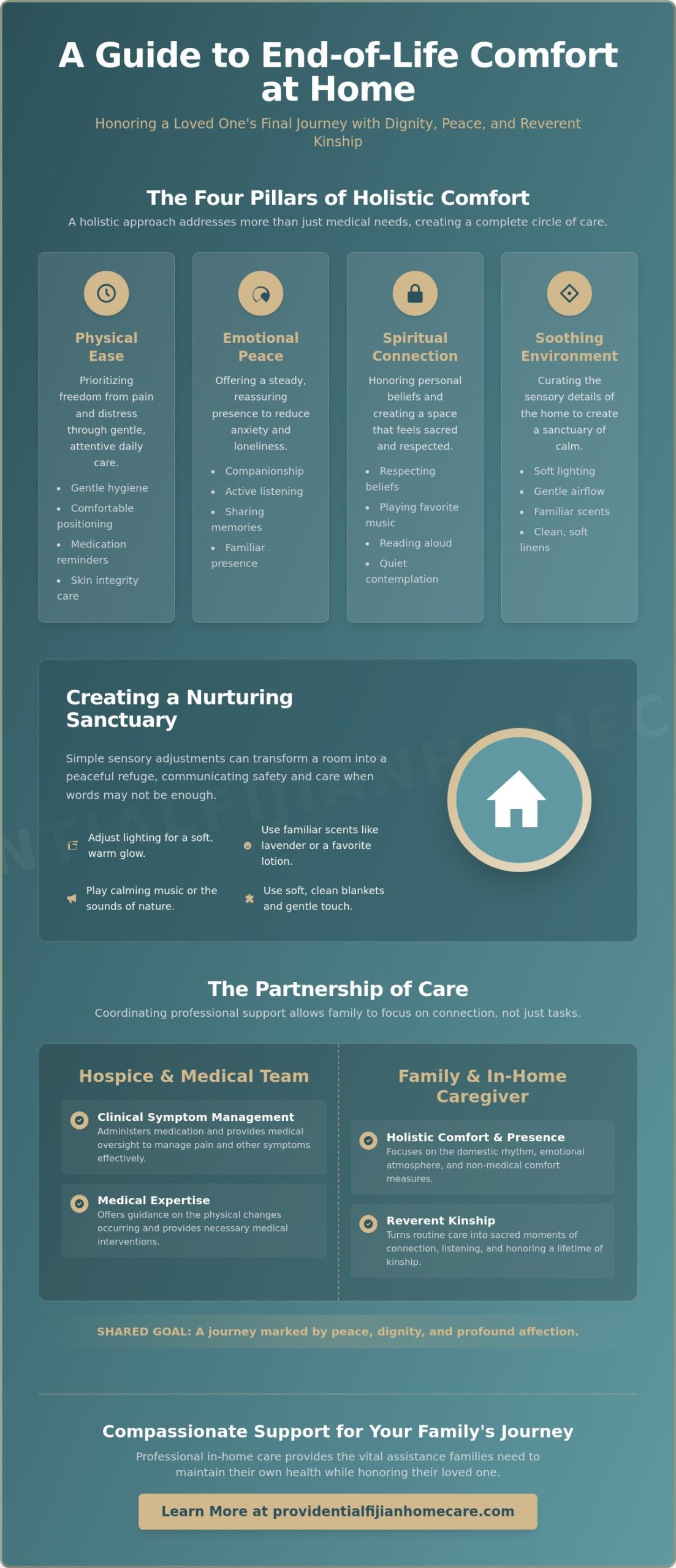
We believe that caregiving is a high honor, and we understand that this journey is about more than just medical tasks; it’s about honoring a lifetime of kinship. This guide will show you how to provide dignified, holistic comfort through physical care, emotional presence, and reliable professional support. We’ll walk through practical techniques for daily symptom management, the vital role of respite care in preventing burnout, and how to coordinate hospice support to ensure your home remains a sanctuary of peace, respect, and deep affection.
Key Takeaways
- Learn how to embrace a holistic four-pillar approach to care that prioritizes physical ease, emotional peace, spiritual connection, and a soothing home environment.
- Discover how simple sensory adjustments like soft lighting, familiar scents, and gentle touch transform a bedroom into a nurturing sanctuary of high esteem.
- Master the daily rhythms of keeping a loved one comfortable at home end of life through gentle hygiene practices and thoughtful positioning techniques.
- Understand the power of ‘reverent kinship’ to turn routine caregiving tasks into sacred moments of active listening and deep personal connection.
- Identify how professional hospice support and respite care offer the vital assistance families need to maintain their own health while honoring their loved one.
The Foundation of End-of-Life Comfort: More Than Just Medical Care
Choosing to remain in the sanctuary of home during a final journey is a profound act of love. It is a decision rooted in high esteem, prioritizing the familiar over the clinical. While end-of-life care often focuses on medical charts and symptom management, true comfort is a holistic experience. We view this stage not as a clinical failure, but as a sacred transition. This shift from curative treatments to a comfort-focused mindset allows the family to focus on connection rather than combatting a disease. It is about honoring a life well-lived through benevolence, loyalty, and deep respect.
Many families share a heavy, common fear: will my loved one be in pain? It is a question that weighs on the heart. While medical teams manage clinical symptoms, keeping a loved one comfortable at home end of life is often achieved through the small, constant details of daily care that prevent distress before it begins. By addressing the four pillars of comfort, which include physical, emotional, spiritual, and environmental needs, we create a protective layer of safety around the person we cherish.
Defining Comfort in the Domestic Sphere
In a hospital, the air is often sterile and the sounds are mechanical. At home, the therapeutic power of a bubbling tea kettle, the soft ticking of a grandfather clock, or the scent of a favorite garden rose provides a different kind of medicine. These familiar sensory cues ground the spirit. We look for signs of peace, such as relaxed facial muscles and a steady breathing rhythm, rather than just monitoring vital signs on a screen. End-of-life comfort is the preservation of dignity through attentive presence.
The Role of Non-Medical Support
Hospice nurses provide essential clinical oversight, but they aren’t always there for the quiet hours in between visits. Compassionate in-home help for seniors bridges this gap by focusing on the domestic rhythm and the emotional atmosphere of the home. This support prioritizes the person’s humanity through several key actions:
- Gentle Hygiene: Maintaining personal cleanliness and skin integrity to preserve self-worth and physical ease.
- Companionship: Offering a steady, reassuring presence that reduces the anxiety of being alone.
- Environment Management: Adjusting lighting, linens, and airflow to ensure the space remains a peaceful refuge.
- Medication Reminders: Ensuring that comfort medications are taken on schedule to maintain a steady state of ease and prevent breakthrough pain.
By managing these daily tasks, professional caregivers allow family members to step back from the role of technician and return to the role of daughter, son, or spouse. This partnership ensures that the home remains a place of kinship and quiet affection rather than a place of stress.
Creating a Nurturing Environment: Physical Comfort and Sensory Care
The physical space surrounding a person in their final days acts as a silent embrace. Transforming a bedroom into a sanctuary is a vital part of keeping a loved one comfortable at home end of life. This process goes beyond simple housekeeping; it’s about creating a landscape of high esteem where every sensory detail is curated with love. By managing the atmosphere, we provide a sense of security that clinical settings often lack. A room filled with soft lighting, gentle airflow, and a comfortable temperature reduces the agitation that can sometimes accompany this stage of life.
Sensory care is a powerful tool for emotional grounding. Soft music, the familiar scent of a favorite perfume, or the warmth of a hand-knit blanket can communicate safety when words are no longer enough. While medical teams focus on the clinical distinctions of Palliative Care and Hospice Care, the family’s role is to provide the texture of home. Gentle touch, such as a light hand massage or simply holding a hand, reinforces the bond of kinship and reminds the loved one they aren’t alone.
As the body’s needs change, nutrition and hydration often become a source of worry for families. It’s important to understand that a reduced appetite is a natural part of the body’s transition. When eating slows, focus on oral comfort rather than caloric intake. Use moistened swabs to keep the mouth fresh and offer small sips of water or ice chips only if the person is alert and desires them. This approach prioritizes ease over the stress of forced feeding, honoring the person’s natural rhythm with benevolence and respect.
Optimizing the ‘Care Room’ in Your Santa Rosa Home
A peaceful environment requires the removal of clinical clutter. Stowing away excess medical supplies and monitors helps the space feel like a home rather than a ward. If you live in Santa Rosa or the surrounding Sonoma County, try to position the bed so your loved one has a view of a garden or the changing light on the trees. Natural light provides a connection to the world outside. Additionally, manage the flow of visitors to ensure the home remains a quiet refuge. Short, meaningful visits are often more comforting than large, noisy gatherings.
Physical Hygiene as an Act of Reverence
Personal care is one of the most intimate ways we show respect. Gentle bathing and dressing in soft, familiar fabrics preserve a person’s dignity and modesty. Because these tasks can be physically demanding and emotionally complex, many families find that bringing in home care givers provides a necessary layer of support. This allows the family to focus entirely on emotional presence and quiet companionship while professionals handle the practicalities of hygiene and skin care. If you’re feeling overwhelmed by these daily tasks, starting a gentle dialogue with a supportive partner like Providential Fijian Home Care can help restore peace to your household.
To prevent skin breakdown, practice frequent, gentle positioning. Use pillows to support the limbs and shift the person’s weight slightly every few hours. These small adjustments are essential for maintaining physical ease and demonstrating the attentive care that defines true kinship.
Emotional and Spiritual Presence: The Power of Reverent Kinship
In many clinical settings, the focus remains strictly on the physical body. However, true peace at the end of life requires a deeper connection that nourishes the spirit. We embrace a philosophy called reverent kinship. This approach views the act of caregiving not as a medical burden, but as a sacred privilege that honors the history and dignity of the individual. By treating your family member with high esteem and deep affection, you create an atmosphere of emotional safety that no hospital can replicate. This spiritual foundation is essential for keeping a loved one comfortable at home end of life, as it addresses the quiet anxieties that medication alone cannot reach.
Facilitating legacy work is a beautiful way to practice this kinship. Spend time sharing stories, looking through old photographs, or simply expressing gratitude for the lessons they’ve taught you. These moments of reflection provide a sense of purpose and closure for the entire family unit. When we focus on the life lived rather than the illness present, we transform the home into a space of celebration and benevolence. This emotional support acts as a bridge, helping both the patient and the family find a steady state of ease during a difficult transition.
Communicating When Words Are Few
It’s a well-documented reality that hearing is often the last sense to fade. Even when a loved one is semi-conscious or non-verbal, your voice remains a powerful source of grounding. Speak naturally and tenderly. Share updates about the family or read favorite passages of literature. Active listening in this stage often means paying attention to non-verbal cues. A squeeze of the hand, a peaceful sigh, or a change in eye contact can tell you more than words ever could. Providing gentle reassurance that it’s okay to let go when they’re ready is perhaps the most profound act of love a family can offer. It releases the person from the perceived duty of staying for the sake of others.
Fostering a Culture of High Esteem
In our cultural tradition, the elder is the central, most respected member of the domestic sphere. This worldview places their needs and their dignity at the heart of every decision. When a home is filled with this level of service-oriented respect, the fear and isolation often associated with terminal illness begin to dissolve. Creating a supportive circle of care is vital for maintaining this environment. This circle involves family, close friends, and professional caregivers who share this mission of loyalty and high regard. By working together, we ensure that the person we cherish is surrounded by a constant, nurturing presence that mirrors the attentive nature of a true family bond.
A Step-by-Step Guide to Daily Caregiving Tasks at Home
Establishing a gentle daily rhythm provides a sense of security for everyone in the house. When keeping a loved one comfortable at home end of life, the goal isn’t to follow a rigid schedule but to create a predictable flow of care that honors their natural needs. This routine starts in the morning with gentle hygiene and medication reminders to ensure a steady state of ease. By refreshing the environment early, you set a tone of high esteem and respect for the day ahead. This flow balances practical assistance with the quiet, emotional presence that defines true kinship.
Mid-day is a time for frequent, small comfort measures. This includes gentle oral care with swabs, shifting their position to prevent pressure points, and offering light nutrition if they desire it. By the afternoon, the focus shifts toward emotional engagement. Reading aloud from a favorite book or simply sitting in quiet companionship allows the loved one to feel cherished without the pressure of conversation. These moments of benevolence are just as vital as any physical task.
We must remember that the primary family caregiver’s health is the foundation of this circle of care. Scheduling regular breaks is not a sign of weakness; it’s an act of loyalty to your loved one. If you find the daily routine becoming overwhelming, reaching out for professional home care support can provide the necessary rest to ensure you remain a supportive presence. This partnership allows you to step back from the tasks and return to being a family member.
The Morning and Evening Routine
The ideal morning routine begins with a gentle freshening of the senses through soft light, a cool cloth for the face, and the comforting scent of a familiar morning tea.
As the sun sets, transition the room for nighttime to promote a calm atmosphere. Dim the lights and reduce noise to signal that the day is closing. This wind-down ritual helps reduce late-day agitation and prepares the spirit for rest. To ensure overnight safety and peace of mind, keep a few essentials nearby:
- Fresh water or ice chips within easy reach for oral comfort.
- A baby monitor to hear any changes in breathing or quiet calls for help.
- Soft, low-level lighting to prevent disorientation if they wake during the night.
Managing Nutrition and Hydration Naturally
It’s natural for the body to slow down its need for intake as it prepares for transition. Rather than viewing food as fuel, treat it as a source of comfort and tradition. Small portions of local favorites, like Sonoma County applesauce or a bit of local honey, can provide a pleasant taste without the stress of a full meal. Recognize that a refusal of food is often the body’s way of seeking ease; forcing intake can lead to physical discomfort. By following these cues with benevolence and respect, you maintain the person’s dignity and honor their body’s natural wisdom.
Coordinating Professional Support in Santa Rosa and Sonoma County
Many families in Sonoma County find themselves at a crossroads, balancing deep devotion with the physical demands of constant care. While the heart is willing, the body often needs rest. Coordinating professional support is not a surrender of your role, but a way to strengthen the circle of care around your family. In Santa Rosa and surrounding areas like Petaluma, Windsor, and Healdsburg, families are increasingly looking for a caregiver agency that understands the delicate balance of keeping a loved one comfortable at home end of life. This partnership ensures that your home remains a sanctuary of high esteem rather than a place of exhaustion.
Recent updates to Medicare hospice payment rates for the 2026 fiscal year have increased support for hospice providers, yet the “boots on the ground” daily assistance often remains the family’s responsibility. This is where non-medical home care becomes vital. Knowing when to call the hospice nurse versus when to rely on your caregiver is key. You call the nurse for medical changes or pain management adjustments; you rely on your caregiver for the rhythmic, hourly tasks that preserve dignity, such as hygiene, positioning, and companionship. This collaborative approach allows you to focus on being a loving presence while professionals manage the practicalities of domestic ease.
The Synergy Between Hospice and Home Care
It’s helpful to view hospice and home care as two halves of a whole. Hospice provides the clinical oversight and medical equipment, while home care provides the consistent, familiar face that stays by the bedside. At Providential Fijian Home Care, we provide non-medical hospice support throughout Sonoma County, rooted in our heritage of reverent kinship. We believe the elderly are the central pillars of the home, deserving of benevolence and high regard. Having a dedicated caregiver means there is always someone to offer a sip of water, adjust a pillow, or sit in quiet vigil, ensuring your loved one is never alone.
Taking the First Step Toward Support
We understand that inviting someone into your home during such an intimate time requires immense trust. It’s best to begin with a low-pressure dialogue about your family’s specific needs and cultural values. When looking for support in Santa Rosa, seek an agency that prioritizes empathy and loyalty over transactional service. Respite care is a specific offering that allows primary family caregivers to rest and recharge, which is essential for maintaining their own health during this journey. We view caregiving as a high honor and a sacred privilege. If you are ready to explore how we can support your family, please Contact Providential Fijian Home Care for a compassionate conversation about your loved one’s comfort and dignity.
Honoring Your Loved One with a Sanctuary of Peace
Providing a dignified environment for a family member is a beautiful expression of loyalty. By focusing on sensory care, maintaining a steady daily rhythm, and embracing the spiritual power of reverent kinship, you ensure their final days are filled with high esteem. You’ve learned that keeping a loved one comfortable at home end of life is a collaborative effort between your devoted presence and professional expertise. This journey isn’t one you have to walk alone; it’s a shared mission of benevolence and deep respect.
Since 2016, we’ve served families across Sonoma, Marin, and San Francisco with our unique Fijian cultural values of warmth and kinship. Our specialized non-medical hospice support is designed to bridge the gaps in daily care, allowing you to return to the role of a loving family member. Let us support your family with compassionate end-of-life home care in Santa Rosa. We are here to listen and provide a supportive presence. You have the strength to navigate this time, and we would be honored to walk beside you.
Frequently Asked Questions
How do I know if my loved one is in pain if they can’t speak?
You can identify pain by observing non-verbal cues such as furrowed brows, clenched teeth, or a restless body rhythm. These physical signals often act as a voice for those who can no longer find the words to express their needs. By watching with high esteem and attentive presence, you’ll notice subtle changes like moaning during movement or a tensed jaw. These signs indicate that keeping a loved one comfortable at home end of life may require adjusting their position or consulting with their medical team for symptom management.
Is it better to keep a loved one at home or in a facility at the end of life?
The decision depends on your family’s desire for intimacy and the level of support available to maintain a safe environment. Many families choose the home because it offers a sacred space filled with the warmth of kinship and familiar sensory memories. While facilities provide clinical structure, the domestic sphere allows for a more personalized, reverent approach to care. This environment often reduces the anxiety of the unknown, providing a steady sense of security that honors the person’s life and legacy.
What are the common signs that the end of life is near?
Common signs include a natural shift in breathing patterns, such as long pauses between breaths, and a significant increase in time spent sleeping. You may also notice the skin becoming cool to the touch or a gentle withdrawal from social interaction. These changes are a natural part of the body’s transition into a state of quiet rest. Observing these milestones with benevolence and loyalty allows the family to prepare their hearts and maintain a peaceful, supportive atmosphere for their cherished elder.
How much does in-home hospice support cost in Santa Rosa?
Costs for support in Sonoma County vary based on the specific needs of the family and the number of hours requested for assistance. Families should contact local providers to discuss their unique situation and find a partner that aligns with both their budget and their cultural values. While expenses are a practical reality, many find that the emotional peace of mind gained from professional help is a vital investment. Researching multiple agencies in the Santa Rosa area helps ensure you find the most respectful and compassionate fit.
Can I provide end-of-life care at home without being a nurse?
Yes, you can provide profound, high-level comfort by focusing on non-medical tasks that preserve dignity and ease. Keeping a loved one comfortable at home end of life involves many acts of service like gentle hygiene, repositioning, and providing a reassuring presence. While medical teams manage clinical needs, your role is to offer the emotional and environmental support that makes a house feel like a home. Professional caregivers can assist with the physically demanding tasks, allowing you to focus entirely on your bond of kinship.
What should I do if my loved one stops eating or drinking?
You should honor their body’s natural wisdom by offering small, frequent comfort measures like oral swabs or ice chips rather than forcing nutrition. As the body prepares for transition, it naturally requires less fuel, and forcing food can lead to physical distress or agitation. This decline is a normal part of the process that should be met with benevolence and respect. Focusing on oral hygiene and keeping the lips moist ensures the person remains comfortable without the stress of unwanted intake.
How can I prevent caregiver burnout while caring for someone at the end of life?
Preventing burnout requires you to accept help through respite care so you can maintain your own health and emotional balance. Caring for a family member is a sacred privilege, but it’s impossible to carry the weight alone without eventually feeling overwhelmed. By scheduling regular breaks and allowing a trusted agency to step in, you ensure that you remain a patient, loving presence. Sharing the daily responsibilities is an act of loyalty to your loved one, as it preserves the quality of the care you provide.
Does insurance or Medicare cover home care during hospice?
Medicare generally covers medical hospice services, including medications for pain management and necessary medical equipment, but it often excludes long-term, non-medical home care. For the 2026 fiscal year, Medicare has updated its payment rates, yet families still frequently pay for supplemental personal care out of pocket. It’s important to review your specific insurance policy to understand what copayments or limits apply to your situation. Discussing these details with a local agency can help you navigate the resources available in the Santa Rosa community.