

What if your parent’s stubborn refusal of care isn’t actually a rejection of you, but a desperate plea to remain the author of their own story? It is deeply painful to watch someone you revere struggle with daily tasks while every offer of support is met with a sharp “I’m fine.” You are likely exhausted from the constant worry over missed medications or household accidents, feeling more like a supervisor than a son or daughter. It’s a heavy burden to carry, and the friction often leaves the domestic sphere feeling more like a battlefield than a sanctuary.
We understand that you simply want them to be safe, cherished, and well. This guide offers a compassionate look at what to do when an elderly parent refuses help by moving away from transactional care and toward a model of kinship. You’ll learn how to balance safety with dignity, ensuring your loved one feels respected, autonomous, and secure. We will explore how professional assistance, from companion care to specialized memory support, can be introduced as a warm, loyal extension of your own family bond, restoring peace to your home and heart.
Key Takeaways
- Understand that resistance is often a protective mechanism for self-identity, allowing you to approach your parent with deeper empathy and patience.
- Discover what to do when an elderly parent refuses help by shifting your perspective from clinical care to a model of reverent kinship.
- Learn to identify the specific “Red Flag” safety thresholds that signal when gentle intervention is necessary to ensure their physical safety.
- Master a five-step approach for introducing support through low-stakes trial runs and heart-centered “I” statements that preserve their dignity.
- Find out how choosing a local, family-rooted companion can bridge the gap between professional assistance and the warmth of a domestic bond.
Understanding the Roots of Resistance: Why Your Parent Says “No”
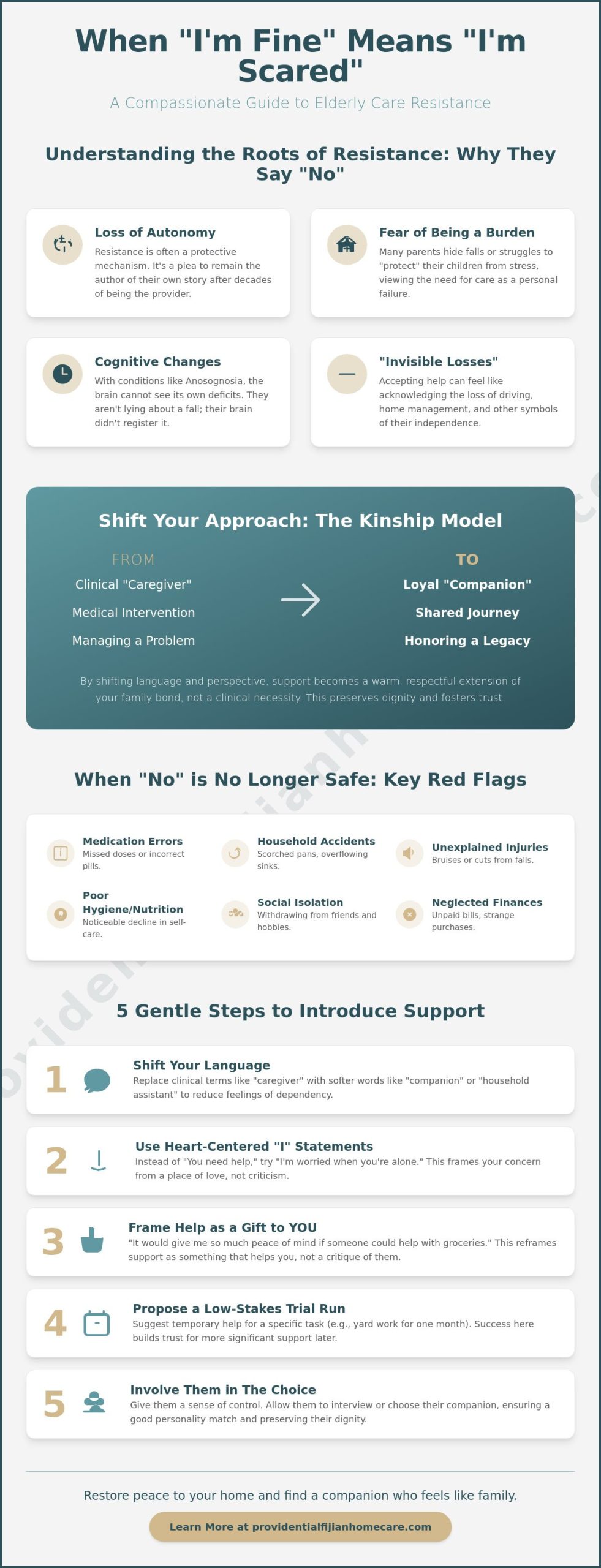
When a parent pushes back against our offers of support, it is easy to feel rejected. We see the scorched pans or the unsteady gait, and our instinct is to fix the problem immediately. However, resistance is rarely about being difficult; it is a protective mechanism for self-identity and autonomy. For a parent who has spent decades as the provider, accepting help feels like a surrender of their very self. They are navigating “invisible losses” like the loss of driving or home management. To them, saying “yes” to support is the same as saying “no” to their adulthood. Many families struggle with what to do when elderly parent refuses help, but the answer often starts with honoring these deep-seated emotional anchors.
Sometimes, the resistance isn’t emotional but physiological. Anosognosia is a clinical condition where the brain literally cannot see its own deficits. It is common in cognitive decline, and it means your parent isn’t lying when they say they didn’t fall; their brain has simply failed to register the event. Understanding this distinction helps us move from anger to a place of deep reverence. Many adult children find themselves trapped in a cycle of worry, leading to a profound sense of Caregiver burden that strains the heart of the family bond. When you are researching what to do when elderly parent refuses help, you must first determine if you are dealing with temporary stubbornness or a deep-seated anxiety about the vulnerability of aging.
The Fear of Becoming a Burden
It is a heartbreaking irony that many parents refuse help because they love their children so intensely. They hide falls or bruises because they want to “protect” you from the stress of their decline. In our culture, there is a heavy pressure to be hyper-independent, which makes the transition to receiving care feel like a personal failure. To bridge this gap, we must validate their desire for independence. Instead of highlighting their mistakes, we can focus on how a little support actually preserves their freedom for longer. It’s about shifting the conversation from what they can’t do to how they can remain the master of their own home. This perspective is vital when planning what to do when elderly parent refuses help in a way that preserves their dignity.
Cognitive Changes and the Loss of Insight
In the early stages of dementia, the brain’s ability to self-monitor often begins to fray. This loss of insight means that “proving” they are wrong will almost always backfire. If you show them the scorched pan, they may become defensive or angry because their mind is trying to protect them from the emotional weight of realizing they are changing. Logic is rarely the tool that wins these arguments. Instead, we look toward kinship and emotional connection. When we stop trying to win the debate, we create a safe space where they feel respected rather than managed. This approach allows us to introduce safety measures without triggering the fight-or-flight response that comes with feeling diminished.
The Kinship Model: Shifting from “Care” to “Companion”
The language we use within the domestic sphere carries an immense emotional weight. It often determines whether an offer of support is embraced with a smile or met with a closed door. When families look for what to do when elderly parent refuses help, the solution often lies in shifting from a clinical care model to a Kinship model. In our heritage, we are guided by a deep sense of reverence for our elders. They are the anchors of our homes, and our role is to honor their legacy while ensuring their safety. By viewing support as a shared journey rather than a medical intervention, we create an atmosphere where respect and affection lead the way.
Shifting your vocabulary is a small but profound act of respect. Replacing the word “caregiver” with “companion” or “household assistant” can soften the blow to a parent’s pride. This semantic shift is a vital strategy for what to do when elderly parent refuses help because it suggests a partner who helps maintain their autonomy rather than an aide who takes it away. This professional support should feel like an extension of your own family, providing a presence that is humble, loyal, and intensely respectful. This unhurried approach allows trust to bloom naturally, overcoming the initial social barriers that often lead to resistance.
Framing Help as a Gift of Time
One of the most effective ways to introduce support is to frame it as a gift that restores your family relationship. You might say, “I want to spend my visits hearing your stories, not doing the laundry.” By positioning a companion as someone who handles the heavy lifting of meal preparation or light housekeeping, you allow yourself to return to the role of a son or daughter rather than a manager. If resistance persists, you can lean on guidance from the University of Kentucky, which suggests using neutral third parties like doctors to depersonalize the need for assistance. Kinship-based care acts as a bridge between professional expertise and familial love, ensuring the safety of the elder without sacrificing their dignity.
The Cultural Advantage of Warmth
A nurturing, unhurried presence is the hallmark of a Kinship-centered approach. When help feels clinical, it reminds the parent of their deficits. When it feels like heritage-based warmth, it feels like home. This is why many families find that caregivers with a natural inclination toward patience and deep affection have more success in breaking through stubbornness. You can learn more about finding the right fit for your family in The Essential Guide to Home Care Givers in Santa Rosa. If you’re feeling overwhelmed, a simple conversation about companion care can be the first step toward a more peaceful home environment.
Assessing Risks: When “No” Is No Longer Safe
Determining what to do when an elderly parent refuses help becomes a heart-wrenching balance between honoring their choices and preventing a tragedy. There is a sacred line between a parent who is simply “messy” and one who is living in unsanitary conditions that threaten their health. We must establish a clear safety threshold. A stack of old newspapers is a personal preference; however, rotting food in the refrigerator or a bathtub they can no longer exit safely represents a shift from independence to endangerment. When the domestic sphere is no longer a sanctuary, we must step in with a spirit of benevolent protection.
To help you navigate this, look for the “Red Flags” that indicate their safety is compromised. These signs are often quiet cries for help that a parent may be too proud to vocalize. If you are just Getting Started With Caregiving, keep a gentle eye out for these specific markers:
- Physical Clues: Unexplained bruising on the arms or hips, significant weight loss, or a sudden decline in personal hygiene.
- Household Hazards: Scorched cookware, a persistent smell of gas, or piles of unopened bills and late notices.
- Behavioral Shifts: Confusion about the time of day, wandering outside the home, or a withdrawal from long-held social traditions.
It is also vital to distinguish between a lifelong stubborn personality and a clinical mental health issue like depression. In the high-cost regions of Santa Rosa and Marin, the pressure of maintaining a large home can lead to a quiet despair that looks like refusal. For those in Southern California facing similar housing challenges, you can discover Cardenas & Company Real Estate Group to explore options that preserve dignity. If they’ve lost interest in the things they once loved, their “no” might actually be a symptom of a heavy heart rather than a desire for autonomy.
The Danger of Medication Mismanagement
Missed doses or accidental double-dosing are leading causes of avoidable hospitalizations for seniors in Sonoma County. When a parent forgets their blood pressure or heart medication, the consequences can be immediate and severe. Introducing medication reminders is a way to preserve their long-term independence by preventing a medical crisis that would force a move to a clinical facility. You can find more details on how to integrate these supports in our guide to Professional Personal Care Services in Santa Rosa.
Dementia and the Refusal of Care
For parents living with Alzheimer’s or other forms of cognitive decline, the refusal of help is often tied to a lack of insight into their own condition. They may not recognize their own children or understand why a “stranger” is in their kitchen. In these moments, “therapeutic fibbing” is often the most compassionate choice. Instead of arguing about the facts, we join them in their reality. For instance, a companion might be introduced as a “friend from the church” rather than a hired aide. For deeper support, explore our resources on Dementia Care in Sonoma County to learn how to maintain a bond of respect even when memory fades.
5 Gentle Steps to Introduce Help in Santa Rosa and Marin
Introducing support into a parent’s sacred domestic sphere requires a delicate touch, especially in the close-knit communities of Santa Rosa and Marin. You aren’t just hiring a service; you’re inviting a new presence into their life. When you are struggling with what to do when an elderly parent refuses help, the goal is to move slowly. This ensures your parent feels like the author of their own story rather than a passive recipient of care. By following these five gentle steps, you can build a bridge of kinship that honors their dignity while securing their safety.
- Step 1: The Trial Run. Start with a specific, low-stakes task. Suggest a companion for just two hours a week to help with heavy grocery bags or light laundry. This feels less like a permanent change and more like a helpful experiment.
- Step 2: Use “I” Statements. Shift the focus from their perceived “failure” to your own peace of mind. Try saying, “I find myself worrying about you during my workday, and it would be a huge favor to me if someone could check in.”
- Step 3: Enlist a Trusted Messenger. Sometimes a parent will reject a child’s advice but listen to a long-time family doctor in Santa Rosa or a respected member of their faith community. Their authority can provide a neutral perspective.
- Step 4: Focus on the Companion. Frame the new person as a social connection. They are someone to walk with at Spring Lake Park or a partner for a trip to the local market, rather than a clinical aide.
- Step 5: Gradually Increase Hours. As trust and kinship are established, you can slowly add more time. Once they realize the presence is a loyal, supportive one, the resistance often melts into gratitude.
Leveraging Local Sonoma County Allies
We are fortunate to live in a region with excellent medical professionals who understand the nuances of aging in place. Many local Santa Rosa doctors are willing to “prescribe” home help, which can make the transition feel like a medical necessity rather than a loss of autonomy. Finding respite care that feels like a social club rather than a facility is also a key strategy. When you are Finding a Compassionate Caregiver Agency in Santa Rosa, look for those who prioritize the emotional bond as much as the practical assistance.
The “Housekeeper” Strategy
One of the most successful ways to introduce help is to frame it around the home itself. Introducing a companion as a “helper with the heavy lifting” or a “meal prep assistant” allows the parent to maintain their status as the head of the household. Light housekeeping acts as a gentle way to build rapport. You might say, “You’ve worked hard your whole life; you deserve to relax while someone else handles the vacuuming.” This approach centers on their comfort and high regard. To begin this journey with a supportive partner, you can request a dialogue about companion care today.
Choosing the Right Path: Professional Support with Dignity
When you reach the point of deciding how to move forward, the choice of a partner becomes a sacred trust. Many families find that large, corporate agencies often lack the warmth and personal connection required to soothe a parent’s anxieties. A local, family-owned agency offers something different: a presence that is humble, community-oriented, and intensely loyal. By prioritizing non-medical support, such as companion care or light housekeeping, we allow your parent to remain in their cherished home while quietly ensuring their safety. This approach turns the question of what to do when an elderly parent refuses help into a journey of shared respect rather than a clinical transaction.
Providential Fijian Home Care bridges the gap between professional expertise and familial love by grounding every interaction in cultural reverence. We don’t see our work as a series of tasks; we see it as a privilege to serve the elders of Santa Rosa and Marin. Our goal is to ensure your parent feels like a person of high esteem whose wisdom is valued, rather than a patient who needs to be managed. This shift in perspective often melts away the final layers of resistance, replacing fear with a sense of belonging and security.
Why Cultural Values Matter in Care
Our approach is deeply rooted in the Fijian tradition of “Veidokai,” a term that represents a profound, abiding respect for those who came before us. This value changes the entire care dynamic. Instead of coming into the home with a checklist, our caregivers enter the domestic sphere with a spirit of benevolence and high regard. They integrate into the local community as a supportive presence, offering a kinship-based support system that feels natural and unhurried. When a parent realizes that their companion is there to honor their traditions and domestic importance, the home environment transforms into a place of peace and deep affection.
Starting the Dialogue Today
The most important step you can take is to begin a low-pressure conversation. This weekend, find a quiet moment to speak with your parent, using the “I” statements we discussed to share your heart. Instead of suggesting a formal “assessment,” which can feel like an interrogation, suggest a simple “meet and greet.” This allows your parent to feel the warmth and sincerity of a potential companion without any immediate commitment. We invite you to begin this process with a gentle, no-obligation conversation that focuses on your family’s unique heritage and needs. You don’t have to carry this worry alone; a supportive partner is ready to walk beside you. Please schedule a compassionate consultation with our Santa Rosa team to discover how we can help your parent age in place with dignity and grace.
Restoring Peace and Kinship to Your Family Home
Navigating the delicate path of aging requires a blend of patience, reverence, and specialized support. You now understand that resistance is often a quiet plea for continued significance rather than a rejection of your love. By shifting from a clinical mindset to a kinship-centered approach, you can honor your parent’s legacy while ensuring their domestic sphere remains secure. We’ve explored how understanding the roots of anxiety and using a gradual, five-step introduction can help you decide what to do when an elderly parent refuses help.
Since 2016, our family-run team has served Sonoma and Marin Counties with a deep commitment to Fijian values of respect and benevolence. Whether you require specialized Alzheimer’s and dementia expertise or simple companion care, we are here to act as a loyal extension of your support network. You don’t have to carry the weight of these decisions alone. Begin a gentle conversation about your parent’s care today. Your parent’s safety and dignity are a shared privilege; let us help you restore peace to your heart and home.
Frequently Asked Questions
Can I force my elderly parent to accept care in California?
You cannot legally force a parent to accept care in California unless they are deemed incapacitated through a court-ordered conservatorship or present an immediate danger to themselves. Respecting their autonomy is a legal requirement; however, you can gently intervene by introducing non-medical support as a “gift of time” for the family. If safety becomes a critical issue, a professional evaluation is the most respectful way to determine if legal protection is necessary.
How do I tell the difference between stubbornness and dementia?
Stubbornness is typically a lifelong personality trait where a parent remains aware of their surroundings but chooses to be difficult. Dementia often involves anosognosia, a clinical condition where the brain literally loses the ability to recognize its own deficits. If your parent is forgetting how to use common appliances or getting lost in familiar areas of Santa Rosa, these are red flags that go beyond simple personality and require a compassionate, specialized approach.
What if my parent fires every caregiver we hire?
This cycle often occurs when a parent feels their domestic sphere is being invaded by a stranger who represents a loss of control. When deciding what to do when an elderly parent refuses help, try shifting the language from “caregiver” to “household assistant” or “companion.” Framing the new person as someone who is there to help with heavy chores allows your parent to maintain their status as the head of the household, reducing the urge to push the support away.
How can I pay for home care in Sonoma County without exhausting their savings?
Families can explore various paths, including long-term care insurance or California’s Medi-Cal program, which has a reinstated individual asset limit of $130,000 as of January 1, 2026. Additionally, the 2026 federal gift tax exclusion allows you to contribute $19,000 per recipient to help cover costs. It’s helpful to consult with a local professional who understands the specific regional thresholds and can help you preserve the family heritage while securing high-level care.
Is it better to hire an independent caregiver or a licensed agency in Santa Rosa?
A licensed agency provides a level of stability and security that independent hires usually cannot match. Agencies handle the intensive vetting, liability insurance, and background checks, ensuring that a loyal and supportive presence is always available. If a primary companion is unavailable, an agency provides a seamless backup, so your parent is never left without the kinship and safety they deserve in their domestic sphere.
What happens if my parent refuses to go to the doctor for an assessment?
If a formal assessment feels too threatening, try framing the appointment as a routine wellness check for insurance purposes or a visit to address a simple physical ailment like a cough. You can also ask a trusted messenger, such as a long-time family physician or a member of their faith community, to suggest the visit. This depersonalizes the request and makes it feel like a professional requirement rather than a family confrontation.
How do I handle my own guilt when my parent refuses help?
Guilt is a heavy burden, but it’s vital to remember that your intervention is an act of deep affection and benevolence. You aren’t trying to control them; you are working to prevent a crisis that could lead to a permanent loss of their independence. Reframe your efforts as a form of kinship that honors their legacy by keeping them safe, cherished, and respected within their own home for as long as possible.
What is the “kinship model” of senior care?
The kinship model is a nurturing approach to support that views professional care as an extension of the family bond. Grounded in the Fijian value of “Veidokai,” it prioritizes high regard and reverence for the elderly within the domestic sphere. Instead of a clinical transaction, this model focuses on building a loyal, unhurried relationship where the companion becomes a trusted part of the family’s support network, ensuring safety through emotional connection.