

What if the price of keeping your parent in the home they love isn’t a burden, but a final, beautiful act of devotion? Many families in Sonoma County feel a heavy weight when they start looking into the cost of in-home care in Petaluma, often fearing that a lifetime of savings might vanish just to ensure a loved one is safe and respected. It’s a vulnerable time, and the confusion between different types of support only adds to the anxiety of finding a caregiver who will treat your family with true reverence and warmth.
We understand this path is as much about emotional security as it is about financial planning. This guide will help you find clarity by exploring the latest 2026 pricing trends, local financial assistance programs, and the practical steps to secure high-quality, kinship-based care. You’ll learn the differences between hourly and live-in options while discovering how to access the millions in unclaimed elder care benefits available to California families. By the end, you’ll have a clear roadmap to ensure your loved one receives the esteem they deserve while maintaining your family’s peace of mind.
Key Takeaways
- Learn how non-medical support serves as a vital bridge for aging in place while honoring the deep importance of your loved one’s home life.
- Gain a transparent view of the cost of in-home care in Petaluma to help your family budget for everything from occasional respite to dedicated daily assistance.
- Identify the specific needs, such as hygiene support or medication reminders, that shape the frequency and duration of your personalized care plan.
- Explore reliable financial pathways like VA Aid and Attendance benefits and Long-Term Care Insurance to make high-quality, respectful care more accessible.
- Discover how a heritage of kinship and service-oriented respect creates a stable, loving environment that reduces the stress of caregiver turnover.
Understanding the In-Home Care Landscape in Petaluma (2026)
Petaluma is a place where history lives in every corner, from the beautifully preserved Victorian homes in the Theatre District to the quiet, rolling hills of our rural outskirts. For many families in our community, these homes are more than just property; they are repositories of memories, laughter, and a lifetime of hard work. As we move through 2026, more families are embracing non-medical in-home care as a vital tool for aging in place. This approach allows our elders to remain in the domestic spaces they cherish while receiving the gentle assistance they need to navigate daily life with dignity. Choosing home care is often a deeply personal decision rooted in the desire to maintain a sense of self and connection to the local community.
While the cost of in-home care in Petaluma is a practical detail you must manage, the value of this choice often lies in the intangible feelings of safety and belonging it provides. In-home care in the United States has evolved into a sophisticated model of support that ranges from simple companion care to specialized Alzheimer’s and dementia care. While companion care might involve help with meal preparation or light housekeeping, memory support requires a higher level of emotional attunement and safety protocols tailored to cognitive changes. In Petaluma, where residents value an active and engaged lifestyle, this support acts as a bridge that keeps seniors connected to their neighborhoods and their heritage.
Home Care vs. Home Health: Which Do You Need?
It is helpful to distinguish between the two primary types of support available. Home care focuses on the activities of daily living, often called ADLs, which include personal hygiene, medication reminders, and companionship. This is a nurturing, non-clinical service designed to enhance quality of life. In contrast, home health care involves skilled nursing, physical therapy, or other medical interventions typically ordered by a physician. Choosing non-medical support is an act of love that prioritizes long-term emotional comfort and domestic stability over clinical routine.
The Growing Demand for Senior Support in Sonoma County
The aging population in Sonoma County continues to grow in 2026, leading to a significant increase in the need for dedicated caregivers. Petaluma families are looking for more than just a service provider; they are seeking in-home help for seniors that feels like a natural extension of their own kinship network. This demand is driven by a collective desire to keep our elders active in local life, whether that means a walk through Walnut Park or a visit to a favorite local cafe. Finding a caregiver who respects these traditions ensures that the cost of in-home care in Petaluma remains a meaningful investment in your family’s legacy of care.
Estimated Costs: Hourly vs. Daily Care Rates in Petaluma
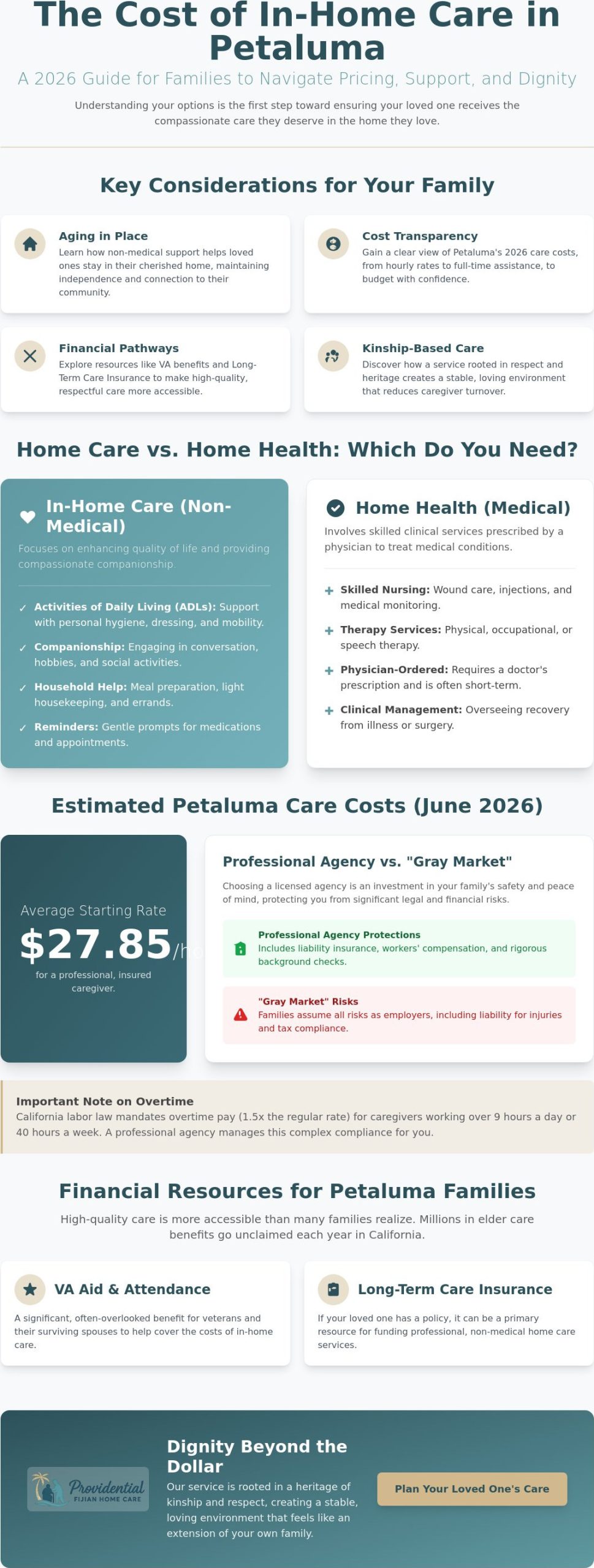
Understanding the cost of in-home care in Petaluma starts with looking at the current market rates as of June 2026. In our local community, the average starting rate for a professional home care provider is approximately $27.85 per hour. This figure reflects the high standard of living in Sonoma County and the specialized training required to provide the level of respect your loved one deserves. While some families consider hiring independent caregivers from the “gray market” to reduce immediate expenses, these arrangements often lack the essential protections of a licensed agency. Choosing a professional partner ensures that workers’ compensation, liability insurance, and rigorous background checks are all managed for you. This creates a sanctuary of safety for your parent and protects your family from the legal and financial risks of being an individual employer.
When you compare a few hours of respite care to 24/7 round-the-clock support, the financial investment changes to reflect the intensity of the service. A typical 40-hour week at the average Petaluma rate totals around $1,114. However, continuous care requires navigating California’s specific labor laws, which mandate overtime pay at 1.5 times the regular rate after nine hours in a single day or 40 hours in a week. Navigating these details is a vital part of Paying for Long-Term Care, a journey that involves balancing the family budget with a deep desire to provide high-level care. By working with an agency, you gain a team that manages these complex scheduling and payroll requirements, allowing you to focus entirely on your loved one’s well-being.
Hourly Care: Flexibility for Respite and Errands
Short shifts of four to eight hours are a beautiful way to support family caregivers who need a gentle breath of air to recharge. These visits often include vital transportation for medical appointments at Petaluma Valley Hospital or simple errands to the local market, ensuring your parent remains active and engaged. Most Sonoma County agencies maintain a four-hour minimum for each visit. This requirement helps ensure the stability and continuity of the caregiver’s presence, fostering a deeper bond of kinship between the aide and your family.
Specialized Care Tiers: Dementia and Hospice Support
Specialized support, such as alzheimer’s and dementia care, often involves a different rate structure because it requires caregivers with advanced training in cognitive engagement and safety protocols. Similarly, non-medical hospice support and post-surgical care provide the focused, one-on-one attention necessary to prevent costly hospital readmissions. These tiers of care are designed to provide end-of-life comfort and domestic stability, ensuring that your loved one is treated with the highest esteem during their most vulnerable moments. If you are feeling uncertain about which level of support fits your family’s unique situation, starting a gentle dialogue with a local care coordinator can help clarify the best path forward.
Factors That Influence Your Home Care Investment
Every family’s journey is unique. When you look at the cost of in-home care in Petaluma, it’s vital to understand that the final investment is shaped by the specific rhythm of your loved one’s daily life. It isn’t just about a set number of hours. It is about the depth of support required to maintain a domestic sanctuary where your parent feels truly seen and respected. The physical assistance required for daily safety is often the primary driver of these variations. If your loved one needs help with complex mobility transfers or has safety concerns due to a high risk of falls, the level of expertise and attention required naturally increases.
The timing of care plays a significant role in your planning. While weekday support is standard, schedules that include overnight stays, weekend visits, or holiday coverage involve different considerations to ensure caregivers are fairly compensated for their dedication. Location also matters in our beautiful Sonoma County. For families living in the rural outskirts of Petaluma or near the rolling hills of Healdsburg, travel time and logistics for caregivers are factored into the overall plan. We view these logistics not as mere transactions, but as the necessary steps to bring high-quality, reverent care directly to your doorstep, no matter how tucked away your home might be.
The Complexity of the Care Plan
The specific tasks included in a care plan significantly influence the investment. Helping a senior with personal hygiene, such as gentle bathing and dressing, requires a more hands-on approach than simple companion care. Medication reminders and meal preparation are also essential threads in the safety net we build, ensuring that nutrition and health are prioritized every day. A customized care plan prevents families from paying for unnecessary services by focusing resources exactly where they provide the most relief and security for the recipient.
Caregiver Expertise and Cultural Alignment
Finding home care givers who share your family’s values is perhaps the most important part of the process. When a caregiver has specialized training in memory care, they can skillfully manage the challenges of cognitive decline or sundowning with patience and high regard. This expertise is a critical budget consideration because it ensures safety and reduces the likelihood of emergencies. Consistency is also key. When the same caregiver returns day after day, they develop a bond of kinship that improves patient outcomes and provides long-term stability for your budget. This steady presence reduces the hidden costs of turnover and ensures your loved one’s dignity is always the top priority.
Financial Resources for Petaluma Families
Facing the financial realities of senior support can feel like a heavy burden, but you don’t have to walk this path alone. While the cost of in-home care in Petaluma reflects the high level of expertise required for safe, domestic living; several programs exist to help protect your family’s legacy and savings. We view financial planning not as a transactional hurdle, but as a way to ensure your loved one continues to receive the high regard and comfort they deserve. By exploring a mix of federal benefits, private insurance, and local Sonoma County programs, many families find that high-quality, kinship-based care is more attainable than they initially feared. It’s estimated that nearly $340 million in elder care benefits goes unclaimed in California each year, a statistic that highlights the importance of having a knowledgeable partner by your side.
Navigating VA Benefits and LTCi
For those who have served our country, the Veterans Administration offers a profound resource called the Aid and Attendance benefit. This program provides a monthly stipend specifically for veterans and their surviving spouses who require assistance with daily activities like bathing or medication reminders. Verifying eligibility is a vital first step, and we often encourage local families to reach out to the Sonoma County Veterans Service Office for personalized guidance. Similarly, if your parent has a Long-Term Care Insurance (LTCi) policy, activating it requires careful documentation. We take pride in acting as an advocate for our families, helping you provide the necessary care logs and assessments to ensure your insurance company honors its commitment without delay.
Local Support Systems in Sonoma County
Our community is fortunate to have robust local organizations dedicated to senior well-being. The Sonoma County Area Agency on Aging serves as a central hub for expert guidance, helping families understand the nuances of the In-Home Supportive Services (IHSS) program and Medi-Cal eligibility. For those living in Petaluma or nearby Windsor, respite grants may be available through the Council on Aging or the Redwood Caregiver Resource Center. These grants provide temporary financial relief, allowing family caregivers to rest while their loved one is looked after with warmth and sincerity. Additionally, the Health Insurance Counseling and Advocacy Program (HICAP) offers free, unbiased assistance to help you navigate the complexities of Medicare and private insurance supplements.
Beyond these programs, some families choose to utilize home equity or life insurance settlements to fund a domestic sanctuary for their elders. Using these assets allows for a high degree of flexibility in choosing specialized support, such as Alzheimer’s care, without exhausting monthly income. If you are feeling overwhelmed by these options, we invite you to begin a supportive dialogue with us so we can help you explore the best financial path for your family’s unique needs.
The Providential Fijian Value: Dignity Beyond the Dollar
While we have discussed the cost of in-home care in Petaluma through the lens of hourly rates and insurance claims, the true measure of a care plan lies in the dignity it preserves. In Fijian culture, the concept of kinship is the anchor of every home. We don’t view our work as a series of clinical tasks or hourly shifts; instead, we see it as a sacred duty to honor those who have paved the way for us. This philosophy creates a supportive presence that transcends the typical transactional nature of the healthcare industry. When a caregiver views their role as a privilege, the emotional dividends for your family are immeasurable.
One of the most significant hidden expenses in senior support is the high rate of caregiver turnover. When agencies treat staff as interchangeable parts, the resulting instability causes stress for the senior and financial strain for the family. Our family-oriented approach fosters loyalty and deep affection. By treating our caregivers with the same high regard we show our clients, we build a stable team that truly knows your loved one’s preferences, stories, and needs. This continuity reduces the emotional and financial costs of constantly training new help, ensuring that your investment in care provides lasting peace of mind throughout Petaluma, Santa Rosa, and the surrounding Bay Area.
Heritage-Based Warmth in Every Interaction
Our cultural roots teach us that caring for our elders is a profound honor. This worldview transforms every interaction, whether it is meal preparation or personal hygiene assistance, into an act of sincere respect. A caregiver agency built on these strong values offers better long-term value because it prioritizes the mental well-being and longevity of the senior. When an elder feels valued and heard, their sense of purpose remains strong, which is a vital component of aging in place with grace. It’s about more than just safety; it’s about the joy of being cared for by someone who truly respects your history.
Start a Dialogue with Our Compassionate Team
We understand that the cost of in-home care in Petaluma is just one part of a much larger emotional journey. Our goal is to serve as a compassionate extension of your own family, providing the benevolence and professional expertise you need to navigate this season of life. We invite you to begin a low-pressure conversation with us about your specific domestic needs. There is no obligation; just a gentle opportunity to explore how we can support your family’s legacy of care. Schedule a compassionate care consultation today and let us help you find the peace of mind you deserve.
Securing a Legacy of Care for Your Loved One
Investing in your parent’s comfort and safety is a profound act of love that honors their lifetime of hard work. We’ve explored the 2026 pricing landscape and the vital financial pathways available through VA benefits and long-term care insurance. Managing the cost of in-home care in Petaluma becomes much clearer when you view it as a partnership rooted in mutual respect rather than a simple transaction. By choosing a path that prioritizes dignity, you’re ensuring that your loved one remains in the home they cherish while receiving the specialized attention they deserve.
Since 2016, our family-run team has served neighbors across Sonoma and Marin Counties with a specific focus on Alzheimer’s and dementia support. Our approach is anchored in traditional Fijian values of kinship, warmth, and high regard. We believe that caregiving is a privilege that requires a steady hand and a sincere heart. You don’t have to navigate these complex decisions alone. We are here to offer guidance, benevolence, and a supportive presence for your family’s unique journey. Begin a Compassionate Dialogue with Our Petaluma Care Team today to see how we can help you provide the very best for those you love.
Frequently Asked Questions
Is in-home care in Petaluma covered by Medicare?
Medicare typically does not cover non-medical in-home care as it is considered custodial support rather than clinical treatment. While Medicare might pay for short-term skilled nursing after a hospital stay, the daily assistance provided by a domestic caregiver is usually a private expense. Families often look to long-term care insurance or personal savings to manage the cost of in-home care in Petaluma for these essential daily living services.
How much does 24/7 live-in care cost compared to hourly care?
Continuous 24/7 care involves a higher investment than hourly support because it requires a team of caregivers to ensure safety around the clock. In California, labor laws mandate overtime pay after nine hours in a single day, which significantly impacts the budget for live-in arrangements. While hourly care offers flexibility for respite, a full-time schedule provides a stable sanctuary of kinship for seniors who cannot be left alone at any time.
Can I use my VA benefits to pay for Providential Fijian Home Care?
Yes, veterans and their surviving spouses can often use the VA Aid and Attendance benefit to fund our services. This stipend is designed specifically for those who need help with personal care or hygiene assistance in their own homes. We are honored to work with local veterans to help verify eligibility and provide the documentation needed to access these funds, ensuring you receive the high regard you deserve for your service.
What is the difference between a caregiver and a home health aide in California?
A home health aide provides clinical, medical support under the supervision of a nurse, whereas a caregiver focuses on non-medical domestic assistance. Our caregivers help with personal hygiene, meal preparation, and medication reminders to maintain your loved one’s quality of life. While home health aides handle wound care or therapy, our team provides the nurturing presence and companionship that allows seniors to age in place with dignity and emotional security.
How do I know if my loved one needs personal care or just companionship?
Companion care is ideal for seniors who are physically independent but need social engagement or help with light housekeeping and laundry. If your loved one struggles with bathing, dressing, or mobility, they likely require personal care assistance. We begin every relationship with a gentle dialogue to assess these needs, ensuring we provide the right level of support to keep them safe while honoring their independence within the home.
Are there local grants available for respite care in Sonoma County?
Yes, Sonoma County offers several resources for families seeking financial relief for respite care. Organizations like the Redwood Caregiver Resource Center and the Council on Aging often provide grants to help family caregivers take a necessary breath and recharge. These local programs are vital for maintaining the health of the entire kinship network, and we can help point you toward the right applications to secure this supportive funding.
What happens if our caregiver is sick or unavailable?
As a professional agency, we ensure that your loved one is never without the support they need if their primary caregiver is unavailable. We maintain a dedicated team of caregivers who share our values of respect and warmth, allowing us to provide a seamless transition if a sickness occurs. This reliability is a key reason families choose an agency over independent hires, as it guarantees the domestic stability and safety of your parent.
How does dementia care change the cost of in-home support?
Dementia care often requires a different investment level because it involves caregivers with specialized training in cognitive decline and safety protocols. Managing challenges like sundowning or memory loss requires a higher level of emotional attunement and patience. This expertise is a critical component of the cost of in-home care in Petaluma, ensuring your loved one receives the reverent care necessary to navigate the unique challenges of Alzheimer’s with dignity.