
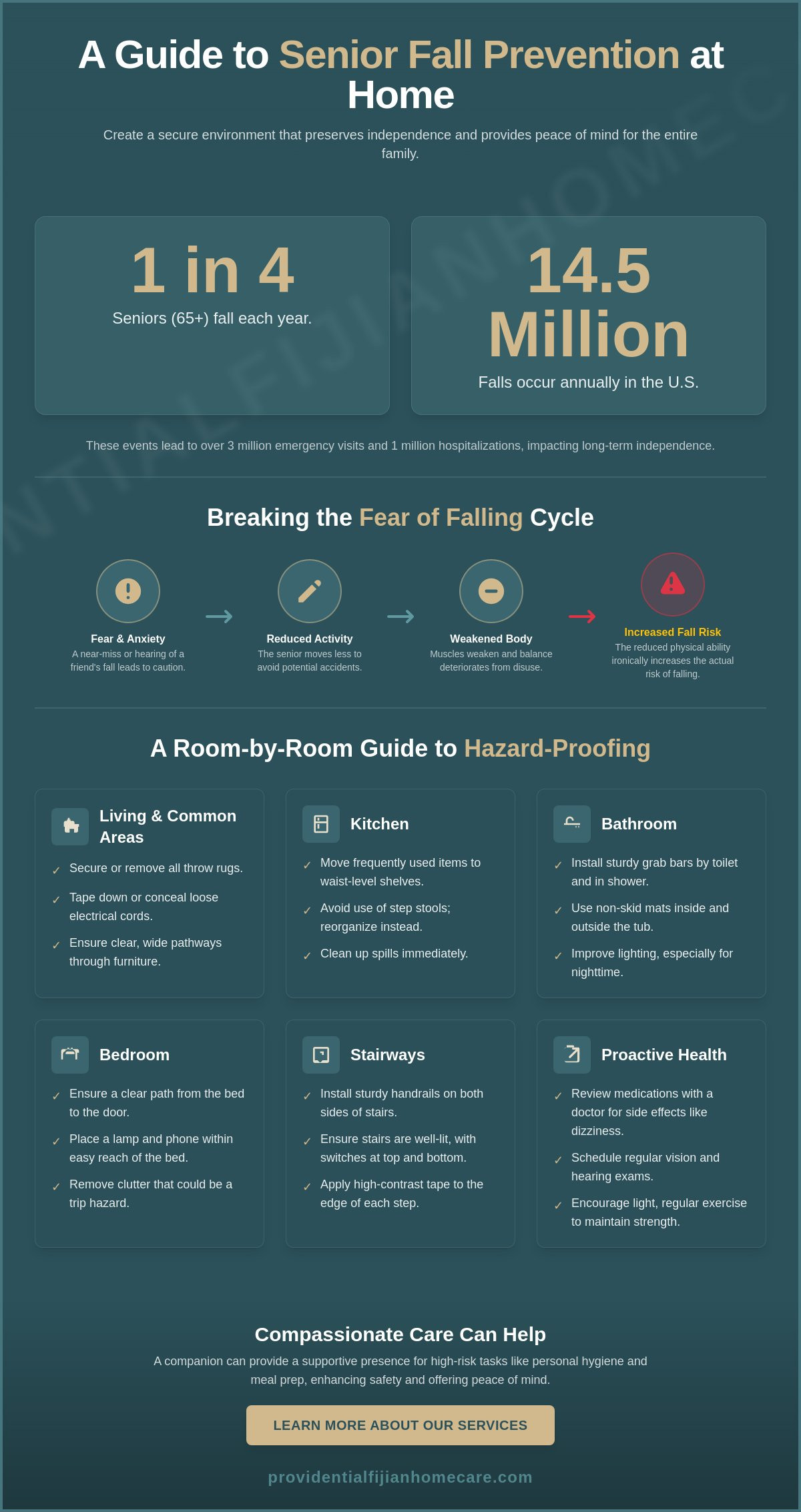
More than one in four people aged 65 and older fall each year, which translates to roughly 14.5 million falls annually in the United States. This single statistic often carries a heavy weight for families, fueling a deep fear of life-altering hip fractures and the quiet guilt of not being present every moment. You want to honor your loved one’s desire for independence, yet the constant stress over their safety can be overwhelming. Understanding how to prevent falls for seniors at home is a vital act of devotion that ensures their sanctuary remains a place of comfort rather than a source of danger.
We believe that every senior deserves to move through their day with confidence and grace. It’s natural for parents to resist home modifications that feel clinical or cold, but true safety can be woven into the domestic sphere with profound respect and care. This guide provides practical room-by-room modifications and lifestyle changes that protect your family’s legacy. You will discover how to create a secure environment that preserves independence, reduces anxiety for everyone involved, and offers the deep peace of mind that comes from knowing your cherished elders are secure in the home they love.
Key Takeaways
- Reframe safety modifications as a sacred gesture of love that honors your family’s legacy while ensuring a secure living environment.
- Discover practical strategies on how to prevent falls for seniors at home, from securing loose rugs to reorganizing kitchens for waist-level access.
- Learn why proactive health steps, such as medication reviews and sensory exams, are vital for preserving a senior’s balance and confidence.
- Gain tools for respectful communication that allow you to suggest safety updates while fully honoring your loved one’s sense of independence.
- Explore how a compassionate companion provides a supportive presence to assist with high-risk tasks like personal hygiene and meal preparation.
Why Fall Prevention is a Sacred Act of Kinship
Caring for an aging parent is a journey of deep affection and high esteem. It’s often marked by a quiet, persistent anxiety that follows you through the day. You worry about a slip in the kitchen or a trip on a loose rug. This concern isn’t just a list of chores; it’s a profound expression of your devotion. Learning how to prevent falls for seniors at home is a sacred act of kinship that protects the dignity and legacy of those who raised us.
There is a hidden danger often called the “Fear of Falling” cycle. When a senior experiences a near-miss or hears about a friend’s injury, they often become overly cautious. This anxiety leads to less movement, which causes muscles to weaken and balance to fade. Ironically, this retreat from activity actually increases the risk of the very thing they fear. Breaking this cycle requires a holistic approach that nurtures the body, the home, and the heart, ensuring that safety feels like a warm embrace rather than a restrictive set of rules.
Understanding the Real Impact of Falls
Every year, more than one in four people aged 65 and older experience a fall, leading to roughly 3 million emergency department visits and 1 million hospitalizations. These aren’t just numbers. They represent a sudden shift in a person’s ability to live freely. A single incident can compromise long-term independence and diminish the simple joys of daily life. In our local community, ensuring a secure environment is the essential foundation for successful aging in place in Santa Rosa. Using a comprehensive guide to fall prevention helps families identify risks before they become life-altering events.
The Fijian Perspective on Elderly Care
In many cultures, including our own heritage-based traditions, the elderly are viewed with immense reverence. In the Fijian worldview, caring for our elders is not a burden but a sacred privilege that strengthens the bonds of kinship. We believe that professional support should never feel clinical or distant. Instead, it should act as a supportive extension of your own family. By prioritizing safety and understanding how to prevent falls for seniors at home, we create a space where seniors can enjoy a joyful, unhurried lifestyle, surrounded by the high regard they have earned through a lifetime of service.
A Room-by-Room Guide to Hazard-Proofing the Home
A home should be a sanctuary of peace, reflecting a lifetime of memories and love. However, as our physical needs change, the environment must adapt to remain a place of safety. Transforming a residence into a secure space is a practical way to show high regard for your loved ones. By following a detailed room-by-room safety checklist, you can identify subtle hazards that often go unnoticed during the rhythm of daily life.
In the living room, the most common culprits are decorative throw rugs and loose electrical cords. While these rugs may hold sentimental value, they are frequent tripping hazards. It’s often best to remove them entirely or use double-sided tape to secure the edges firmly. In the kitchen, reorganization is key. Move frequently used items like tea kettles, favorite plates, and heavy pots to waist-level shelves. This simple adjustment prevents the need for overreaching or using step stools, which are major risks when considering how to prevent falls for seniors at home.
Bathrooms require special attention due to wet surfaces. Installing sturdy grab bars near the toilet and inside the shower provides a reliable anchor for balance. Pair these with non-skid mats to ensure every step is firm. In the bedroom, clear a wide path from the bed to the door. Nighttime trips to the bathroom are common, and having a clutter-free route is essential for security. If these physical modifications feel overwhelming, our team at Providential Fijian Home Care can assist with light housekeeping to keep these pathways clear and safe.
Stairways must be treated with the utmost caution. Ensure that handrails are installed on both sides of the stairs and that they extend past the top and bottom steps. Applying high-contrast tape to the edge of each step helps those with changing vision distinguish where one level ends and the next begins. This visual cue provides a sense of stability and confidence during transitions between floors.
Lighting the Way to Safety
Visibility is the first line of defense against accidents. As we age, our eyes require more light to see clearly and navigate safely. Replace dim, yellowed bulbs with bright, non-glare LEDs to accommodate these changes. Motion-activated nightlights are a wonderful addition to hallways and bathrooms. They provide immediate illumination without the senior needing to fumble for a switch in the dark. Always ensure that light switches are accessible at both the top and bottom of every stairway.
Outdoor Spaces and Sonoma Weather
In Santa Rosa, our beautiful foggy mornings and rainy winters can make outdoor surfaces treacherous. Moisture from the coastal fog often settles on porches and walkways, creating a slick film that is hard to see. Regularly check for uneven pavement or cracked walkways caused by the roots of our majestic local trees. Ensure that all outdoor areas, especially those used for errands or trash disposal, are bathed in sufficient light to guide every step. Understanding these local environmental factors is a vital part of knowing how to prevent falls for seniors at home effectively.
Health and Lifestyle Factors in Fall Prevention
While physical home modifications are a vital first step, maintaining the health of the body is equally essential. Learning how to prevent falls for seniors at home requires looking beyond the furniture and focusing on the person within the home. True safety is a holistic endeavor. It involves understanding how internal factors, like medication side effects or subtle changes in vision, influence daily mobility. When we address these lifestyle elements with high regard and patience, we empower our elders to remain active and secure.
Beyond medical checkups, gentle movement is a gift to the body. Activities like Tai Chi or daily walking through our beautiful Sonoma County neighborhoods build the core strength needed for balance. These exercises aren’t just about fitness; they’re about preserving the freedom to move with grace. Prioritize annual vision and hearing exams, as spatial awareness relies heavily on these senses. If a senior can’t see a threshold clearly or hear a family member’s warning, the chance of an accident rises. Finally, stay hydrated to prevent sudden dizziness, which is a common but avoidable precursor to a tumble.
The Hidden Risks in the Medicine Cabinet
Many common prescriptions, such as sedatives or blood pressure medications, can inadvertently increase the risk of stumbling. Sedatives prescribed for sleep can linger in the system, causing a “hangover” effect that impacts morning balance. Blood pressure meds may cause a sharp drop in pressure when standing up too quickly. Scheduling a comprehensive medication review with a local Santa Rosa physician is a proactive way to manage these risks while showing reverence for your loved one’s well-being. Keep a daily log of any moments where they feel lightheaded; this record is an invaluable tool for their doctor. Consistent routines, supported by medication reminders, ensure that health stays on track without the stress of missed doses.
Footwear: The Foundation of Balance
Choosing the right footwear is a critical component of how to prevent falls for seniors at home. Floppy slippers and walking in socks may feel comfortable, but they offer little traction on hardwood or tile. Selecting proper shoes is an act of nurturing that keeps our elders grounded. Shoes with firm heel support and non-skid soles provide the stability required for safe movement. For those living with arthritis, Velcro closures offer ease of use without sacrificing security. The right shoe acts as a sensory bridge between the foot and the floor, providing the immediate feedback the brain needs to maintain a steady gait. By combining these health habits with a Room-by-Room Fall Prevention Guide, you create a comprehensive safety net for your family.
Navigating the Conversation: How to Suggest Changes Respectfully
Opening the door to safety discussions can feel like stepping onto fragile ground. For many elders, their home is more than just a structure; it’s a museum of their life’s work and a fortress of their independence. When you suggest how to prevent falls for seniors at home by moving furniture or adding grab bars, they might hear something different. They might hear that they’re losing control or that their home is becoming a clinical space. Approaching these talks with profound empathy and high regard is the only way to ensure they feel supported rather than scrutinized.
To keep the dialogue gentle, use “I” statements to express your heart. Instead of saying, “You need to move this rug,” try saying, “I feel so much more at peace when I know your walkway is clear.” This shifts the focus from their perceived “failings” to your own feelings of devotion and concern. Always frame the goal as preserving their independence. Safety modifications aren’t meant to restrict them; they’re meant to empower them to stay in the home they love for as long as possible. Involve them in every choice, from the color of a new handrail to the placement of a nightlight, so they remain the master of their own sanctuary.
Overcoming Resistance to Mobility Aids
It’s common for seniors to view walkers or canes as symbols of weakness. We prefer to frame them as “tools for freedom” that allow for a more joyful, unhurried lifestyle. If resistance is high, start with small, non-obtrusive changes like the lighting upgrades we discussed earlier. You might also suggest a “trial period” for new equipment. Knowing a change isn’t necessarily permanent can lower their defenses and allow them to experience the added security firsthand without feeling pressured.
When to Bring in Professional Support
There comes a point where a family’s desire to help may exceed their physical or emotional capacity. This is a natural part of the caregiving journey and not a sign of failure. Sometimes, a senior is more likely to accept advice from a neutral third party than from their own children. A professional caregiver brings a steady, supportive presence that can bridge the gap between family worry and senior resistance. If you find yourself needing a moment to breathe and recharge, respite care provides a vital safety net that honors both the senior’s needs and the caregiver’s well-being.
Creating a safe home is a collaborative effort rooted in love and mutual respect. If you’re unsure how to start this delicate journey, we invite you to reach out for a compassionate dialogue about your family’s unique needs and how we can support your goals.
How Companion Care Enhances Home Safety in Santa Rosa
While the physical changes we’ve discussed are foundational, the human element is what truly brings safety to life. A home modified with the best equipment still requires a vigilant heart to ensure every day remains secure. Professional companion care serves as that essential bridge, offering a steadying hand and an extra set of eyes. Our caregivers are trained to spot hazards, such as a missed spill or a misplaced stool, before they ever lead to an accident. By managing the small details of daily life, we provide the ultimate answer to how to prevent falls for seniors at home.
High-risk activities often center on the most personal moments of the day. Bathing, dressing, and meal preparation require balance and strength that can fluctuate. Having a supportive presence during these times reduces the physical strain on the senior and provides immediate assistance if they feel a moment of dizziness. Whether it is navigating the steam of a bathroom or reaching for ingredients in the kitchen, we ensure these tasks are completed with dignity and high regard. Outside the home, we offer steadying support during errands or gentle walks through Santa Rosa, allowing your loved ones to enjoy the Sonoma County air without the fear of a stumble.
Beyond Physical Safety: The Power of Presence
The rush to answer a phone or a doorbell is a frequent cause of trips. When a companion is present, that sense of urgency disappears. Our caregivers handle the door or the phone, allowing the senior to move at an unhurried, natural pace. This is the heart of the Fijian approach to care with high esteem, where every interaction is rooted in benevolence and respect. For families navigating Alzheimer’s and dementia care, this presence is even more vital. We focus on environmental orientation, helping seniors stay grounded in their surroundings and reducing the confusion that often leads to wandering or falls.
Your Next Steps for a Safer Home
Taking the first step toward a more secure home doesn’t have to be a stressful transition. It begins with a simple, low-pressure dialogue about your family’s unique needs and heritage. We view caregiving as a privilege and a sacred extension of your own support network, dedicated to preserving the independence of your cherished elders. If you are ready to explore how to prevent falls for seniors at home through a blend of environmental safety and compassionate companionship, we are here to walk that path with you. We encourage you to reach out for a compassionate consultation today to learn more about our local home safety assessments and how we can bring lasting peace of mind to your family.
Embracing a Future of Safety and Serenity
Protecting a loved one’s sanctuary is one of the most profound ways to honor their legacy and life’s work. We have explored how a combination of thoughtful room modifications, proactive health habits, and gentle communication creates a lasting foundation of security. By removing physical hazards and introducing a supportive presence, you ensure that home remains a place of joy and unhurried comfort. Mastering how to prevent falls for seniors at home is not merely a clinical task. It is a continuous journey of love, patience, and devotion.
Since 2016, our family has served Sonoma, Marin, and San Francisco Counties with a deep commitment to Fijian values of kinship and high regard. Whether you require specialized Alzheimer’s and dementia safety support or a steady hand for daily errands, we act as a compassionate extension of your own family. We invite you to Request a Compassionate Home Safety Consultation to begin a low-pressure dialogue about your needs. Your peace of mind and your loved one’s dignity are our highest priorities, and we look forward to supporting your family with benevolence and care.
Frequently Asked Questions
What is the most common cause of falls for seniors at home?
Environmental hazards like loose rugs, poor lighting, and cluttered pathways are the most frequent causes of accidents. These risks are often compounded by physical factors such as muscle weakness or medication side effects. Understanding how to prevent falls for seniors at home begins with identifying these subtle dangers. By clearing walkways and ensuring high visibility, you create a sanctuary that respects their need for movement while providing the security they deserve.
How can I convince my parent to remove dangerous throw rugs?
Focus on “I” statements and their continued independence rather than their limitations. You might explain that removing a rug isn’t about their ability to walk, but about your own need for peace of mind and high regard for their safety. Suggesting a “trial period” for a clearer floor can help them feel in control of their domestic sphere while slowly embracing a safer, more secure environment rooted in mutual respect.
Are there specific exercises that help prevent falls in the elderly?
Gentle activities like Tai Chi, walking, and light strength training are highly effective for improving balance and spatial awareness. These movements don’t just build muscle; they restore the confidence needed to navigate the home with grace. We view these exercises as a way to honor the body’s resilience, helping seniors maintain a joyful, unhurried, and active lifestyle in the Santa Rosa community they love.
Does Medicare pay for home safety modifications like grab bars?
Generally, Medicare Part B does not cover the cost of home modifications like grab bars or ramps, as they are not typically classified as durable medical equipment. However, it’s wise to check for local Sonoma County programs or specific Medicare Advantage plans that may offer additional support. While the financial aspect can feel stressful, these updates are a vital investment in the long-term dignity and security of your cherished elders.
What should I do immediately after my elderly loved one has a fall?
Remain calm and encourage your loved one to stay still while you check for pain, bruising, or signs of injury. Do not try to lift them immediately, as a sudden move could worsen an undetected fracture. Once you have assessed the situation and sought medical help if needed, reflect on how to prevent falls for seniors at home by identifying the specific cause to ensure their future safety and your family’s peace of mind.
Can professional home care givers help with fall prevention if I work during the day?
Professional caregivers provide a steadying presence and a vigilant set of eyes when you cannot be there personally. We assist with high-risk tasks like bathing, dressing, and meal preparation, ensuring that your parent is never alone during the most vulnerable parts of their day. This support acts as a supportive, loyal, and compassionate extension of your own care, maintaining the bonds of kinship while you are at work.
How often should a senior’s home be reassessed for safety hazards?
A senior’s home should be reassessed every six months or whenever there is a significant change in their health, vision, or medication. As physical needs evolve, the domestic environment must adapt to remain a place of safety and high regard. Regular check-ins allow you to spot new hazards, like dimming bulbs or changing mobility levels, ensuring that their home remains a secure and peaceful sanctuary for years to come.