

Choosing hospice isn’t an admission of defeat; it’s a profound act of devotion that prioritizes the dignity of life’s final chapters over the clinical noise of a hospital room. Many Santa Rosa families feel a heavy weight when trying to decide between palliative care vs hospice care at home, often fearing that a specific label changes the way they honor their family member. You aren’t alone in feeling overwhelmed by complex medical decisions or the pressure to balance your daily responsibilities with the sacred duties of caregiving in Sonoma County.
We believe that caregiving is an act of kinship and a deep privilege. This guide will help you discover the vital differences between these two paths so you can ensure your loved one receives the most respectful, nurturing support in the comfort of their own home. We’ll explore how timing, treatment goals, and local resources like companion care and respite support can provide the clarity you need to find a path that feels like family. You deserve the peace of mind that comes from knowing your loved one is surrounded by benevolence and high regard during this vulnerable season.
Key Takeaways
- Gain clarity on the fundamental differences between palliative care vs hospice care at home to ensure your loved one receives the most appropriate level of nurturing support for their current stage.
- Recognize the gentle emotional and physical milestones that signal when it may be time to transition from curative-focused care to a path of pure comfort and peace.
- Reframe the hospice decision as a courageous act of love that prioritizes your family member’s dignity and emotional well-being over clinical intervention.
- Explore how non-medical in-home services like personal care and companion support provide the human touch necessary to maintain a respectful and serene domestic environment.
- Learn the practical steps for navigating the Santa Rosa healthcare system, including how to select a caregiver agency that treats your family with the high regard they deserve.
Understanding the Heart of Care: Palliative vs. Hospice at Home
At the center of every family’s journey through a serious illness is a simple, deep-seated desire for peace and respect. When we explore the nuances of palliative care vs hospice care at home, we’re looking at two distinct ways to wrap a loved one in a blanket of support. Both paths share a sacred mission: prioritizing the quality of life and the inherent dignity of the individual above all else. While the medical system often focuses on the progression of a disease, these models of care focus on the person and the kinship that binds a family together. Choosing to provide this care within the familiar walls of a Sonoma County residence transforms a house into a sanctuary of high regard, where the rhythms of domestic life continue to offer comfort.
The shared heart of these services is the belief that no one should face a difficult health journey in isolation or unnecessary pain. By bringing professional support into the home, we honor the central importance of our elders within the family circle. This approach moves away from a clinical, transactional model toward a presence that feels like a natural extension of your own care. Whether a family is managing a long-term illness or preparing for a final transition, the goal remains the same: to provide an atmosphere of safety, benevolence, and deep affection.
What is Palliative Care at Home?
Palliative care is a specialized form of support that focuses on relieving the symptoms and emotional stress of a serious illness. It’s often described as “comfort care,” but it’s unique because it can be provided alongside curative treatments. You can find a comprehensive overview of palliative care that explains how this philosophy addresses the physical, emotional, and spiritual needs of the patient. It doesn’t require a family to stop seeking a cure. Instead, it acts as an extra layer of protection that can begin at the moment of diagnosis. This care helps manage pain, stress, or nausea, ensuring the whole family feels supported while they continue their medical journey.
What is Hospice Care at Home?
Hospice care represents a gentle, reverent shift in focus. It’s designed for those who have reached a stage where curative treatments are no longer the primary goal, typically when life expectancy is limited. This transition isn’t about giving up hope; it’s about “honoring the journey” and ensuring that every remaining moment is filled with high esteem. Hospice is a philosophy of care, not a specific place. By choosing hospice support in the home, you ensure that your loved one is surrounded by the people and memories they cherish most. It turns the focus from fighting an illness to celebrating a life, providing a peaceful environment where every need is met with sincerity and warmth.
Key Differences: Timing, Treatment, and Team Support
Deciding between palliative care vs hospice care at home requires a gentle understanding of where your loved one stands on their health journey. While both paths prioritize a supportive presence, the timing and medical objectives differ significantly. Palliative care is often introduced early, sometimes at the moment of a serious diagnosis, to manage the stress and physical toll of the illness. In contrast, hospice care is a specialized transition reserved for the final season of life, typically when a physician estimates a life expectancy of six months or less. The National Institute on Aging provides a helpful guide on the key differences between palliative and hospice care that many Sonoma County families find useful during these initial conversations.
Accessing these benefits usually involves Medicare Part A, which fully covers hospice services, including medications and medical equipment related to the terminal illness. Palliative care is typically billed similarly to other specialist visits under Medicare Part B or private insurance. Regardless of the financial path, the emotional outcome remains centered on creating a safe, respectful environment where your loved one feels seen and cherished. This isn’t just about managing a condition; it’s about honoring a life with sincerity and warmth.
Can You Still Seek a Cure?
The most significant distinction lies in the concurrent care model. With palliative support, your loved one can continue curative treatments, such as chemotherapy or specialized medications, while receiving help for pain and stress. Hospice care requires a shift away from aggressive, curative interventions to focus entirely on comfort. This transition doesn’t mean giving up hope. Instead, hope changes its shape. It becomes a hope for peaceful days, meaningful conversations, and a gentle journey in the heart of the home, surrounded by family and high esteem.
Who Makes Up the Support Circle?
A robust care team includes a medical director and a hospice nurse who oversee clinical needs. However, the non-medical home care givers often become the most consistent presence, serving as the “eyes and ears” in the home. In our tradition, caregiving is a spiritual and emotional pillar rooted in deep respect for our elders. We provide a nurturing environment where every need is met with patience and benevolence. If you’re feeling the weight of these decisions, we’re here to offer a supportive presence for your family during this vulnerable time.
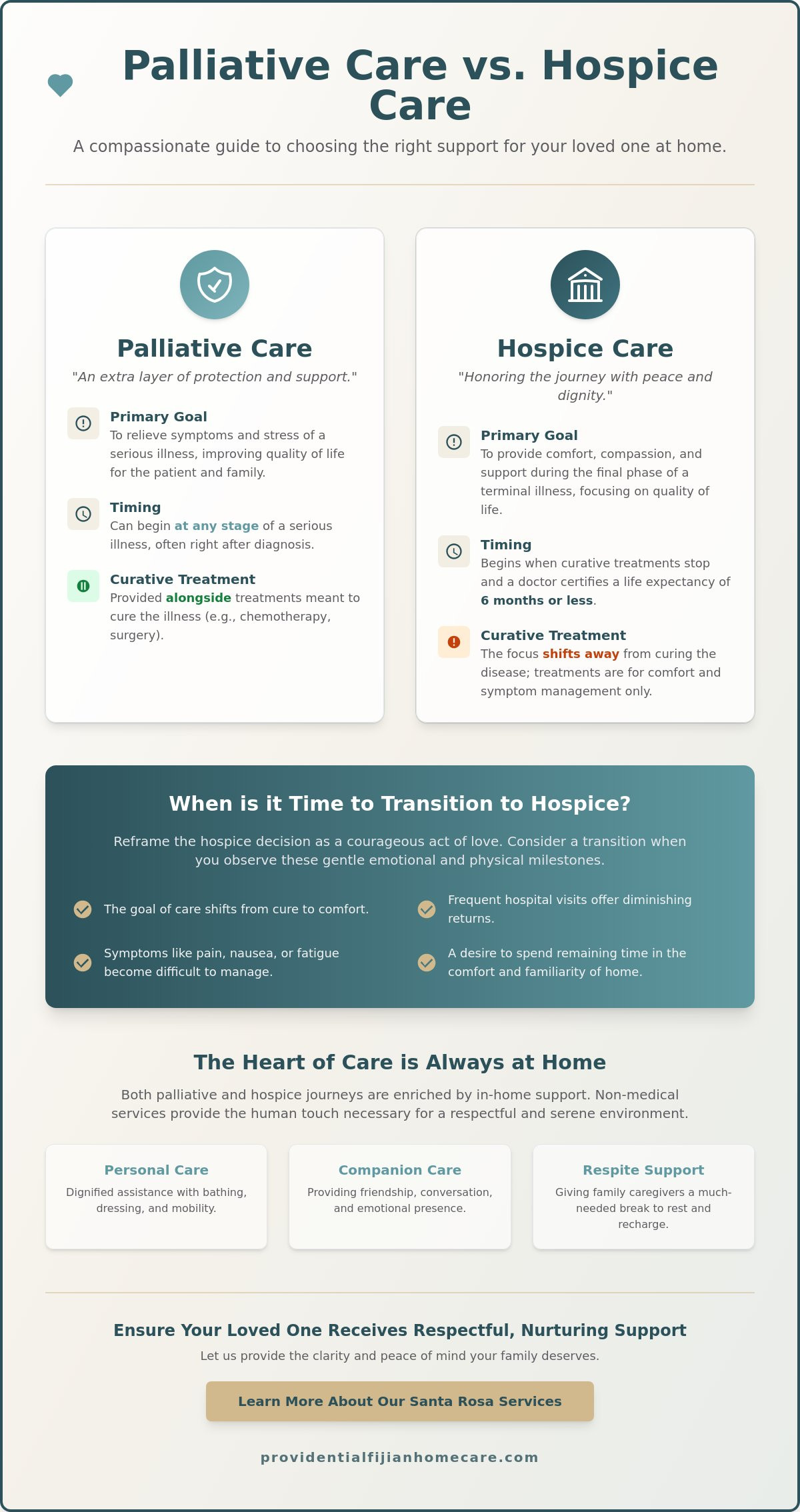
Navigating the Decision: When is it Time to Transition?
Choosing the right path between palliative care vs hospice care at home is rarely a single moment of clarity. It’s often a series of quiet realisations shared between family members in the soft light of a Sonoma County living room. Many families feel a natural hesitation when the word “hospice” enters the conversation, fearing it signifies an end to hope. In our tradition of care, we view this transition differently. It’s not about giving up; it’s about shifting the focus of our devotion. We move from the exhausting cycle of clinical battles to a space of profound peace, where the goal is to surround your loved one with the highest level of esteem and comfort.
Starting with palliative support early in a diagnosis often leads to better long-term outcomes because it establishes a foundation of trust and symptom management. The American Cancer Society highlights the role of the palliative care team in coordinating these complex needs, ensuring that medical goals align with the family’s values. When the time comes to have the “kinship conversation” with your physician, remember that this dialogue is an act of love. It’s an opportunity to ask whether the current treatments are truly serving your loved one’s spirit or if a gentler, home-based approach would offer more dignity.
Physical Signs and Quality of Life Markers
There are practical signals that the focus of care may need to evolve. If you find your family making frequent, stressful trips to Santa Rosa medical centres for emergency interventions, it may be a sign that the curative path is becoming more burdensome than beneficial. Doctors often use the “Surprise Question” to guide this choice: “Would I be surprised if this patient passed away in the next six to twelve months?” When the answer is no, and curative treatments result in increasing fatigue rather than recovery, hospice care provides a more reverent way to manage the journey ahead.
The Emotional Journey of the Family
This season requires a shift from “doing for” a loved one to simply “being with” them. This is particularly true for families managing dementia care in Sonoma County, where the slow progression of the condition can make the “right” time feel elusive. By prioritising a home-based presence, you create a sanctuary where the domestic rhythms of life provide a sense of safety. Finding peace in this decision allows you to return to your role as a daughter, son, or spouse, leaving the practicalities of support to a team that views caregiving as a sacred privilege.
The Essential Role of In-Home Support in Palliative and Hospice Care
While medical teams manage the clinical complexities of palliative care vs hospice care at home, it’s the daily, non-medical support that often defines the quality of a loved one’s experience. Doctors and nurses provide essential oversight, yet they cannot be present for every meal, every bath, or every restless hour of the night. Professional caregivers step into this space as a supportive presence, providing the “human touch” that keeps the domestic environment serene. This level of care transforms the home into a sanctuary, ensuring that your family member is never defined by their illness, but rather by their inherent worth and the high esteem in which they are held.
One of the most profound gifts of professional support is the gift of respite. When a family member is primary caregiver, the weight of medication reminders, meal preparation, and hygiene tasks can quickly lead to exhaustion. By inviting a skilled caregiver into your home, you gain the space to be a daughter or a son again. You can focus on sharing stories and holding hands while we handle the practicalities of domestic life with sincerity and warmth. This allows the bonds of kinship to remain the priority during a season that should be defined by connection rather than stress.
Daily Living Assistance with Reverence
Maintaining dignity starts with the most personal tasks. Our approach to in-home help for seniors is rooted in the Fijian value of “reverent care,” where personal hygiene and bathing are viewed as sacred duties of respect. We manage the “heavy lifting” of daily life, from light housekeeping and laundry to preparing nutritious meals tailored to changing appetites. A clean, peaceful home environment is a pillar of comfort for anyone on a hospice journey, providing a sense of order and safety when the outside world feels uncertain.
Companion Care and Emotional Presence
Isolation is a common challenge for seniors who can no longer engage with the Santa Rosa community as they once did. Companion care bridges this gap, offering a nurturing presence that reduces loneliness and provides emotional security. Whether it’s ensuring safety during the overnight hours or providing a watchful eye during family absences, a caregiver acts as a loyal extension of your own support network. We believe that caregiving is a privilege, and this humble, community-oriented mindset ensures your loved one feels cherished every day. If you are seeking a partner to walk this path with you, we invite you to explore our compassionate hospice support and personal care services.
Starting Care in Santa Rosa: Your Local Roadmap
Finding the right path between palliative care vs hospice care at home is a journey that begins with a single, courageous step toward support. In Santa Rosa, we’re blessed with a medical community that understands the value of domestic peace. To ensure your loved one transitions smoothly into a cocoon of care, follow this local roadmap designed for Sonoma County families:
- Step 1: Consult with your primary physician or hospital discharge planner to clarify the medical goals and necessary clinical oversight.
- Step 2: Interview a caregiver agency to handle the non-medical needs that medical teams don’t cover.
- Step 3: Coordinate with local hospice providers serving Sonoma and Marin counties to ensure all medical supplies and medications are managed.
- Step 4: Prepare the home environment for safety and serenity, focusing on comfort and ease of movement.
- Step 5: Establish a care schedule that honors your family’s unique rhythm, allowing for both professional support and private family time.
This structured approach reduces the overwhelming weight of decision making. It allows you to move from a place of uncertainty to a state of calm preparation. By focusing on these practical steps, you ensure that the transition is handled with the high regard and sincerity your family member deserves.
Transitioning from Local Hospitals to Home
The journey from a hospital bed to a home sanctuary is a delicate time. When working with discharge teams at Sutter Santa Rosa or Kaiser Permanente, the first 48 hours are critical. It’s vital to ensure that non-medical support is ready and waiting before your loved one arrives home. Providential Fijian Home Care specializes in supporting these post-surgical or transition periods, providing a bridge between clinical care and domestic comfort. We focus on creating an atmosphere of safety where the only thing your family needs to worry about is being present for one another during those first few days back in familiar surroundings.
Building Your Community Support Network
You don’t have to walk this path in isolation. Connecting with local Sonoma County senior resources and support groups provides an extra layer of strength for the entire kinship circle. We believe a “family-first” approach is essential for long-term care sustainability. It ensures that no single person carries the full weight of responsibility, preventing the exhaustion that often accompanies intensive caregiving. This humble, community-oriented mindset is at the heart of everything we do. We invite you to begin a low-pressure dialogue with us about your family’s unique needs. Let us help you find the peace, dignity, and nurturing support your loved one needs to feel truly at home.
Embracing a Sanctuary of Peace and Dignity at Home
Understanding the nuances of palliative care vs hospice care at home allows you to make decisions rooted in love rather than fear. You now recognize that whether your family member is pursuing curative treatments or transitioning to a season of pure comfort, their dignity remains the highest priority. By integrating professional in-home support, you reclaim your role as a cherished family member while ensuring your loved one is surrounded by high esteem and constant warmth.
Since 2016, our family has served Sonoma, Marin, and San Francisco communities with a deep commitment to benevolence. We specialize in Alzheimer’s, dementia, and hospice support, bringing a cultural heritage of patience and profound respect into every home we enter. You don’t have to navigate these complex waters alone. We invite you to start a compassionate dialogue with our Santa Rosa care team today to explore how we can support your unique journey.
Your family deserves the security of a supportive presence that feels like kinship. We are here to walk beside you with sincerity and heart.
Frequently Asked Questions
What is the main difference between palliative care and hospice care?
The primary distinction lies in the medical goal; palliative care accompanies curative treatment, while hospice care is a specialized transition for the final season of life. When comparing palliative care vs hospice care at home, it’s helpful to remember that palliative support can begin at the moment of diagnosis. Hospice is reserved for when a physician determines a life expectancy of six months or less. Both paths prioritize dignity and a serene domestic environment for your loved one.
Can my loved one receive palliative care while still living at home in Santa Rosa?
Yes, palliative care is frequently provided in the comfort of a private Santa Rosa residence. This allows your family member to remain in their familiar sanctuary while receiving symptom management and emotional support. It creates an atmosphere of safety where medical needs are met without the stress of frequent hospital visits. Our team provides the daily companionship and personal care that makes staying at home a reality for Sonoma County families.
Does insurance or Medicare cover hospice care at home?
Medicare Part A fully covers hospice services at home, including medications and medical equipment related to the terminal illness. Most private insurance plans and Medi-Cal also offer comprehensive benefits for these services. Palliative care is typically covered under Medicare Part B or private insurance as a specialist service. We recommend reviewing your specific policy to ensure your family feels secure and supported in your financial decisions.
How do I know if it is time to move from palliative care to hospice?
The transition typically happens when curative treatments become more burdensome than beneficial or when a doctor certifies a limited life expectancy. You might notice your family member experiencing increased fatigue or frequent hospitalizations at Santa Rosa medical centers. This is a moment for a “kinship conversation” with your physician to determine if shifting to a path of pure comfort and high regard is the most respectful choice for your loved one’s spirit.
Will a hospice nurse be in our home 24/7?
Hospice nurses do not typically provide 24/7 presence; they visit intermittently to manage clinical needs and pain levels. To ensure your loved one is never alone or uncomfortable, families often partner with a home care agency for continuous support. We provide the nurturing presence needed for hygiene, meals, and safety during the hours between nursing visits. This collaborative approach ensures a steady, unhurried rhythm of care throughout the day and night.
How does a non-medical home care agency work with a hospice team?
A non-medical agency acts as the “eyes and ears” in the home, working alongside the hospice team to provide holistic support. While the hospice nurse manages clinical tasks, our caregivers handle personal hygiene, meal preparation, and light housekeeping. We view this partnership as a sacred privilege, ensuring the medical goals of the hospice team are supported by a clean, peaceful, and respectful domestic environment where the family can focus on connection.
Can we change our minds and stop hospice care if my loved one’s health improves?
Yes, you have the right to stop hospice care at any time if your loved one’s health stabilizes or if you choose to pursue curative treatments again. This process is called “revoking” the hospice benefit, and it’s a simple administrative step. It offers families peace of mind knowing that they aren’t locked into a single path. Decisions are always made with the highest esteem for the individual’s current needs and the family’s wishes during this season.
What should I look for when choosing a home care provider in Sonoma County?
Look for an agency that treats caregiving as a privilege and values deep, cultural roots within the Sonoma County community. It’s essential to find a provider that offers specialized hospice support and Alzheimer’s care while prioritizing a “family-first” philosophy. Choose a team that projects a persona of humble loyalty and sincerity. You deserve a partner that feels like a compassionate extension of your own family network rather than a distant, clinical agency.