

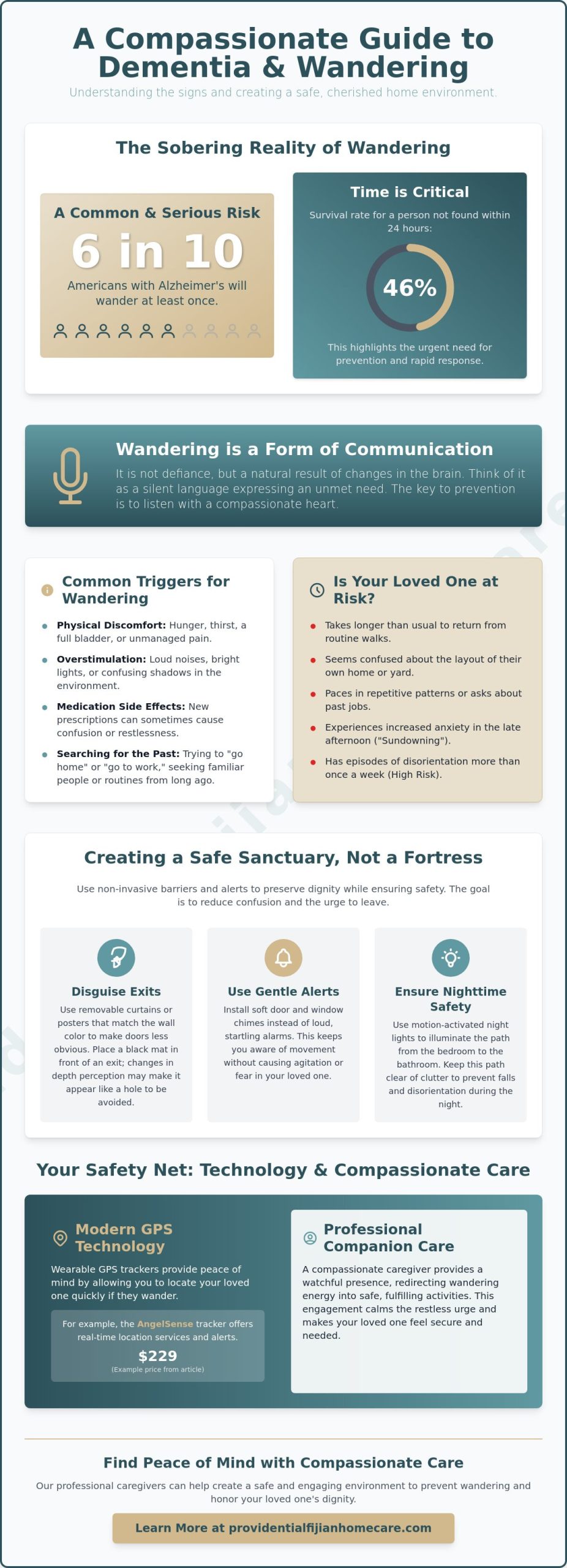
Did you know that 6 in 10 of the 7.4 million Americans living with Alzheimer’s in 2026 will wander at least once? It is a sobering reality, particularly when you consider that the survival rate for those not found within 24 hours is only 46 percent. You likely know the heavy weight of hyper-vigilance, the sleepless nights spent listening for a clicking latch, and the heart-wrenching guilt that comes with wanting to restrict a parent’s freedom just to keep them safe. You want your cherished elder to feel like the heart of the home, not a prisoner within its walls.
We understand that wandering is often a search for connection rather than a problem to be managed with locks. This guide provides a path toward peace of mind through compassionate wandering prevention for dementia patients. You’ll learn how to secure your home using modern tools like the 229 dollar AngelSense tracker, while honoring your loved one’s dignity through cultural engagement and professional care. We will explore practical safety steps, techniques to calm the restless urge to wander, and ways to ensure your family stays safe, seen, and truly cherished.
Key Takeaways
- Learn to view wandering as a form of communication rather than a behavior to be corrected, helping you respond to your loved one’s unspoken needs with patience and grace.
- Discover how to implement effective wandering prevention for dementia patients by creating a secure yet warm home environment that uses non-invasive barriers to preserve their dignity.
- Explore the balance between safety and autonomy by comparing wearable identification and modern GPS technology to find the right safety net for your family’s unique journey.
- Find out how simple daily rhythms and meaningful tasks can calm the restless urge to wander by making your cherished elder feel needed and secure at the heart of the home.
- Understand the role of compassionate companion care in providing the constant, watchful presence required to redirect energy into safe, fulfilling activities.
Understanding Wandering: Why It Happens and Who is at Risk
Seeing a parent or spouse pace the hallway or reach for the door handle can feel like a crisis for any family. It’s helpful to remember that Wandering in dementia isn’t a rebellious choice or a sign of being difficult. It’s a natural progression of the brain’s changing landscape. From our Fijian perspective, we view these moments as a sacred call for more cherished attention. When the heart of the home feels unsettled, they aren’t just walking; they’re speaking. They might be communicating hunger, thirst, or a deep-seated fear they can’t quite name. Effective wandering prevention for dementia patients begins with listening to this silent language with unconditional love and recognizing that their dignity remains intact even when their sense of direction is lost.
Common Triggers for Wandering Behavior
Many families find that wandering doesn’t happen without a reason. Often, a physical discomfort like a full bladder, unmanaged pain, or the side effects of a new medication can trigger a restless urge to move. The environment plays a role too. Loud television sets, bright fluorescent lights, or confusing shadows on the floor can cause overstimulation, leading a loved one to seek a “quieter” place. Sometimes, they’re simply searching for the comfort of the past. When they say they want to “go home” while sitting in their own living room, they’re usually looking for the feeling of safety and familiarity they remember from decades ago. Honoring this search by offering a warm embrace or a familiar story can often calm the urge to leave.
Is Your Loved One at Risk?
You can often spot the signs that wandering might start before it becomes a safety concern. Pay close attention if your loved one takes longer than usual to return from a routine walk or if they seem confused about the layout of their own backyard. You might notice them pacing in repetitive patterns or asking about a job they retired from years ago. In Sonoma County, many families notice these behaviors peak in the late afternoon. This “Sundowning” period happens as the sun sets, often causing increased anxiety and a desire to “go to work” or fulfill old roles. It’s a time when the need for a warm, steady presence becomes most vital to prevent them from slipping out the door. If a person experiences episodes of disorientation more than once a week, they’re considered at high risk for wandering.
Securing the Home: Practical Environmental Modifications
Transforming your house into a sanctuary shouldn’t feel like building a fortress. When we think about wandering prevention for dementia patients, we focus on maintaining the “cultural warmth” of a home while adding layers of quiet protection. It’s about honoring the dignity of your loved one so they never feel like a prisoner in their own living room. Many families struggle with the guilt of restricting a parent’s movement, but thoughtful modifications can provide safety without sacrificing comfort. Our team often provides in-home help for seniors that begins with a gentle walkthrough of the living space to identify these subtle hazards. By making the environment intuitive and calm, we reduce the confusion that leads to the urge to leave.
Step-by-Step Home Safety Upgrades
Start with non-invasive alerts that keep you informed without causing alarm. Instead of loud sirens that might provoke agitation, install gentle door chimes that notify you when a door opens. You can also use visual “tricks” to guide your loved one away from exits. Placing a black mat in front of the front door is a remarkably effective technique. Because of changes in depth perception, many people living with wandering and dementia perceive dark colors as a physical hole or a drop-off, which naturally discourages them from stepping toward the door. Another nurturing strategy is to disguise exit doors with removable curtains or posters that match the wall color, making the door “disappear” into the background of the room.
Nighttime safety is equally vital for your peace of mind. Ensure the path from the bedroom to the bathroom is clear of clutter and bathed in soft, motion-activated light. This simple adjustment helps prevent the disorientation that often strikes in the middle of the night, allowing your cherished elder to feel safe and seen even in the dark.
Outdoor and Perimeter Safety
In Santa Rosa, our beautiful gardens and fresh air are part of the “heart of the home.” You don’t have to keep your loved one strictly indoors. Enclosing a backyard space with a secure fence allows for supervised “wandering” in nature, which can be deeply therapeutic. To keep these areas safe during the evening hours, install adequate lighting along garden paths to prevent falls during periods of restlessness. It’s also helpful to break the “leaving” ritual by keeping car keys, coats, and outdoor shoes in a hidden cabinet. If they don’t see the items they associate with going out, the impulse to wander often fades before it begins. If you find these environmental changes difficult to manage alone, a simple conversation with a compassionate caregiver can help you find the right balance of safety and freedom for your family.
Technology and Identification: Your Safety Net
While a secure home environment provides a foundation of safety, modern technology serves as an invisible safety net that extends our care beyond the front door. We understand the heart-stopping fear that comes when a loved one isn’t where they’re supposed to be. In these moments, having a reliable system in place is not just about security; it’s about honoring the life and dignity of your cherished elder. By combining the latest tools with our local wandering prevention for dementia patients strategies, we create a circle of protection that allows families to breathe a little easier. Technology should never replace human touch, but it can certainly provide the peace of mind you need to rest at night.
Wearable ID and Medical Alerts
Identification is the most basic yet vital tool in your safety kit. We’ve found that medical bracelets are significantly more reliable than IDs kept in wallets or purses, as these items are often left behind or misplaced during a period of confusion. It’s also a wise practice to discreetly label the inside of all clothing with the senior’s name and a primary contact number. This acts as a quiet backup if a bracelet is ever removed. MedicAlert remains the industry standard for memory care because it offers a dedicated 24/7 emergency response service that is specifically trained to communicate with individuals experiencing cognitive changes.
GPS Tracking and Smart Sensors
Choosing the right tracking device depends heavily on your loved one’s unique habits. GPS watches are excellent for those who are comfortable wearing jewelry, but some seniors experience sensory changes and may “strip” their clothes or accessories. In these cases, GPS shoe inserts provide a discreet, non-invasive alternative that stays with the person wherever they go. You might also consider smart home sensors that send an immediate alert to your smartphone the moment an exterior door is opened. These tools allow you to respond quickly without making your loved one feel like they are being constantly watched.
In our Sonoma County community, we believe safety is a shared responsibility. We encourage you to build a “Community Safety Net” by introducing your loved one to trusted neighbors and explaining their tendency to wander. A truly effective plan for dementia care in Sonoma County includes notifying the Santa Rosa police or the Sonoma County Sheriff’s Office about at-risk residents. Providing them with a recent photograph and a list of your loved one’s favorite local spots ensures that if they ever wander, they are found by people who see them as a person to be honored, not just a statistic.
Engagement and Routine: Proactive Prevention Strategies
Preventing the urge to wander often begins long before a loved one reaches for the door handle. In our Fijian tradition, we believe that when an elder feels like the “heart of the home,” their spirit remains anchored and at peace. Wandering is frequently a physical manifestation of a searching heart looking for purpose, comfort, or a sense of belonging. By integrating meaningful engagement into every day, we provide a different kind of wandering prevention for dementia patients, one rooted in unconditional love rather than restriction. When a cherished elder feels safe, seen, and truly useful, the anxiety that fuels the need to “go somewhere” often begins to melt away.
Consistency is the greatest gift you can offer a mind that feels unsettled. A steady daily rhythm acts as a roadmap, reducing the disorientation that leads to wandering. We suggest starting the day with gentle physical activity to burn off restless energy. A 20 minute morning walk through one of our beautiful Santa Rosa parks, such as Howarth Park or Spring Lake, can significantly reduce afternoon agitation. This movement doesn’t just strengthen the body; it grounds the person in the physical world and provides the sensory input their brain is craving.
Meaningful Daily Activities
Honoring your loved one with small, manageable tasks is a powerful way to reduce the anxiety that triggers wandering. These aren’t chores; they are opportunities for connection. You might invite them to fold warm towels, sort a basket of colorful buttons, or help with light gardening in a secure backyard. These tactile activities provide a sense of accomplishment and remind the senior that they’re a vital part of the family. Music therapy also plays a beautiful role in grounding someone in the present. Playing familiar songs from their youth can act as a bridge to happy memories, creating an atmosphere of “cultural warmth” that makes them want to stay exactly where they are.
Reducing Nighttime Restlessness
Managing the “wandering urge” also requires a focus on the body’s internal clock. Ensure your loved one receives plenty of natural light exposure during the day to help regulate their circadian rhythm. As evening approaches, it’s helpful to limit caffeine and sugar to promote a more restful state. Instead of a clinical bedtime, create a “wind-down” ritual that feels like a warm embrace. This might include a cup of herbal tea, soft lighting, and a few minutes of quiet conversation. If you need help establishing these supportive routines, our team is here to provide compassionate Alzheimer’s and dementia care that honors your family’s unique needs.
How Professional Home Care Stops the Wandering Urge
While technology and home modifications provide a sturdy framework for safety, nothing replaces the watchful eye and steady hand of a dedicated caregiver. Many families in Santa Rosa reach a point where the fear of a loved one slipping out at night becomes overwhelming. It’s a heavy burden to carry alone. Choosing to partner with a caregiver agency isn’t about giving up; it’s about expanding your family circle to ensure your loved one is never truly alone. Professional 24/7 supervision offers a level of security that locks and alarms simply cannot match, because a human heart can anticipate a need before it turns into a crisis.
The true magic of professional support lies in companion care. When a senior feels the restless urge to leave, a trained caregiver doesn’t just block the door. They engage. They might notice the subtle signs of agitation and redirect that wandering energy into a safe, soothing activity like looking through a cherished photo album or preparing a light snack. This proactive approach to wandering prevention for dementia patients transforms a potential emergency into a moment of meaningful connection. It closes the painful gap between “locking them in” and “letting them live,” allowing your loved one to move freely within a safe, supervised space.
The Providential Fijian Approach
At Providential Fijian Home Care, we don’t see patients; we see the “heart of the home.” Our approach is rooted in the Fijian values of unconditional love and reverence for our elders. Our caregivers are trained in gentle redirection techniques that preserve a person’s dignity while keeping them safe. We use “cultural warmth” to soothe the underlying anxiety that often fuels the desire to wander. By treating your parent or spouse as a cherished member of our own family, we create an atmosphere where they feel safe, seen, and truly at peace. This emotional security is often the most effective tool we have to calm the searching heart.
Respite Care for Sonoma County Families
We believe that caring for the caregiver is just as important as caring for the senior. Providing 19.6 billion hours of unpaid care, as American families did in 2025, takes a significant toll on your own health and spirit. We view it as an honor to step in and provide you with the rest you deserve. Our respite care services in Sonoma County offer flexible scheduling that fits your life. Whether you need a few hours of companionship during the day or vigilant overnight support so you can finally sleep through the night, we are here to help. Contact us today for a warm conversation about your family’s needs and let us help you bring peace back to your home.
Restoring Peace and Safety to Your Home
You don’t have to carry the heavy weight of hyper-vigilance alone. By transforming your living space into a secure sanctuary and embracing a steady daily rhythm, you’ve already taken the first vital steps toward safety. True wandering prevention for dementia patients is built on a foundation of unconditional love and specialized support that honors the dignity of your cherished elder. Every small change, from subtle environmental adjustments to meaningful daily engagement, brings you closer to the peace of mind your family deserves.
Since 2016, Providential Fijian Home Care has provided memory support rooted in cultural warmth and heartfelt dedication. We specialize in Alzheimer’s and dementia care, treating every senior as the heart of the home across Sonoma, Marin, and San Francisco Counties. Our team is here to offer the honorable service required to keep your loved one safe, seen, and truly cherished. It’s time to replace fear with the comfort of professional companionship. Talk to a Compassionate Memory Care Expert in Santa Rosa today and discover care that feels like family.
Frequently Asked Questions
What time of day is wandering most common for dementia patients?
Wandering most frequently occurs during the late afternoon and early evening hours. This period is often called sundowning. As natural light fades, confusion and anxiety can peak, leading a loved one to feel they need to “go home” even if they’re already there. Establishing a calm, warm routine during these hours can help anchor their spirit and reduce the urge to leave.
Can wandering be a sign that my loved one needs more intensive care?
Frequent wandering often indicates that a loved one requires more consistent, specialized support. If disorientation episodes happen more than once a week, it’s a clear signal to reevaluate your safety plan. Implementing professional wandering prevention for dementia patients ensures that your cherished elder remains safe and seen while allowing you to rest and recover from the strain of hyper-vigilance.
What should I do immediately if I can’t find my loved one with dementia?
Search the home and immediate surroundings for no more than 15 minutes before calling 911. Tell the dispatcher your loved one is a “vulnerable adult” with memory loss. Having a recent photo and a list of their favorite local Santa Rosa spots ready can save vital time. Remember that the survival rate drops to 46 percent if a person isn’t found within the first 24 hours.
Is it ethical to use GPS trackers on a person with Alzheimer’s?
Using GPS technology is widely considered ethical when the primary goal is protecting a person’s life and dignity. While autonomy is important, the physical risks of getting lost make safety a loving priority. It’s best to involve your family member in these choices early in their journey to honor their wishes. This approach ensures they stay safe while remaining a cherished part of the community.
How does sundowning contribute to wandering behavior?
Sundowning triggers a restless “searching” heart as the sun begins to set. The transition from light to shadow can cause visual confusion, making familiar hallways look strange or even frightening. This disorientation often leads to a deep-seated urge to leave the house in search of a place that feels more secure. Providing cultural warmth and steady companionship during this time can soothe their fears.
Will insurance or Medicare cover the cost of a wandering prevention system?
Traditional Medicare and most private insurance plans don’t cover the cost of GPS trackers or door alarms. These are typically classified as “safety items” rather than durable medical equipment. You might find support through specific long-term care insurance policies or local Sonoma County community grants. Many families view these tools as an essential investment in their own peace of mind and their loved one’s safety.
How can I explain wandering risks to my neighbors in Santa Rosa?
Introduce your loved one as the heart of your home and gently explain that they sometimes lose their way. Give your neighbors a business card with your contact information and a recent photo of your cherished elder. Most Santa Rosa residents are happy to help when they understand the situation. This builds a beautiful community safety net for wandering prevention for dementia patients.
Can certain medications help reduce the urge to wander?
There isn’t a specific medication designed to stop wandering, though some treatments can manage the underlying anxiety or agitation. Doctors might prescribe medications to help with sleep or mood, but these can sometimes have side effects like increased confusion. Many families find that meaningful engagement and a warm, steady routine are the most effective ways to calm the urge to move without using sedatives.