
What if the secret to a peaceful afternoon isn’t found in a medical chart, but in the gentle, rhythmic flow of a day designed with love? For many families in Santa Rosa, the reality of memory loss often feels like a series of storms, marked by repetitive questions and the heavy weight of caregiver burnout. You likely feel the deep exhaustion that comes when transitions like bathing or bedtime trigger agitation instead of ease. We understand that you want more than just a checklist; you want to restore the spirit of your home.
In this guide, we’ll explore how creating a daily routine for a dementia patient can act as a nurturing anchor, transforming your role from a taskmaster into a wise nurturer. With an estimated 11% of seniors in Sonoma County living with Alzheimer’s, finding a path that honors their dignity is essential. We’ll show you how to build a predictable schedule that reduces anxiety and makes your loved one feel truly cherished. You’ll discover practical steps to foster cooperation and create a calmer environment that reflects the cultural warmth and unconditional respect your family deserves.
Key Takeaways
- Learn why tapping into procedural memory through consistent rhythms provides a sense of safety and anchors the heart of your home.
- Discover the “Big Three” anchors necessary for creating a daily routine for a dementia patient that minimizes confusion and reduces agitation.
- Find out how to incorporate sensory-rich activities and intergenerational connections to keep your loved one feeling seen and truly cherished.
- Master the “Three R’s” of caregiver resilience to handle resistance with grace, remembering that the person is never the disease.
- Explore how integrating Fijian cultural warmth transforms daily care into an honorable service that treats your elder as the core of the family.
The Power of Predictability: Why Routines Anchor the Heart of the Home
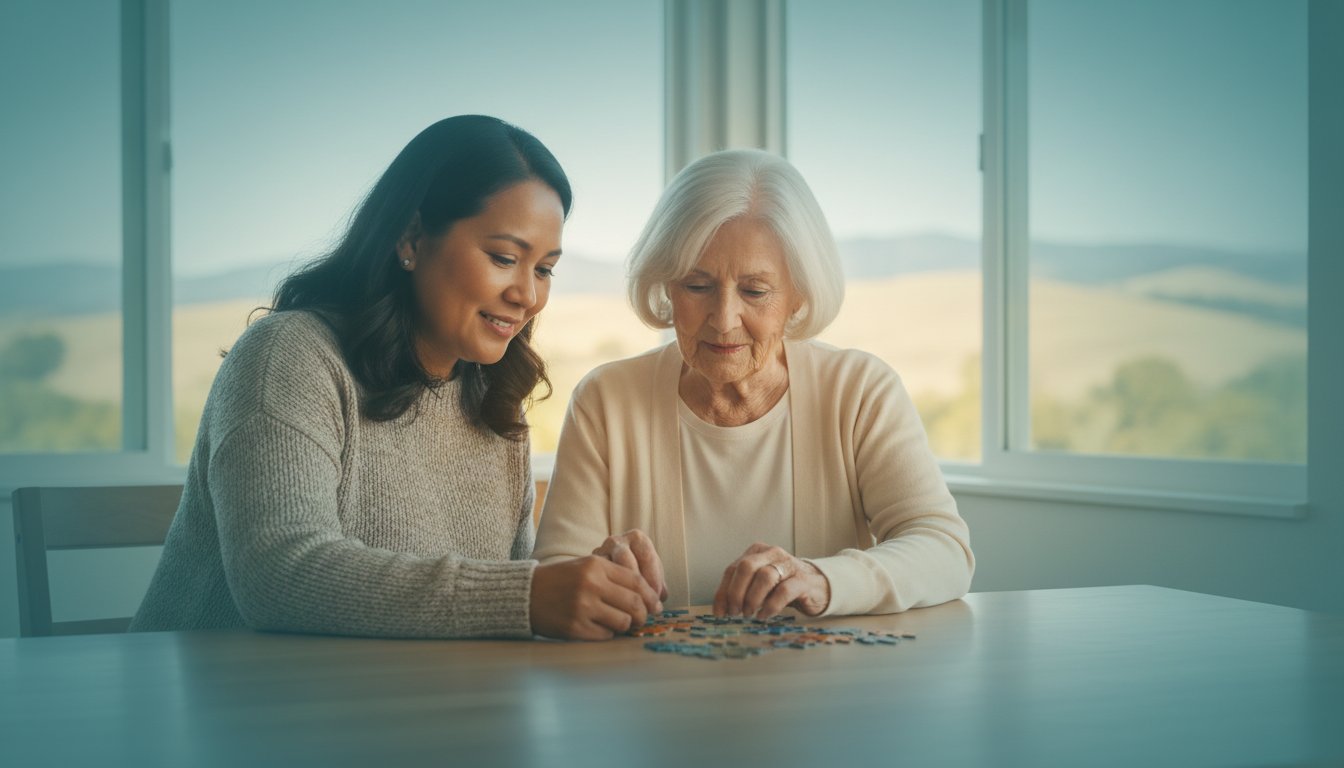
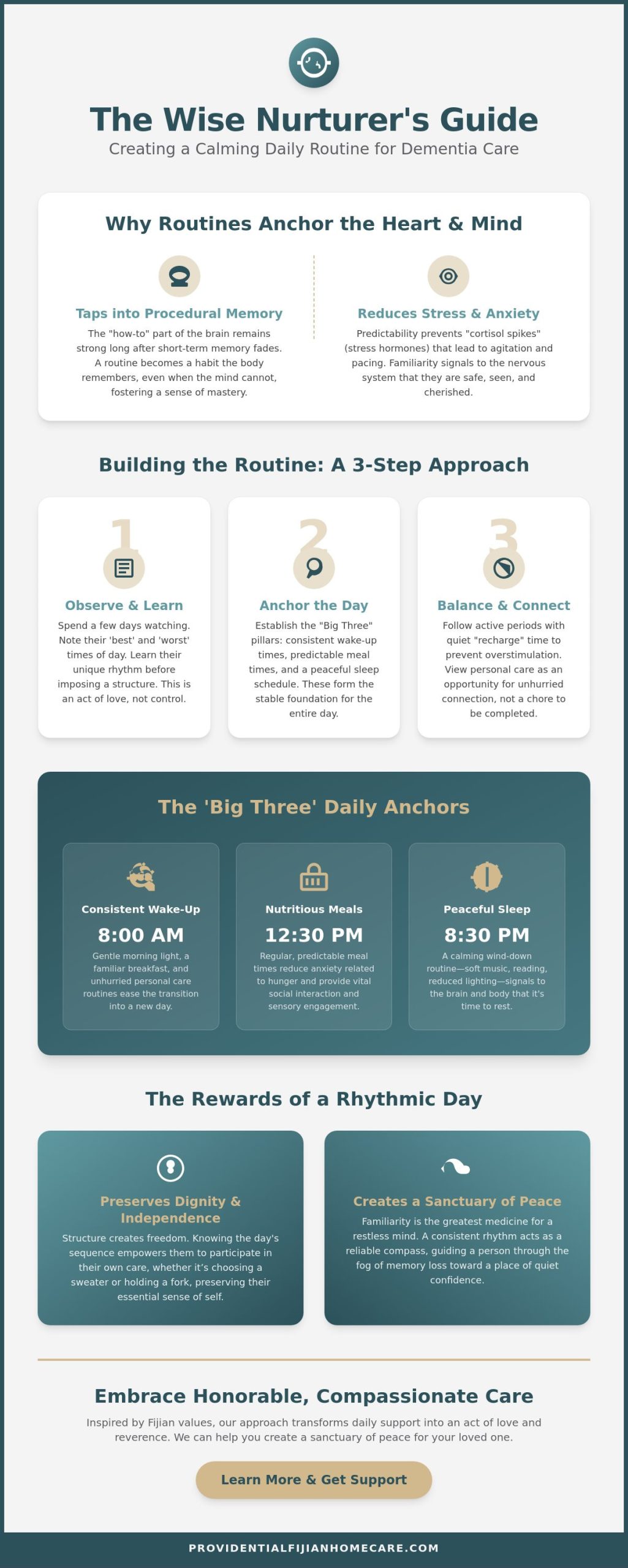
When we speak of a daily plan for someone living with memory loss, we aren’t talking about a rigid, clinical schedule. Instead, think of it as a rhythmic guide that balances engagement with safety. For those we love, the world can often feel like a fragmenting puzzle where the pieces no longer fit. By creating a daily routine for a dementia patient, you provide a gentle structure that anchors their spirit to the present moment. This predictability acts as a warm embrace, signaling to their nervous system that they are safe, seen, and truly cherished.
There is a beautiful biological reason why these rhythms work so well. While short term memory is often the first to fade, procedural memory, the “how-to” part of the brain, stays intact much longer. This is the same memory that helps us ride a bike or tie our shoes. When a routine becomes a habit, the body remembers the flow of the day even when the mind cannot recall the time. Effective Dementia caregiving relies on this internal clock to create a sense of mastery for the senior. Without this structure, the brain often experiences “cortisol spikes,” which are surges of stress hormones that lead to the pacing, shadowing, and agitation many families find so difficult to manage.
Adopting the “Wise Nurturer” approach means viewing this structure as an act of profound love rather than a method of control. You aren’t just checking off tasks; you’re cultivating an environment where your loved one can rest in the knowledge of what comes next. This dedication transforms the home from a place of confusion into a sanctuary of peace.
Reducing Anxiety Through Familiarity
Fear of the unknown is a heavy burden for someone with memory loss. When every transition, from breakfast to a bath, is a surprise, it triggers a defensive “fight or flight” response. A consistent rhythm serves as a compass for those who have lost their way in time. In the heart of the home, familiarity is the greatest medicine for a restless mind. A steady routine acts as a reliable compass that guides a person through the fog of memory loss toward a place of quiet confidence.
Preserving Dignity and Independence
Structure actually creates freedom. When a senior knows the sequence of the morning, they are more likely to participate in their own care, whether it’s reaching for a toothbrush or choosing a sweater. This preserves their dignity and keeps them active in their own life for as long as possible. We believe in the Fijian value of reverence, where every interaction is an opportunity to honor the elder. If you are looking for specialized support in this journey, our team provides compassionate dementia care sonoma county families trust to keep their loved ones safe and respected. By making every daily task an honorable interaction, we ensure that creating a daily routine for a dementia patient remains a path toward deeper connection and mutual respect.
Step-by-Step: Creating a Daily Routine for a Dementia Patient
Building a rhythm begins with quiet observation. Before you write a single word on a calendar, spend a few days simply watching. Notice when your loved one seems most alert or when the shadows of “sundowning” begin to creep in. By documenting these “best” and “worst” times, you aren’t just tracking behavior; you’re learning the language of their heart. Creating a daily routine for a dementia patient starts with identifying the “Big Three” anchors: consistent wake times, nutritious meal times, and a peaceful sleep schedule. These three pillars provide the structural integrity that holds the rest of the day together.
For those looking for a structured template, the Alzheimer’s Association provides a helpful Daily Care Plan that can serve as a starting point. However, remember to infuse this plan with unhurried connection. When assisting with personal care or hygiene, view these moments as opportunities for bonding rather than chores to be completed. Balance is vital. Every active period of engagement should be followed by a “recharge” period. This prevents the overstimulation that often leads to distress, ensuring the home remains a sanctuary of peace.
Assessing Current Abilities and Preferences
A Wise Nurturer focuses on the light that remains. If your loved one always loved the garden, place simple tasks like watering plants in the morning “high energy” block. Perhaps they find comfort in the rhythmic feel of folding warm laundry. These small acts preserve their sense of purpose and dignity. By looking past the disease to the person’s soul, you can tailor activities to their lifelong hobbies. This ensures they feel useful, respected, and deeply connected to their own history.
Building the Visual Schedule
Clarity is a gift you give to someone whose world feels fuzzy. Use a large-print calendar or a whiteboard in the kitchen to map out the day. This reduces the anxiety of the unknown by providing a constant point of reference. You can also use “object cues” to bridge the gap between thought and action. Placing a sun hat by the door signals a walk, while setting a placemat on the table signals a meal. Our home care givers often use these gentle techniques to help seniors feel oriented and safe throughout the day. If you ever feel overwhelmed by this process, a simple conversation with a compassionate professional can provide the clarity and support your family deserves.
Meaningful Connections: Selecting Activities for a Sonoma County Lifestyle
Meaningful activities are the threads that weave a sense of purpose into the fabric of the day. When creating a daily routine for a dementia patient, we shift our focus from “doing for” them to “being with” them. This subtle change in perspective is the hallmark of a Wise Nurturer. Instead of generic tasks, we choose experiences that engage the senses and honor their history. This might mean feeling the texture of warm laundry or smelling fresh herbs like rosemary and lavender that thrive in our Sonoma County soil. These sensory inputs bypass the confusion of language and speak directly to the soul.
Productivity is a human need that doesn’t vanish with a diagnosis. Everyone wants to feel needed. We encourage “intergenerational” moments, such as looking through old family albums with a grandchild or a companion. These connections remind the elder they are the cherished heart of the home. Music also serves as a powerful bridge. Playing familiar tunes from their youth can spark “reminiscence therapy,” turning a quiet afternoon into a time of joy and shared stories. For more comprehensive guidance on these transitions, the National Institute on Aging provides excellent resources on Alzheimer’s caregiving that align with this person-centered approach.
Local Sensory Outings in Santa Rosa
Santa Rosa is blessed with beautiful spaces that offer low-stress stimulation. A gentle morning walk at Howarth Park or Spring Lake helps regulate circadian rhythms through natural light exposure. The sight of the water and the sound of the birds provide a peaceful backdrop for connection. Visiting local garden centers like King’s Nursery can also be a wonderful sensory experience. The vibrant colors and earthy scents allow your loved one to feel safe, seen, and truly cherished while remaining part of the community. These outings prevent the isolation that so often accompanies memory loss.
Afternoon “Sundowning” Mitigation
As the sun sets over the Sonoma hills, many seniors experience increased confusion or “sundowning.” Mitigating this requires a gentle shift in the home’s atmosphere. We recommend quiet, repetitive activities like folding towels or listening to soft, instrumental music. It’s helpful to reduce background noise from televisions and dim the lights to signal that the day is winding down. If these transitions become particularly difficult, seeking in-home help for seniors can provide the extra layer of support needed to maintain a calm environment. By staying ahead of the sunset, you protect the peace of your sanctuary.
When Plans Change: Staying Flexible and Resilient as a Caregiver
Even the most thoughtfully crafted schedule will face moments of friction. It’s vital to remember that the person you love is not the disease; resistance is often just a silent cry for an unmet need. When creating a daily routine for a dementia patient, we must leave room for the unexpected. Perhaps they are tired, in pain, or simply overwhelmed by the environment. We use the “Three R’s” to navigate these waves: Reassess the situation, Redirect their attention to something soothing, and Relax your own expectations. If a task doesn’t happen exactly on time, it’s not a failure. It’s an opportunity to prioritize their comfort over a clock.
The most common concern for families is the fear of refusal. What if they won’t eat? What if they refuse to bathe? In those moments, the Wise Nurturer steps back. Pushing against resistance only creates more agitation for everyone in the home. Instead, we pause. We listen. We wait for a more peaceful moment. To remain a source of compassion, you must also recognize when you need a breath of fresh air yourself. Caregiving is a marathon of the heart, and even the most dedicated family member needs support to stay resilient and patient.
Handling Resistance with Cultural Warmth
We believe in the power of a “gentle invitation” rather than a direct command. Instead of saying “It’s time for your shower,” try asking, “Would you like to feel the warm water now?” This honors their autonomy and reduces the feeling of being managed. A warm touch on the shoulder or a shared, sincere smile can often reset a tense moment, bringing the focus back to the love that connects you. Perfection is a shadow that often hides the beauty of a simple, shared moment.
The Role of Respite in Maintaining the Routine
Sometimes, the familiar presence of a spouse or child can unintentionally trigger a cycle of resistance. A fresh face often brings a new energy that can break through a difficult afternoon. Professional respite care isn’t just a service; it’s a way to ensure the primary caregiver doesn’t lose their own sense of peace. This is where home care santa rosa ca services become a vital lifeline for local families. By allowing a trained companion to step in, you can recharge your spirit and return to your loved one with renewed patience. If you find the weight of the day becoming too heavy, we invite you to start a supportive conversation with us today.
Honorable Care: How Fijian Values Elevate Daily Support in Santa Rosa
At Providential Fijian Home Care, we believe that an elder is the heart of the home. This isn’t just a slogan; it’s a generational tradition that shapes every interaction we have. While many agencies focus on the clinical mechanics of creating a daily routine for a dementia patient, we focus on the person within. There’s a profound difference between simply completing a task and truly honoring a human being. When our caregivers prepare a meal or assist with personal hygiene, they do so with a spirit of reverence that transforms a chore into a meaningful connection. This cultural warmth is the foundation of everything we do.
Our approach brings a unique sense of peace to Santa Rosa families. In Fijian culture, caring for the elderly is viewed as a sacred privilege rather than a burden. This worldview naturally positions our team as a Wise Nurturer for your loved one. We don’t just follow a schedule; we create an atmosphere of unconditional love and safety. This emotional core is why families throughout Sonoma County trust us to be more than just service providers. We act as a compassionate extension of your own family, ensuring that the home remains a sanctuary of respect and kindness.
A Legacy of Respect
Our caregivers are trained to see the wisdom and history in every client. This legacy of respect is deeply rooted in our heritage, where elders are cherished as the pillars of the community. By creating a daily routine for a dementia patient that prioritizes their emotional well-being, we ensure they remain safe, seen, and truly cherished. We don’t just manage symptoms. We nurture the soul. Our goal is to provide care that feels like family, where your loved one’s dignity is always the highest priority.
Starting the Conversation
We know that implementing a new rhythm at home can feel daunting. You don’t have to navigate this journey alone. Our team is here to help you design and implement a schedule that honors your loved one’s unique preferences while providing you with the peace of mind you deserve. Whether you need help with meal preparation or simply a companion to share a walk at Spring Lake, we are here to support you. We invite you to start a conversation with our compassionate care team today. This low-pressure support is the first step toward a home environment that feels balanced, supported, and full of light.
Restoring the Heart of Your Home
A peaceful day is within your reach. By focusing on the “Big Three” anchors and embracing the sensory beauty of Sonoma County, you’ve already taken the first steps toward a calmer environment. Creating a daily routine for a dementia patient isn’t about rigid control. It’s about building a sanctuary where your loved one feels safe, seen, and truly cherished. You’ve learned that flexibility is an act of love and that the rhythmic flow of a day can reduce the stress that leads to caregiver burnout.
Since our founding in 2016, Providential Fijian Home Care has remained deeply rooted in Santa Rosa. We bring the cultural warmth of our heritage to every family we serve, treating each senior as the honored heart of the home. Our specialized Alzheimer’s and dementia support is designed to provide care that feels like family, ensuring your loved one is treated with the dignity they deserve. You don’t have to carry this weight alone. We invite you to start a conversation with our compassionate Santa Rosa care team today. Together, we can create a nurturing rhythm that honors your family’s journey and brings light back into your daily life.
Frequently Asked Questions
How do I start a routine if my loved one is already resistant to change?
Start small by anchoring just one activity, such as a consistent breakfast time, rather than overhauling the entire day at once. Gentle invitations and soft transitions help reduce the perceived threat of change. Once the first anchor feels safe and familiar, you can slowly layer in other parts of the rhythm. Patience is your greatest tool during this initial phase of adjustment.
What is the best time of day for high-energy activities for a dementia patient?
Late morning is typically the ideal time for high-energy activities because cognitive clarity and physical energy levels are usually at their peak. This window, often between 10:00 AM and noon, allows for meaningful engagement before the fatigue of the afternoon sets in. Use this time for walks at Spring Lake or more involved hobbies that require focus and movement.
Can a daily routine help reduce ‘sundowning’ in the late afternoon?
Yes, a predictable schedule is one of the most effective ways to manage the agitation associated with sundowning. By creating a daily routine for a dementia patient that includes quiet, low-stimulation activities as the sun begins to set, you help the brain transition more smoothly into evening. Reducing background noise and dimming the lights during this period further signals a sense of safety.
How detailed does a daily care plan really need to be?
Your plan should provide a clear framework but remain flexible enough to accommodate your loved one’s mood and energy. Focus on the sequence of events rather than strict timestamps. A successful care plan highlights the major anchors of the day while leaving plenty of room for the spontaneous moments of connection that make a house feel like a home.
What should I do if my loved one sleeps all day and stays up all night?
Focus on increasing exposure to natural light during the morning hours to help reset their internal circadian rhythm. Engaging them in gentle outdoor activities at local Santa Rosa parks can encourage daytime alertness. Limit long afternoon naps to thirty minutes and keep the evening environment very dim and quiet to promote better sleep hygiene and a healthier rest cycle.
Is it okay to change the routine for special occasions or doctor visits?
It’s perfectly acceptable to adjust the schedule for necessary appointments or family celebrations, provided you prepare for the transition. Use object cues or simple, calm explanations ahead of time to reduce potential anxiety. After the event concludes, return to the usual rhythm as quickly as possible to help your loved one feel grounded and safe in their environment again.
How can a professional caregiver from Providential Fijian Home Care help with this routine?
Our caregivers act as a compassionate extension of your family, bringing cultural warmth and patience to the daily rhythm. When creating a daily routine for a dementia patient, we assist with personal care, meal preparation, and meaningful companionship. We honor the senior as the heart of the home, ensuring every task is performed with the reverence and dedication they deserve.