
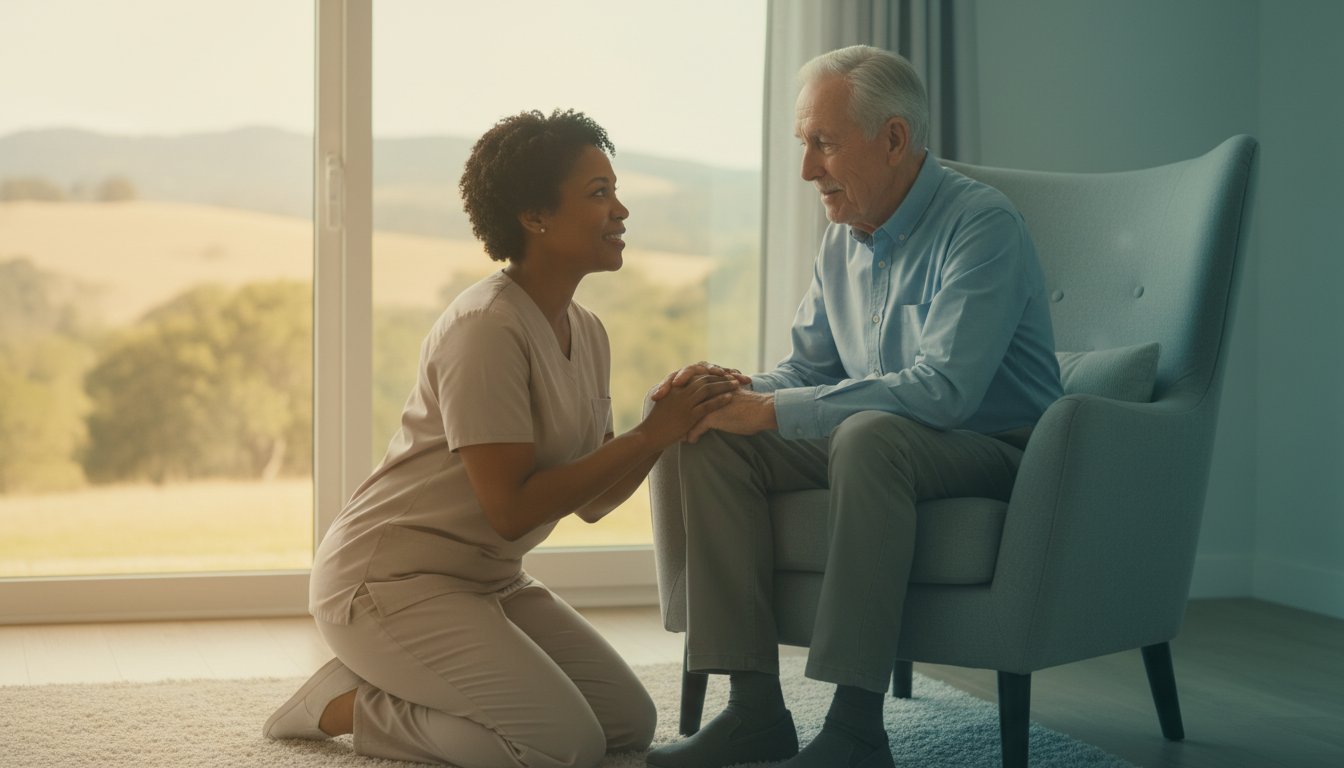
What if the sudden outbursts and sharp words from your loved one aren’t a sign of lost love, but a desperate, unspoken plea for connection? You’re likely physically exhausted from constant vigilance and perhaps carrying a heavy weight of guilt for feeling resentful when your home feels like a battlefield. It’s natural to feel fear when agitation, which affects up to 76% of patients, transforms the person you cherish into someone you barely recognize. We understand the weight you carry while managing dementia-related aggression and anger for one of the 7.4 million Americans living with this condition in 2026.
We want to help you restore peace to your household by showing that transforming these moments is possible through cultural warmth and “heart-first” de-escalation. You’ll learn to interpret these behaviors as a meaningful language, discover new medical milestones like the FDA approval of Auvelity on April 30, 2026, and find a path toward local support in Santa Rosa. Our goal is to ensure your loved one remains the heart of the home while making sure you feel safe, seen, and truly cherished.
Key Takeaways
- Reframe outbursts as distressed communication by identifying the hidden unmet needs, such as hunger or physical discomfort, that trigger agitation.
- Practice the Wise Nurturer stance by using non-threatening body language and meeting your loved one at eye level to provide immediate comfort.
- Build a Safe Haven by reducing environmental noise and establishing a rhythmic daily routine that helps lower your loved one’s anxiety.
- Master compassionate strategies for managing dementia-related aggression and anger while learning to recognize the signs of caregiver burnout.
- Discover how to honor your loved one as the heart of the home. These strategies transform difficult moments into deep, soulful connections.
Understanding the Why: Aggression as Distressed Communication
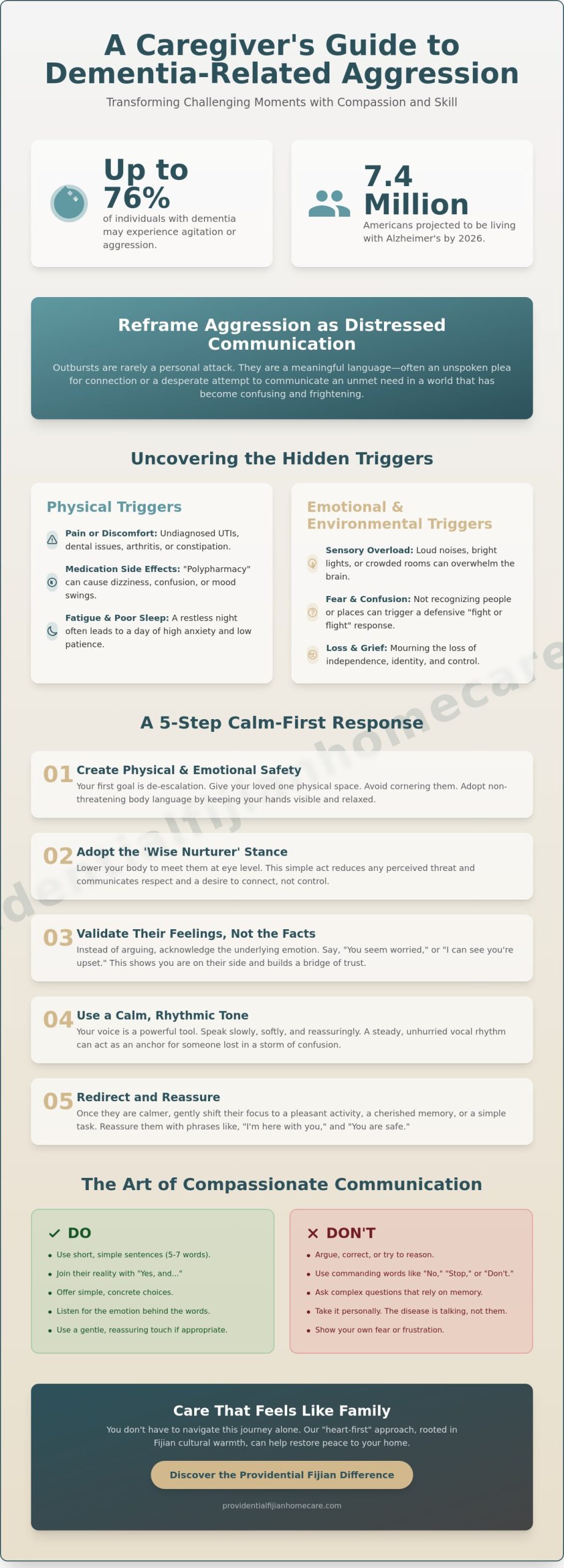
When a loved one who once offered nothing but kindness suddenly lashes out with sharp words or physical resistance, the emotional impact is devastating. It feels like a personal betrayal; however, we must remember that your loved one is still the heart of the home. In our Fijian tradition, we view the elderly with a deep, ancestral reverence that looks past the symptoms of a disease to the soul within. This perspective helps us realize that managing dementia-related aggression and anger isn’t about “controlling” a patient. It’s about listening to a new, difficult language. Aggression is rarely a personal attack. It’s a response to a world that has become frightening, loud, and impossible to navigate.
We use the “unmet need” framework to decode these moments. Imagine being unable to express that you’re thirsty, that your hip aches, or that you need to use the bathroom. That frustration builds until it boils over. Sensory overload also plays a massive role. A television that’s too loud or a room filled with too many people can trigger a “fight or flight” response in a brain that can no longer filter out background noise. By viewing these outbursts through Understanding Agitation in Dementia, we can shift our focus from being victims of the behavior to being detectives of the cause.
Hidden Physical Triggers You Might Miss
Physical discomfort is a primary driver of agitation in 2026. Undiagnosed urinary tract infections (UTIs) remain a leading cause of sudden behavioral changes in seniors because they often present as confusion and anger rather than typical physical pain. Dental issues or ill-fitting dentures can also cause silent agony that manifests as irritability during meal times. We also pay close attention to “polypharmacy,” which is the use of multiple medications. As of 2026, many seniors are on five or more prescriptions, and the interactions can lead to dizziness or mood swings. Poor sleep hygiene is another culprit; a restless night almost always guarantees a morning of high anxiety and low patience.
The Emotional Landscape of Memory Loss
Beyond the physical, there’s a profound emotional grief happening beneath the surface. Your loved one is mourning the loss of their freedom, their driving privileges, and their very identity. When they don’t recognize their own home or the person standing in front of them, the brain defaults to a defensive state. Distressed communication is the brain’s attempt to signal discomfort when words fail. When we approach these moments with the heart of a Wise Nurturer, we ensure our family members feel safe, seen, and truly cherished even in their darkest hours.
How to Respond During an Outburst: 5 Calm-First Steps
In the heat of a crisis, your primary goal is to ensure that everyone remains safe and that your loved one feels safe, seen, and truly cherished. When managing dementia-related aggression and anger, the first few seconds of your response dictate the outcome. Start by creating physical space. If they’re agitated, don’t stand directly in front of them or corner them in a hallway. Instead, adopt the stance of the Wise Nurturer. This means lowering your body to their eye level and keeping your hands visible and relaxed to project an aura of total safety.
Validation therapy is your most powerful tool during these difficult moments. Instead of correcting a false claim or arguing about reality, acknowledge the underlying emotion. If they insist they need to go home to a house that was sold twenty years ago, don’t fight the facts. Simply say, “You’re feeling worried and want to be somewhere safe. I’m right here with you.” This honors their dignity without creating a power struggle. Our caregivers often lean into cultural warmth, using a soft, rhythmic tone of voice that reflects the peaceful spirit of our heritage. This steady, unhurried rhythm can act as an anchor for someone lost in a storm of confusion.
The Art of Verbal De-escalation
Words have immense power during an outburst. Avoid triggers like “No,” “Stop,” or “Don’t,” which often sound like commands and can escalate fear. Instead, use “Yes” and “And” to join their reality. Keep your sentences short, using no more than five to seven words. This prevents the brain from becoming overwhelmed by trying to process complex instructions. Use comforting phrases like “I can see you’re upset,” or “Let’s find a quiet spot together.” If the situation feels overwhelming, remember that starting a conversation about professional support can provide the respite your family needs.
Non-Verbal Cues and the ‘Mirroring’ Effect
Your body speaks louder than your words. People with dementia often have “emotional radar” and will mirror the stress or tension they see in your face. If your heart is racing, try to take slow, deep breaths to lower your own physiological response. Maintaining a 45-degree body angle rather than facing them head-on can reduce the perceived threat during an outburst because you appear less like an adversary. Only use a gentle touch if you know it’s a source of comfort for them; if they pull away, respect that boundary and give them the space they need to breathe.
Preventing Aggression through Routine and Environment
Creating a sanctuary within your own walls is one of the most effective ways of managing dementia-related aggression and anger. A “Safe Haven” environment is free from the chaos of clutter and the jarring noise of background televisions or loud appliances. For a brain struggling to process information, a pile of mail on the counter or a flickering light can feel like a direct threat. We recommend simplifying the visual landscape of your home to reduce this cognitive load. When the home is quiet and orderly, the spirit remains calm.
A predictable daily rhythm acts as a warm embrace for your loved one. It’s not about a rigid military schedule; it’s about a gentle flow that they can rely on. When breakfast, bathing, and rest happen at the same time every day, anxiety levels drop significantly. We also encourage families to include “meaningful connections” through small, familiar tasks. Whether it’s folding towels or sorting seeds for a Santa Rosa garden, these activities reinforce their dignity. In our Fijian worldview, we see these moments as opportunities to honor the person as the heart of the home.
Managing Sundowning in Sonoma County
In the North Bay, the transition from afternoon to evening can be particularly difficult. During our Sonoma County winters, the sun sets early and casts long, distorting shadows that can trigger intense fear and confusion. This phenomenon, known as sundowning, is often exacerbated by the “grey hour.” We suggest closing the drapes by 4:00 PM and turning on warm, circadian lighting to keep the environment consistent. Pay close attention to dietary triggers as well. Late-afternoon caffeine or high-sugar snacks can spike energy levels at the exact moment the body needs to wind down, leading to increased irritability.
The Power of Familiarity and Tradition
Anchoring a person in happy memories through music and scents can prevent an outburst before it begins. The smell of coconut oil or the sound of soft, melodic songs can transport a loved one to a place of safety. This practice is rooted in our Fijian value of reverence, where we treat every care task as a sacred bonding moment. For more local resources, you can explore our Dementia Care in Sonoma County: A Compassionate Guide for Local Families. By blending tradition with practical environmental changes, you create a household where your loved one feels safe, seen, and truly cherished.
When the Burden Becomes Too Heavy: Recognizing Caregiver Burnout
Caring for the heart of the home is a sacred duty, yet the weight of this responsibility can sometimes feel crushing. You might find yourself trapped in a cycle of constant vigilance, waiting for the next outburst with a racing heart. This is more than just being tired; it’s chronic stress. When managing dementia-related aggression and anger becomes your entire reality, your own health begins to wither. Recognizing compassion fatigue isn’t a sign of weakness. It’s an act of honesty. If the aggression moves from verbal distress to physical risk, the “Safety First” rule must apply. You cannot provide a safe haven if you are physically or emotionally broken.
Respite care is a profound act of love. It allows you to step back and breathe so you can return to your loved one with the patience they deserve. In Santa Rosa and Healdsburg, local support groups offer a space to share these burdens with others who understand the specific challenges of Sonoma County caregiving. Seeking help is how you ensure your loved one remains safe, seen, and truly cherished for years to come. Remember that you don’t have to walk this path alone.
The Hidden Cost of ‘Doing It All’
Sleep deprivation is a silent enemy in dementia care. When a caregiver is exhausted, their ability to maintain the “Wise Nurturer” stance vanishes. This tension is often mirrored by the patient, which can lead to a significant increase in the frequency of daily outbursts. Being the primary target of a loved one’s anger is deeply painful. It erodes your bond and leaves you feeling isolated in your own home. If you’re struggling to keep up with the demands of daily care, consider Finding a Compassionate Caregiver Agency in Santa Rosa to help carry the load.
Building Your Local Support Team
Transitioning to in-home help for seniors is a journey that starts with a conversation. When you vet a caregiver agency, ask specifically about their dementia-related de-escalation training. At Providential Fijian Home Care, we believe in the power of a “cultural match.” Our caregivers bring a specific Fijian warmth and reverence to every home. This isn’t just a service; it’s an extension of your own family. If the burden has become too heavy, we invite you to reach out for a supportive conversation about how we can help restore peace to your household.
Care That Feels Like Family: The Providential Fijian Difference
At Providential Fijian Home Care, we understand that managing dementia-related aggression and anger is one of the most taxing journeys a family can undertake. It’s why our approach is rooted in more than just checklists and schedules. Our caregivers are chosen for their innate capacity for kindness and then rigorously trained in the Wise Nurturer method. This specialized de-escalation training focuses on the emotional truth of the moment rather than the clinical symptoms. We believe that by meeting a loved one with cultural warmth and unconditional respect, we can soften the edges of their distress and restore a sense of calm to your living room.
We view every senior we serve as the heart of the home. This isn’t just a phrase; it’s an honorable commitment to treating your mother or father with the same reverence we would our own elders. When we step into your Santa Rosa home, our goal is to lift the administrative and physical burdens from your shoulders. We want you to return to the cherished role of being a daughter or a son. By handling the complexities of daily care, we provide the space you need to simply be family again. Our customized care plans are living documents, evolving alongside your loved one through every stage of their journey to ensure they always feel safe, seen, and truly cherished.
Trained Hearts and Skilled Hands
Our dedication extends to non-medical hospice support and specialized memory care that addresses the whole person. We manage critical medication reminders and maintain a steady daily routine to prevent the common triggers of agitation. This proactive approach reduces the likelihood of outbursts and creates a predictable environment where a senior can thrive. Our philosophy of unconditional love means we don’t shy away from difficult behaviors; instead, we lean in with patience and a gentle spirit. We treat the act of caregiving as a privilege, ensuring that dignity remains intact even when the disease makes communication difficult.
Your Next Step Toward Peace
Taking the first step toward professional support shouldn’t feel like a transaction. We invite you to a quiet, supportive conversation where we can listen to your story and understand your family’s unique needs. During our initial home safety and care assessment, we’ll walk through your environment together and identify ways to enhance comfort and security. This is a low-pressure opportunity to see if our family-centered approach is the right fit for your household. Start a conversation with our compassionate team today and let us help you find the peace and connection you’ve been seeking.
Restoring Harmony and Connection to Your Home
The journey of managing dementia-related aggression and anger is one of the most profound challenges a family can face, but it’s a path you don’t have to walk in isolation. By reframing outbursts as a search for safety and adjusting the rhythms of your home, you can protect the sacred bond you share with your loved one. Remember that every senior remains the heart of the home, deserving of unconditional respect and a sanctuary where they feel safe, seen, and truly cherished.
Since 2016, Providential Fijian Home Care has served families throughout Sonoma County with a Wise Nurturer approach. Our specialized Alzheimer’s and dementia care training is rooted in Fijian values, ensuring that your family member is honored as kin. Whether you need a few hours of respite or a long-term care plan, we’re here to offer the cultural warmth and professional support your household needs to thrive again. Let us help you restore peace to your home; start a conversation today. You’ve carried this weight for long enough, and it’s okay to ask for a helping hand that feels like family.
Frequently Asked Questions
Is it normal for a dementia patient to be aggressive only with their spouse or primary caregiver?
It is very common for a person with dementia to direct their frustration solely at the person they trust most. This phenomenon happens because the spouse represents a “safe harbor” where the patient feels comfortable enough to release their pent-up confusion and fear. While these targeted outbursts feel deeply personal, they’re actually a byproduct of the secure bond you’ve built. Research suggests that behavioral symptoms affect nearly 90% of those with memory loss, and these behaviors frequently surface during the most intimate care moments.
What should I do if my loved one tries to hit me during a dementia outburst?
You should immediately create physical space by stepping back at least two arm lengths to ensure your own safety. Avoid making sudden movements or reaching out to grab their hands, as this can be perceived as an escalation of the threat. This is a vital safety step when managing dementia-related aggression and anger. If the situation doesn’t calm down within a few seconds, it’s best to leave the room for a short period to allow their brain’s “fight or flight” response to subside.
Can certain foods or medications make dementia-related anger worse?
High levels of caffeine, refined sugars, and certain drug interactions are known to increase irritability and restlessness in seniors. In 2026, medical reports show that 40% of older adults take five or more medications, which often leads to “polypharmacy” complications. These interactions can manifest as sudden mood swings or increased agitation. We recommend reviewing all prescriptions with a doctor to ensure that side effects or evening “crashes” from sugar aren’t worsening behavioral issues.
How can I tell the difference between ‘sundowning’ and a medical emergency like a stroke?
You can distinguish a stroke from sundowning by looking for sudden physical drooping or a total loss of motor skills on one side of the body. Use the FAST acronym to check for facial drooping, arm weakness, and speech difficulty. Sundowning usually follows a predictable late-afternoon pattern and involves pacing or verbal confusion. A stroke is a sudden neurological event that happens regardless of the time of day and requires an immediate call to emergency services.
When is it time to consider professional in-home dementia care in Santa Rosa?
It’s time to look for professional help when your own health begins to decline or when the household environment no longer feels like a sanctuary. If you find yourself experiencing 24-hour vigilance or chronic sleep loss, you’ve reached a point where respite is necessary for everyone’s well-being. In Santa Rosa, many families seek support when the person requires more than 40 hours of care per week, as this is often the tipping point where caregiver burnout becomes a physical risk.
Will my loved one eventually stop being aggressive as the dementia progresses?
Aggressive behaviors may decrease in the final stages of the disease as physical energy wanes, but the underlying distress often just changes form. While the “fight” response might fade, the person may still show their discomfort through moaning or withdrawal. Managing dementia-related aggression and anger remains important throughout the journey. The goal is always to keep them feeling safe and cherished regardless of their physical ability to lash out.
How can I explain these outbursts to grandchildren or other family members?
Explain to children that their grandparent has a “sick brain” that sometimes makes them say things that aren’t kind or true. Use simple, honest language to describe how the disease makes it hard for the person to control their feelings. We teach our families that the person is still the heart of the home, even if their behavior is different. This helps younger generations maintain a sense of reverence and love without feeling personally hurt or afraid of the outbursts.