
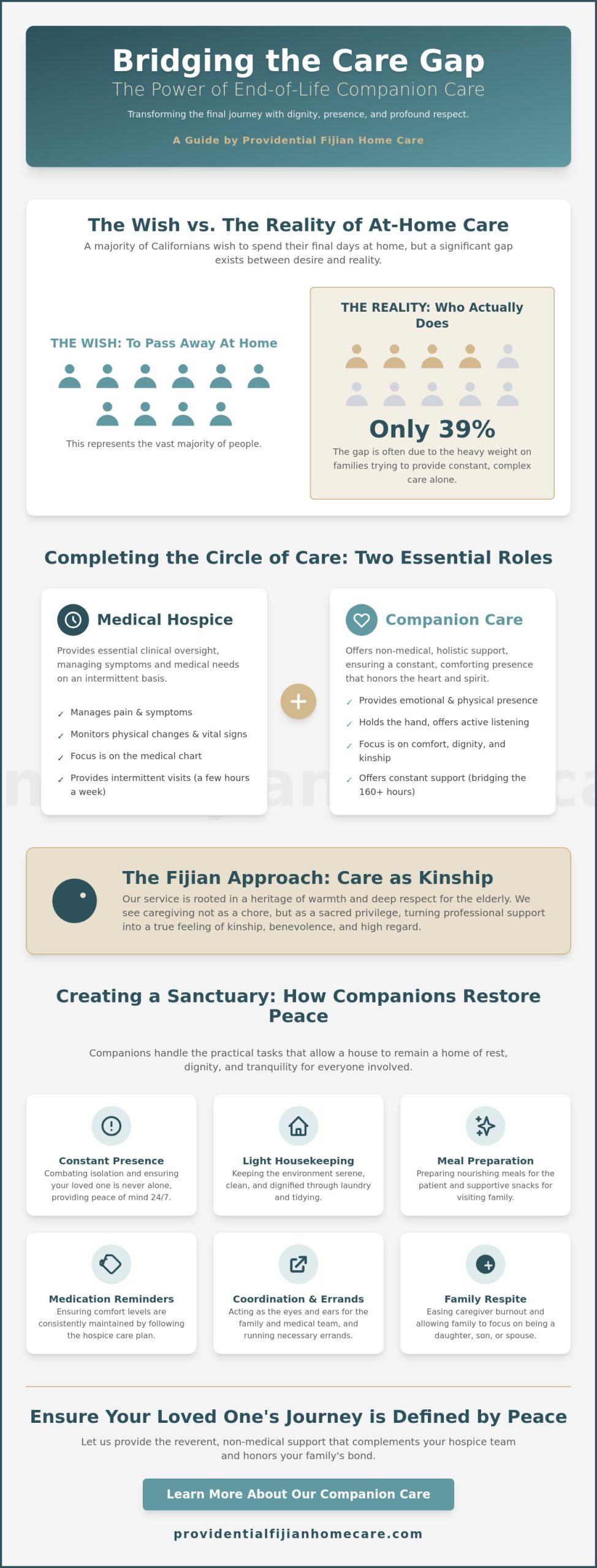
While a majority of Californians express a heartfelt desire to pass away in the familiar peace of their own homes, only 39% are able to make that wish a reality. This gap often comes from the heavy weight placed on families who try to manage complex needs while providing the constant, loving presence their elder deserves. You shouldn’t have to choose between being a clinical caregiver and being a devoted daughter, son, or spouse. It’s natural to fear the loneliness or discomfort your loved one might face, especially when standard medical systems feel distant or hurried.
Our guide shows how specialized end-of-life companion care Petaluma families trust can transform these final chapters into a time of deep connection and quiet dignity. You’ll discover how non-medical support provides the emotional sanctuary and physical comfort that turns a house into a sacred space. We’ll walk through the ways this reverent care supports both the patient and the family, ensuring a seamless bond with your medical hospice team through a spirit of kinship and benevolence. By focusing on high regard and emotional commitment, we can ensure your loved one’s final journey is defined by peace and profound respect.
Key Takeaways
- Understand the vital distinction between clinical hospice and end-of-life companion care Petaluma families use to ensure their loved ones are never left without a comforting hand to hold.
- Identify the critical gaps in standard healthcare and learn how a dedicated companion provides the constant, nurturing presence that medical teams aren’t designed to offer.
- Discover the Fijian approach to caregiving, where heritage-based warmth and deep respect for the elderly turn a professional service into a true feeling of kinship.
- Use our practical checklist to prepare your home’s physical and sensory environment, creating a sanctuary that promotes lasting peace and emotional comfort.
- Learn how to coordinate non-medical support with your hospice providers to ease caregiver burnout and maintain a dignified, tranquil atmosphere for everyone involved.
What is End-of-Life Companion Care in Petaluma?
When a loved one enters their final season of life, the focus shifts from curing to comforting. While medical systems prioritize charts and vital signs, end-of-life companion care Petaluma families rely on prioritizes the heart and the spirit. This non-medical, holistic approach to care ensures that no one has to walk this path alone. It isn’t about clinical interventions; it’s about the steady, reverent presence of someone who understands that caregiving is a sacred privilege rather than a chore. In the quiet streets of Petaluma, more families are choosing this path to ensure their elders are surrounded by the warmth of home rather than the sterile coldness of an institution.
Choosing to age in place during these final transitions is a deeply personal decision rooted in the desire for dignity. Sonoma County is home to over 22,000 seniors with disabilities, and for many, the familiar scents of their own kitchen and the view from a favorite window provide a sense of security that no hospital can replicate. End-of-life care is most effective when it honors the individual’s history and domestic importance, turning a standard residence into a peaceful sanctuary for both the patient and their kin.
The Distinction Between Medical Hospice and Companion Support
It’s vital to understand that companion care doesn’t replace medical hospice; it completes it. A hospice nurse provides essential medical oversight, visiting intermittently to manage pain and monitor physical changes. In contrast, a companion offers consistent emotional and physical presence. While the nurse manages the medical chart, the companion holds the hand. They assist with activities of daily living that fall outside the medical scope, such as gentle personal hygiene, light housekeeping, and preparing nourishing meals. This partnership ensures that the clinical needs are met while the emotional bond remains the primary focus of the home environment.
Why “Presence” is the Primary Goal of Care
Isolation is one of the greatest burdens a person can face during their final journey. The psychological impact of being alone can often outweigh physical discomfort. A dedicated companion acts as a loyal witness to a person’s life, offering high esteem and active listening when it’s needed most. This constant support provides immense peace of mind for family members who may be struggling with caregiver burnout or the impossibility of being present 24/7. We believe that every Petaluma senior deserves to have their life celebrated and their presence honored until the very end. By providing a steady, supportive presence, we bridge the gap between professional service and the deep feeling of kinship, ensuring that every moment is handled with benevolence and high regard.
The Role of Non-Medical Support Alongside Hospice Teams
Standard hospice care is a profound blessing, but it’s often misunderstood as a 24-hour bedside service. Most medical hospice programs provide intermittent visits, which means a nurse might only be in the home for a few hours each week. This leaves family members to bridge a massive gap during the other 160 hours. This is exactly where end-of-life companion care Petaluma becomes an essential pillar of support. We don’t just provide a service; we offer a constant, nurturing presence that ensures your loved one is never alone during their most vulnerable moments. While the medical team manages the clinical chart, we manage the peace, keeping the domestic sanctuary clean, quiet, and filled with light.
Our companions handle the practical tasks that allow the home to remain a place of rest. By maintaining the rhythm of the household, we remove the friction of daily chores that can distract from the emotional weight of the journey. These tasks include:
- Medication reminders to ensure comfort levels are consistently maintained.
- Light housekeeping and laundry to keep the environment serene and dignified.
- Nourishing meal preparation for the patient and supportive snacks for the family.
- Errands and transportation to ensure the household remains functional.
Bridging the Gap in Petaluma Home Care
Companions act as the vital eyes and ears for both the family and the medical team. They notice the subtle shifts in breathing, mood, or comfort that might happen in the middle of the night, providing a layer of security that intermittent visits simply cannot match. This in-home help for seniors transforms the experience from one of high-alert stress to one of emotional advocacy. It ensures the resident’s dignity is protected at every turn, creating a bridge between professional expertise and the warmth of a supportive presence.
Supporting the Family Caregiver: Respite and Relief
The emotional toll on Petaluma spouses and children is often profound. When you’re the primary caregiver, it’s easy to lose your identity as a loved one while drowning in the duties of a nurse. Our respite care allows you to step back into your role as a daughter, son, or partner. This support is often a key part of comprehensive Advance Care Planning, giving you the space to focus on the emotional bonds that matter most. If the end-of-life journey includes memory loss, we also provide specialized dementia care in Sonoma County, ensuring that even in moments of confusion, your loved one is treated with the highest esteem and kinship. If you feel the weight of this journey becoming too heavy, we invite you to reach out for a gentle dialogue about how we can support your family.
The Fijian Approach to Reverent End-of-Life Care
In the Fijian worldview, the elderly aren’t just family members; they are the anchors of the domestic sphere. This cultural heritage places the highest value on communal support and a deep respect for those who have walked the path before us. When we provide end-of-life companion care Petaluma families find that our approach transcends the transactional nature of modern healthcare. We bring a heritage-based warmth into the home that views caregiving not as a clinical task, but as a sacred privilege. This philosophy ensures that your loved one is treated with a level of sincerity and high esteem that reflects their importance to your family and our community.
The concept of kinship is the linguistic and emotional anchor of our work. By treating every client as a respected elder within our own extended family, we bridge the gap between professional service and personal connection. This requires immense patience and emotional endurance, traits that are woven into the fabric of the Fijian caregiving tradition. We understand that these final days require a steady, unhurried presence that can sit in the quiet moments just as comfortably as it handles the practical needs of the household.
Cultural Warmth in the Domestic Sphere
While clinical expertise is necessary for pain management, a warm personality is often more vital for the spirit during the final journey. In Petaluma homes, we translate the Fijian tradition of family-oriented care into a supportive presence that feels natural and safe. We define reverence as a professional standard. It means entering a home with humility and recognizing that we’re guests in a sanctuary. This approach moves away from the cold, corporate jargon found in many agencies, opting instead for a language of deep affection and emotional commitment that reassures families during their most vulnerable times.
The Emotional Triad: Empathy, Nurturing, and Respect
Our holistic model is built upon three foundational traits: empathy, nurturing, and respect. These aren’t just words; they are the active principles that guide every interaction we have with your loved one. This specific focus benefits those seeking home care givers who truly understand the gravity and the beauty of the end-of-life journey. A caregiver who views their work as a high calling creates a peaceful, dignified atmosphere that radiates through the entire house. By choosing a team that values benevolence above all else, you ensure that your loved one’s final transition is marked by the same high regard they’ve earned throughout their entire life.
Planning for Comfort: A Petaluma Family’s Checklist
Preparing for a final journey at home is an act of profound love that extends far beyond medical logistics. It’s about curating a space that honors the spirit and provides a sense of safety. When organizing end-of-life companion care Petaluma families should look beyond the clinical requirements to the sensory details that define a true sanctuary. Simple adjustments like softening the lighting to reduce glare or introducing familiar scents like lavender or the aroma of a favorite tea can transform a room. Logistical readiness is also vital for peace of mind. Keeping a clear medication schedule and an updated emergency contact list ensures that the family and the companion remain in a steady communication rhythm, which significantly reduces the anxiety of the unknown.
Creating a Sacred Space at Home
Rearranging a Petaluma bedroom is often necessary to accommodate both the practicalities of care and the importance of family visits. Ensure there’s enough space for a companion to work comfortably while leaving room for children or grandchildren to sit nearby and hold a hand. The care plan should also reflect the person’s soul, whether that includes favorite music, sessions of prayer, or long periods of quiet reflection. Maintaining dignity through consistent personal hygiene and grooming is a cornerstone of our approach. A gentle shave or brushing a loved one’s hair with high regard ensures they feel respected and like themselves until the very end.
Evaluating a Caregiver Agency for End-of-Life Support
Choosing a caregiver agency for this delicate time requires looking for more than just a list of services. You’re searching for emotional intelligence and a cultural fit that aligns with your family’s values. When interviewing, ask specific questions about their experience supporting hospice teams and how they handle the emotional weight of end-of-life transitions. It’s also important to understand the flexibility of their scheduling. Many Petaluma residents find that while hourly care works initially, the peace of mind provided by live-in options becomes essential as needs evolve. You deserve a partner who views this work as a sacred privilege rather than a transactional chore.
If you’re beginning to feel overwhelmed by the preparations, we invite you to start a gentle dialogue with us about how we can support your family’s unique needs.
Transitioning with Providential Fijian Home Care
At Providential Fijian Home Care, we believe that the final journey is a time for profound connection rather than clinical distance. Our model of end-of-life companion care Petaluma represents a unique marriage between professional expertise and heritage-based warmth. We don’t just provide a service; we offer a supportive presence that treats your loved one with the highest esteem. By weaving the Fijian values of kinship and benevolence into every interaction, we ensure that the domestic sphere remains a sanctuary of peace and dignity. This approach honors the person’s history while providing the physical comfort they deserve.
As a local, family-run pillar of the Sonoma County community, we take immense pride in our role as a compassionate extension of your own support network. We view caregiving as a sacred privilege, an opportunity to honor the lives of those who have built our community. This isn’t about corporate transactions or cold protocols; it’s about a deep emotional commitment to the families we serve. We’re here to bridge the gap between medical necessity and the human need for intimacy, respect, and emotional safety. Our presence allows the family to step back from the stress of caregiving and return to the roles of devoted partners, children, and friends.
Our Commitment to the Petaluma Community
From the historic Victorian homes in West Petaluma to the quiet, established streets of the Adobe area, we’re dedicated to serving our local neighborhoods with sincerity. The clinical coldness often found in standard healthcare systems can leave families feeling isolated and overwhelmed during a terminal diagnosis. Our heritage-based approach solves this problem by centering the care narrative on the individual’s importance within the home. We provide a steady, nurturing hand that ensures no Petaluma senior has to face their final transition without a sense of belonging. You don’t have to walk this path alone; we’re here to share the weight of the journey.
Next Steps: A Compassionate Conversation
We invite you to begin this process with a low-stakes dialogue. This isn’t a high-pressure consultation; it’s a compassionate conversation designed to listen to your story and assess your family’s unique needs. Our goal is to create a customized plan of kinship that provides consistent emotional support and seamless coordination with your medical hospice team. For those seeking a broader perspective on selecting local support, our guide to home care santa rosa ca provides additional context for families throughout Sonoma County. Let’s start a dialogue today to ensure your loved one’s final journey is defined by peace, respect, and the highest regard.
Honoring a Legacy of Love and Kinship
Ensuring a peaceful transition for a loved one is one of the most profound acts of service a family can perform. Throughout this guide, we’ve discussed how a reverent presence turns a house into a sanctuary and how non-medical support provides the constant emotional safety that clinical teams aren’t designed to offer. Choosing end-of-life companion care Petaluma families trust means prioritizing the heart and spirit during these final, quiet chapters. It’s about maintaining dignity through the high regard and benevolence that every elder deserves.
Founded in 2016 with deep roots in Sonoma County, our agency operates as a loyal extension of your own support network. We bring specialized Fijian cultural values to the bedside, where our dedicated non-medical hospice and memory care experts treat every client with the highest esteem. You don’t have to carry the weight of 24/7 care by yourself. We invite you to begin a compassionate dialogue about end-of-life care for your loved one. Our steady, unhurried pace is designed to reduce your stress and allow you to focus on the emotional bonds that matter most. We’re here to walk this path with you with sincerity and deep respect.
Common Questions About End-of-Life Support
What is the difference between hospice and end-of-life companion care?
Medical hospice focuses on clinical management and pain relief through intermittent nurse visits, while end-of-life companion care Petaluma families rely on provides a constant, non-medical presence. Our companions don’t manage medical charts; instead, they focus on the heart and the spirit by holding hands, providing emotional advocacy, and ensuring your loved one is never alone in their domestic sanctuary.
Can companion care be provided in Petaluma assisted living facilities?
Yes, we frequently supplement the care provided in local assisted living and memory care communities. While facility staff must divide their time among many residents, a dedicated companion provides the one-on-one, reverent attention your elder deserves. This ensures a consistent feeling of kinship and safety even when your loved one isn’t in their original family home.
How quickly can end-of-life companion care start in Petaluma?
We typically begin providing support within 24 to 48 hours following our initial compassionate dialogue. We understand that the final journey can involve rapid changes, so we move with a sense of urgency that never feels rushed. Our goal is to match your family with a caregiver who brings immediate relief and a nurturing presence to the household.
Does companion care include medical tasks like giving injections?
Our services are strictly non-medical and do not include skilled nursing tasks like injections, tube feedings, or physical therapy. We focus on the essential domestic and emotional needs of the patient, such as medication reminders, hygiene assistance, and meal preparation. This allows the medical hospice team to focus on clinical needs while we focus on the person’s comfort and dignity.
How do Fijian caregivers approach the end-of-life journey?
Fijian caregivers view the act of caring for an elder as a sacred privilege rather than a chore. This heritage-based approach centers on a deep respect for the elderly and a commitment to communal support. By bringing this unhurried warmth into the home, they create a peaceful atmosphere that radiates empathy and high esteem, treating every client like a cherished member of their own family.
Is companion care covered by Medicare in California?
Medicare generally doesn’t cover non-medical companion care, as it’s classified as custodial rather than clinical support. Most Petaluma families utilize private pay or long-term care insurance to secure these services. It’s best to check with your insurance provider to see if your specific policy covers respite care or personal assistance within the home.
What happens if our needs change from hourly to 24/7 care?
We provide flexible support that can transition from a few hours of respite to 24/7 or live-in care as the situation evolves. Our loyalty to your family means we’re prepared to adjust our rhythm to match the patient’s needs. This ensures a steady, supportive presence is always available to maintain the peace and dignity of the home environment.
How do you coordinate with our existing hospice nurse?
We act as the consistent eyes and ears for your medical hospice team, noticing subtle changes in breathing, mood, or comfort that occur between nurse visits. By maintaining a clear communication rhythm, we help ensure your medical providers have the insights they need to manage pain effectively. This seamless coordination ensures that the clinical and emotional aspects of care work in perfect harmony.