
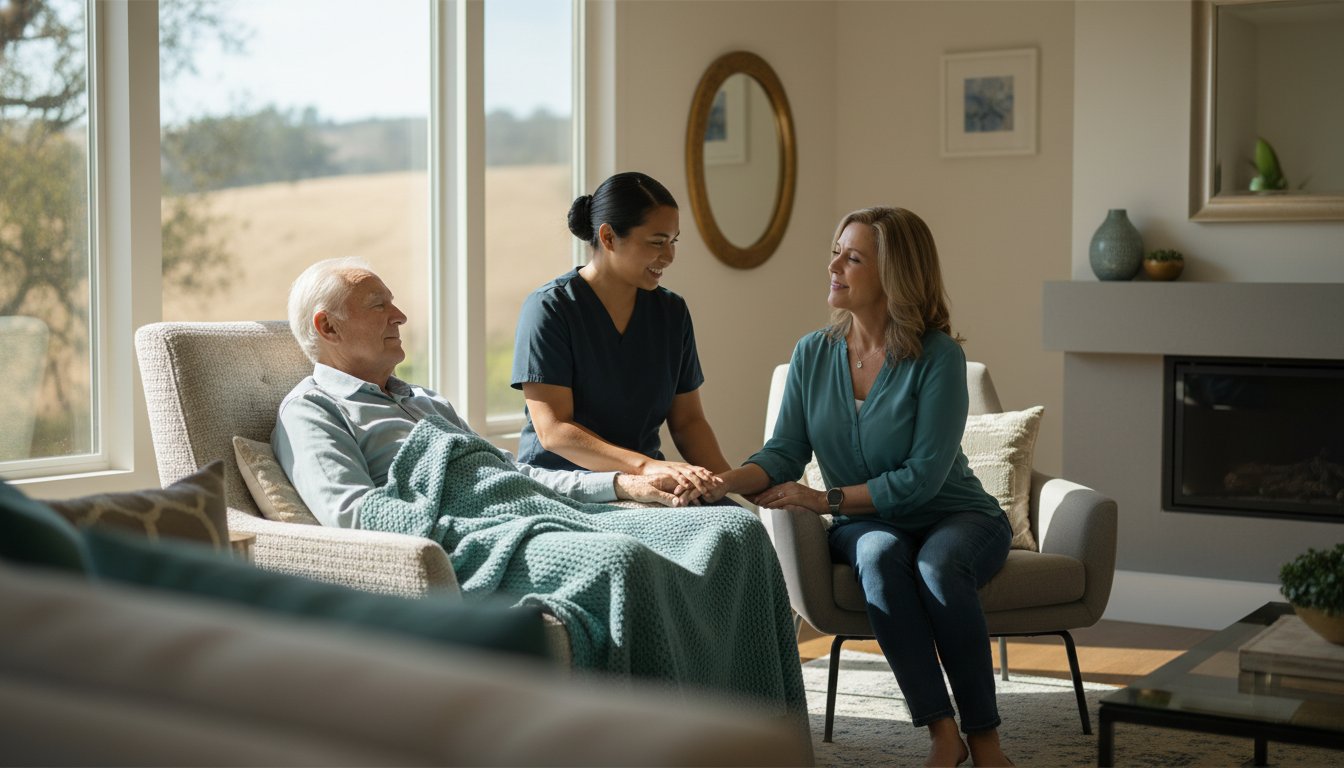
Imagine sitting by your father’s bedside in Santa Rosa, finally able to just hold his hand and listen to his stories because someone else is quietly tending to the home. You’ve likely felt the exhaustion of trying to be both a medical coordinator and a devoted child, wondering if you’re providing the dignity your loved one deserves. It’s a heavy burden to carry alone, and it’s natural to ask, what does a hospice support caregiver do to help my family find peace?
We believe that caregiving is a sacred privilege rooted in kinship and deep respect. This guide explains how a support caregiver provides a clean, calm, and reverent environment through non-medical comfort measures. You’ll discover how this specialized approach to personal care, companion support, and meal preparation allows you to step back from the chores and return to your vital role as a family member. We will walk through the essential ways these professionals offer the steady, nurturing, and protective presence your family needs during this delicate time.
Key Takeaways
- Understand what does a hospice support caregiver do by exploring their specialized non-medical role that works in harmony with your medical hospice team.
- Learn how professional assistance with personal hygiene and medication reminders preserves your loved one’s dignity while ensuring their comfort plan is followed with precision.
- Discover the healing power of “Veidokai,” a traditional value of deep respect that brings a patient, unhurried, and reverent presence to the bedside.
- Find relief from caregiver burnout through respite care, allowing you to transition from a task-oriented role back to the warmth of being a family member again.
- Gain a clear roadmap for coordinating care after a hospital discharge in Santa Rosa to ensure a smooth and peaceful transition back to the home environment.
What is a Hospice Support Caregiver? Defining the Non-Medical Role
Entering the final chapter of a loved one’s life is a journey filled with deep reflection and a quiet kind of heartbreak. In these moments, families in Santa Rosa frequently find themselves overwhelmed by the logistics of care. This is where the specialized role of a hospice support caregiver becomes essential. So, what does a hospice support caregiver do to ease this transition? At its heart, this role is about professional, non-medical assistance that prioritizes quality of life and comfort. Unlike clinical services, our focus remains on the emotional and physical sanctity of the home, ensuring every hour is spent in an atmosphere of peace and high regard.
In the quiet spaces of a home facing end-of-life challenges, the environment should be one of safety and profound respect. We view the domestic sphere as a sacred place where the elderly should be honored, not just managed. Our heritage-based approach introduces the concept of reverent care. This is a way of being that treats every interaction as a privilege rather than a chore. When families ask about the specifics of this role, they’re often looking for more than a list of tasks. They’re looking for a supportive presence that understands the weight of these final days and meets them with patience and sincerity.
Hospice Support vs. Skilled Nursing
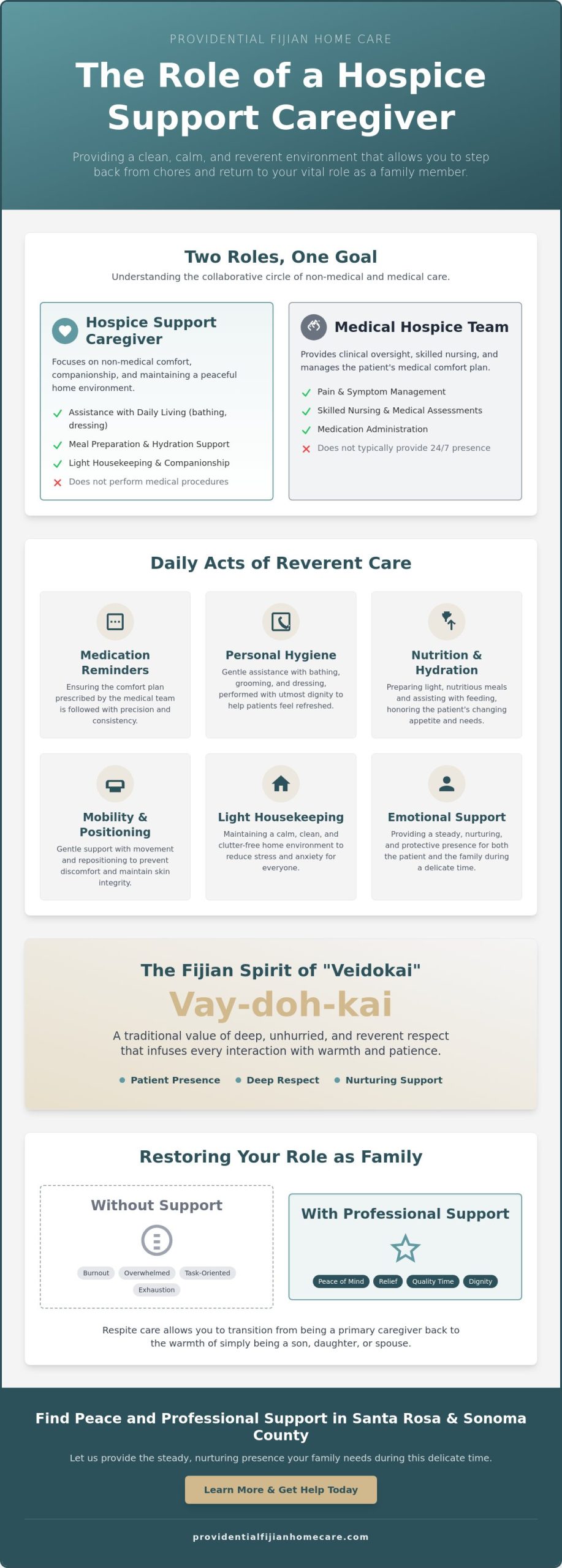
It’s common to feel confused about the different layers of care available. While a medical hospice team provides clinical oversight, a support caregiver focuses on the intimate details of daily living. We don’t perform medical procedures or skilled nursing tasks. Instead, we offer help with activities of daily living (ADLs) like gentle grooming, dressing, or preparing a nutritious meal. This Hospice care overview highlights how various roles combine to support the patient during this time. At Providential Fijian Home Care, we specialize in heart-centered support where companionship and a steady emotional presence take precedence over clinical monitoring.
The Collaborative Care Model
A support caregiver doesn’t work in isolation. We act as a vital bridge between the family and the medical providers. Because we are present in the home for extended periods, we become the eyes and ears for the hospice nurse. If a loved one’s comfort levels shift or their breathing patterns change, we ensure the medical team is informed. This seamless communication creates a safety net of benevolence. For families seeking more information on how this fits into a broader plan, our resource on in-home help for seniors in Santa Rosa offers deeper insights into aging with dignity. By managing the domestic details, we allow you to focus entirely on the bond of kinship.
The Daily Responsibilities of a Hospice Support Professional
When a family asks, what does a hospice support caregiver do on a day-to-day basis, the answer lies in the small, sacred acts of service that preserve a loved one’s comfort. These responsibilities are not merely tasks on a checklist. They’re a commitment to ensuring that your home remains a sanctuary of peace, cleanliness, and reverence. By attending to the physical environment and the patient’s immediate needs, we create a space where the focus remains on love rather than the stress of logistics. Our work is designed to weave into the fabric of your family life, providing a steady and reliable presence during a time of great vulnerability.
- Personal hygiene assistance: Bathing, grooming, and dressing are performed with the utmost dignity to help the patient feel refreshed.
- Medication reminders: We ensure the comfort plan is followed exactly as prescribed by doctors, providing consistency in pain management.
- Nutrition and hydration: Our team prepares light meals and assists with feeding as strength naturally declines, honoring the patient’s changing appetite.
- Light housekeeping: Maintaining a calm and clutter-free environment reduces anxiety for everyone in the home.
- Mobility and positioning: We provide gentle assistance with movement to prevent discomfort and maintain skin integrity for those who are bedbound.
Maintaining Dignity through Personal Hygiene
For many bedbound patients, the simple act of staying clean can become a source of physical and emotional stress. Our caregivers provide meticulous skin care and gentle bed baths to prevent irritation and maintain a sense of freshness. Professional grooming, such as brushing hair or applying soothing lotion, helps a loved one feel like themselves even in their final days.
A caregiver preserves a patient’s dignity through gentle, respectful touch, ensuring that every interaction is conducted with high esteem.
Maintaining skin integrity is a vital part of end-of-life care. When a person stays in one position for too long, it can lead to significant discomfort. We use pillows and soft supports to keep the patient at ease, reducing physical strain and promoting a sense of security. This attentive care is a hallmark of our kinship-based approach.
Managing the Household Logistics
A clean home is a calm home. We handle the laundry and linens so that your loved one is always resting in a fresh, sanitary environment. When families ask what does a hospice support caregiver do for the household, they’re often relieved to learn we manage the routine chores that feel impossible during times of grief. By taking over the dishes and the dusting, we give you the space to simply be present. Instead of worrying about the state of the kitchen, you can focus on sharing memories and finding emotional peace. If you’re feeling overwhelmed by these daily demands, we invite you to start a supportive dialogue with our team.
The Fijian Perspective: Infusing Warmth and Patience into Care
In our cultural heritage, the elderly are the anchors of the family, held in the highest regard within the domestic sphere. We bring this worldview into every home we enter through a value we call “Veidokai,” which translates to a profound and active respect for our elders. When families ask what does a hospice support caregiver do to make a difference, the answer often lies in this cultural foundation. It isn’t just about finishing a list of chores; it’s about the spirit in which those tasks are performed. By infusing care with genuine affection and a sense of sacred duty, we move beyond the transactional nature of healthcare to create a bond of kinship that feels safe and familiar.
This approach emphasizes a patient, unhurried presence that is increasingly rare. In the final stages of life, anxiety can often stem from a feeling of being rushed or treated as a clinical case. Our caregivers are trained to slow down, matching the rhythm of the patient. This steady pace reduces stress for both the loved one and the family, creating an atmosphere where emotional peace can flourish. If you are exploring what does a hospice support caregiver do, you’ll find that our most significant contribution is often the calm and loving energy we maintain in the room, even during the most difficult moments.
The Gift of Companionship
True support goes far beyond physical assistance. We strive to provide high-level esteem through genuine emotional connection. This might mean reading aloud from a favorite book, playing music that holds special meaning, or simply holding a hand in silence. These small acts of benevolence remind your loved one that they are seen, heard, and deeply valued. For those beginning this journey, The Essential Guide to Home Care Givers in Santa Rosa provides more context on how companionship serves as a pillar of quality care. We believe that no one should feel alone in their final chapter, and our presence ensures a continuous thread of warmth and recognition.
Cultural Sensitivity in End-of-Life Care
Every family has its own traditions and ways of honoring their history. We approach each household with humility, respecting the unique domestic importance of the elderly in your specific family structure. A caregiver’s demeanor sets the emotional tone for the entire home, and we take that responsibility seriously. By maintaining a reverent and supportive attitude, we help turn a challenging time into a period of shared reflection and love. This unique Fijian warmth transforms a clinical environment into a sanctuary where tradition and respect take center stage. Our goal is to ensure that your home remains a place of dignity, where your loved one’s legacy is celebrated every day.
Supporting the Family: Respite and Burnout Prevention
Families often whisper the same heavy thought: “I should be doing this myself.” This sentiment is born from deep affection, but it can lead to a state of exhaustion that makes it difficult to be truly present. Choosing to bring in professional assistance is a courageous decision that honors the sanctity of your relationship. By allowing someone else to manage the laundry or the medication reminders, you’re free to return to the simple, vital role of being a daughter, a son, or a spouse again. Accepting help isn’t a sign of weakness; it’s a profound act of love that ensures your loved one receives the highest level of esteem while you preserve your own health.
When considering what does a hospice support caregiver do to protect the family’s well-being, it’s vital to look at the relief they provide to the primary family member. We provide respite care, which is the gift of time, rest, and safety. This support allows you to catch up on sleep, eat a nutritious meal, and begin the necessary process of grieving without the constant distraction of physical labor. Our caregivers offer a listening ear and professional reassurance, acting as a steady pillar of strength when the path feels uncertain. Whether you need a few hours of hourly respite or more consistent support in the Santa Rosa area, the goal remains the same: to maintain your family’s emotional peace.
Preventing Caregiver Burnout
The physical and emotional toll of providing end-of-life care without professional help is immense. Without a break, the weight of responsibility can cloud the precious moments you have left together. Having a professional in the home changes the dynamic from one of constant stress to one of connection. You can find more guidance on this transition in our local guide to Finding a Compassionate Caregiver Agency in Santa Rosa. We believe that when the burden of chores is lifted, the bond of kinship can truly shine, allowing you to focus on the memories that matter most.
Navigating the Transition Together
Introducing a new face into your home during such a sensitive time requires a gentle touch and a patient heart. We establish a routine that respects your family’s privacy while ensuring the patient’s safety is never compromised. We suggest beginning with a low-stakes dialogue. This unhurried conversation allows us to understand your family’s unique needs and cultural values before any services begin. By moving at your pace, we ensure the transition feels like a natural extension of your home life. If you’re ready to explore how we can support your family, we invite you to reach out for a compassionate conversation today.
Transitioning to Hospice Support in Santa Rosa and Sonoma County
The journey from a clinical hospital setting back to the sanctuary of home is a delicate transition that requires a bridge of benevolence. When your loved one is discharged from local centers like Santa Rosa Memorial or Kaiser Permanente, the shift can feel sudden and overwhelming. Families often find themselves asking, what does a hospice support caregiver do to bridge this gap during such a sensitive time? We coordinate closely with discharge planners and family members to ensure that the moment your loved one crosses their own threshold, a clean, calm, and reverent environment awaits them. This local, family-oriented support is the hallmark of our work in the North Bay community, where we treat every client as an extension of our own kinship network.
During our initial home assessment, we focus on more than just the physical needs of the patient. We take the time to listen to your family’s history and values. We want to understand the domestic importance of your loved one so we can customize a care plan that respects their legacy and your family’s specific routines. This unhurried dialogue allows us to match the right personality to your home, ensuring a cultural and emotional fit that feels natural rather than intrusive. By focusing on these intimate details, we provide a level of security that clinical models often overlook.
Starting the Conversation
Talking to family members about bringing in professional hospice support is rarely easy. It’s natural for siblings or spouses to feel protective or even hesitant about inviting a new person into the home. We suggest focusing the conversation on the gift of presence; explaining that professional help isn’t a replacement for family care, but a way to strengthen it. When interviewing an agency, ask how they incorporate respect and tradition into their daily tasks. For more detailed advice on navigating these choices, see our resource on Choosing the Best Home Care in Santa Rosa. Finding a partner who values high esteem and sincerity will make the transition much smoother for everyone involved.
Your Next Steps Toward Peace of Mind
If you’re feeling the weight of caregiving, please know that you don’t have to walk this path alone. Our approach is rooted in the belief that caregiving is a sacred privilege, and we’re here to offer a steady, nurturing presence whenever you’re ready. We invite you to begin with a low-pressure conversation where your questions are heard and your concerns are met with empathy. There’s no commercial pressure here; only a sincere desire to assist your family in finding emotional peace. We encourage you to contact us for a supportive dialogue about your family’s needs and discover how we can help you return to the vital role of being a loved one again.
Embracing a Path of Dignity and Peace
When you understand what does a hospice support caregiver do, you realize it’s about more than just managing tasks; it’s about preserving the sanctity of your home. We’ve explored how professional assistance with personal hygiene and household logistics allows you to focus on your bond of kinship. By choosing non-medical support, you provide your loved one with the highest level of esteem while protecting your own well-being through essential respite care.
Since 2016, Providential Fijian Home Care has served families across Santa Rosa and Sonoma County with a specialized focus on non-medical hospice and dementia support. Our foundation is built on traditional Fijian values of reverence, warmth, and sincere affection. We view our work as a sacred privilege, ensuring every interaction is filled with benevolence. Begin a gentle dialogue with our compassionate care team today. You don’t have to navigate these quiet, heavy moments alone. We’re here to walk beside you with patience and deep respect.
Common Questions About Hospice Support Care
Is hospice support care the same as medical hospice care?
No, these roles are different but complementary. Many families wonder what does a hospice support caregiver do compared to a medical team; the medical hospice team provides clinical oversight and pain management, while a support caregiver focuses on non-medical needs. We ensure the home remains a sanctuary through personal care, meal preparation, and a steady, nurturing presence that fills the gaps between medical visits.
Can a hospice support caregiver stay overnight in my Santa Rosa home?
We provide hospice support and respite care in Santa Rosa that can be tailored to your family’s specific needs, including overnight presence. Having a professional in the home during the night offers immense peace of mind, ensuring your loved one is never alone and their comfort is monitored while you rest. This unhurried support is part of our commitment to your family’s kinship and safety.
Will insurance or Medicare cover non-medical hospice support services?
Medicare typically covers the clinical hospice team and medical supplies, but non-medical hospice support is often managed through private pay or long-term care insurance. Because every policy is unique, we recommend families review their specific coverage or contact their provider for clarification. Our focus is on providing high-level care that prioritizes dignity and comfort, acting as a compassionate extension of your own support network.
How does a caregiver help if my loved one is no longer able to communicate?
If a loved one can no longer speak, our caregivers rely on the Fijian value of “Veidokai” to provide a reverent and intuitive presence. We monitor non-verbal cues like breathing patterns or facial expressions to ensure comfort is maintained. By keeping a calm environment and offering a gentle, respectful touch, we ensure the patient feels safe and honored even in the quietest moments.
What happens if we already have a hospice nurse visiting our home?
A support caregiver works in harmony with your existing hospice nurse to create a seamless circle of care. While the nurse handles clinical assessments and medical needs, the caregiver remains in the home to assist with daily living tasks and emotional support. This collaborative model ensures the nurse’s instructions are followed while providing the continuous companionship that a medical professional simply cannot offer.
Can a hospice support caregiver help with medication administration?
A support caregiver provides medication reminders to ensure the comfort plan is followed, but they don’t administer medications. Our role is to act as the eyes and ears in the home, helping your loved one stay on the schedule managed by their medical team. This ensures safety while maintaining our focus on non-medical, heart-centered support that honors the patient’s dignity and domestic importance.
How quickly can hospice support care begin in Sonoma County?
Beginning care in Sonoma County starts with a compassionate, low-stakes dialogue to understand your family’s unique situation. We don’t rush this process, as we believe a successful transition requires a deep understanding of your loved one’s needs and heritage. Once we’ve established a connection and a customized plan, we work diligently to introduce a caregiver who is a perfect cultural and emotional fit for your home.