

What if the most vital part of the healing process isn’t found in a clinical ward, but within the familiar embrace of one’s own living room? For at least 50% of patients, the heart’s deepest wish is to recover at home, yet the transition often brings a heavy sense of worry for family members. When you are learning how to prepare home for post-surgery recovery, you’re doing much more than clearing floor hazards or organizing discharge papers. You’re building a sanctuary of kinship where physical safety meets the profound warmth of heritage and respect.
We understand the exhaustion that comes from wanting to provide perfect care while fearing a sudden fall or injury. It’s a delicate balance to maintain a loved one’s dignity while managing their new daily needs. This guide promises to walk beside you, offering a path to transform your home into a nurturing haven through practical safety tips and emotional support strategies. We’ll look at how to simplify the environment, the importance of meal preparation for strength, and how to use personal care assistance to ensure a stress-free transition that prevents hospital readmission and honors the spirit of those you hold in high esteem.
Key Takeaways
- Discover how the “First Floor Rule” and centralizing living spaces during the critical first 72 hours can prevent readmission and ensure immediate safety.
- Learn the practical steps of how to prepare home for post-surgery recovery by modifying bathrooms and kitchens into nurturing environments that protect a loved one’s dignity.
- Understand why emotional support is a clinical necessity and how the value of kinship creates a more resilient path toward holistic healing.
- Gain a clear roadmap for the discharge process from local Santa Rosa hospitals, ensuring no vital detail is overlooked during the transition back to the domestic sphere.
- Recognize the compassionate indicators that it may be time to seek professional post-surgical care to maintain the well-being and harmony of the entire family network.
Creating a Post-Surgery Recovery Sanctuary: Safety and Accessibility First
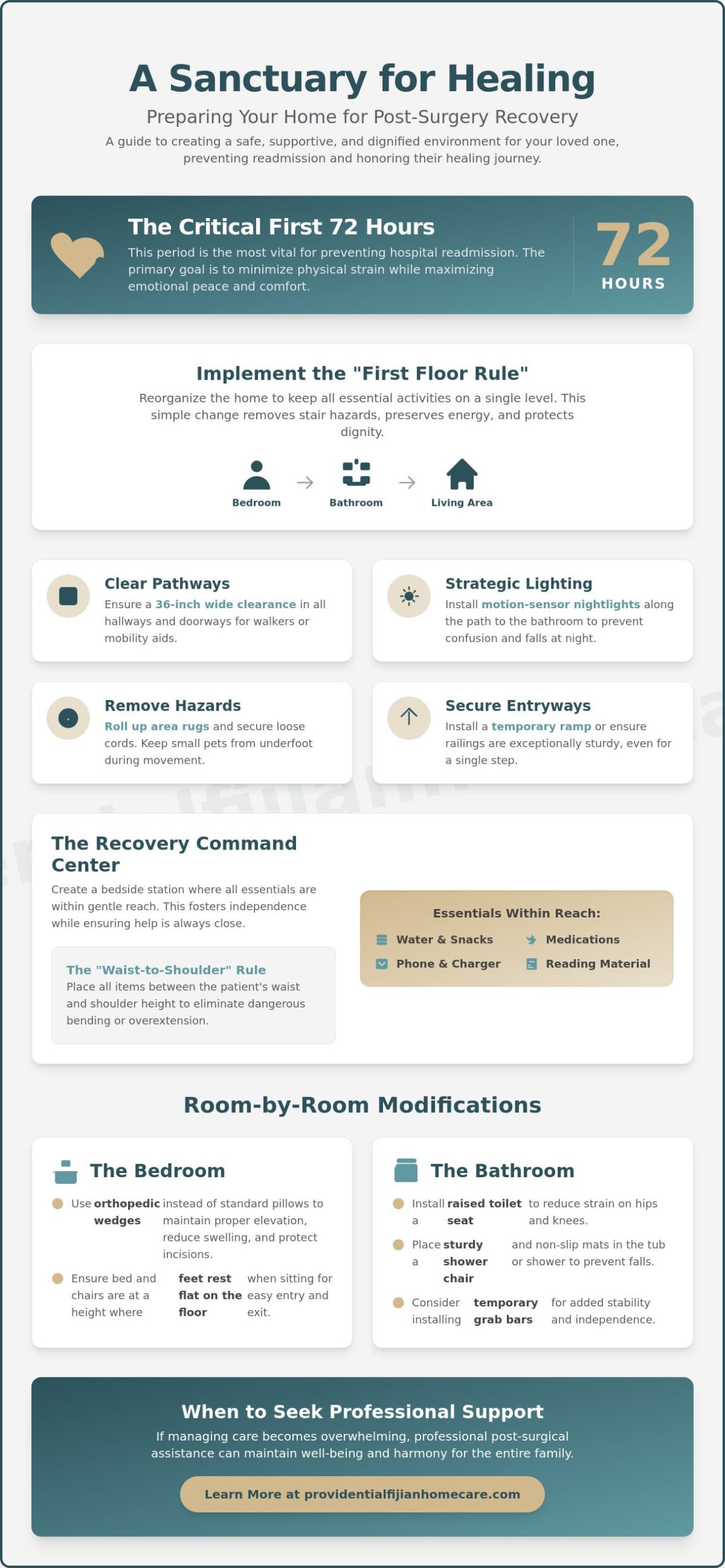
The first 72 hours following a hospital discharge represent a sacred window of time. This period is the most critical for preventing an unwanted return to the hospital, yet it’s often when families feel the most overwhelmed. When you are determining how to prepare home for post-surgery recovery, your primary goal is to minimize physical strain while maximizing emotional peace. We recommend the “First Floor Rule.” By reorganizing the home to keep all essential activities on a single level, you remove the danger of stairs and allow your loved one to focus entirely on their gradual recovery of health and strength. This simple change preserves their energy and protects the dignity of their movement.
Accessibility requires a discerning eye and a commitment to safety. Walk through your home with a measuring tape to ensure at least a 36-inch wide clearance in every hallway and doorway. This space is necessary for the steady use of walkers or other mobility aids without the frustration of snagging on furniture. Lighting acts as a silent guardian during this transition. Installing motion-sensor nightlights along the path to the bathroom prevents the confusion and falls that often happen during midnight hours. These small, thoughtful additions create an environment where the patient feels secure and held in high esteem.
The Recovery Command Center: Everything Within Reach
A bedside station serves as the heart of the recovery space. It’s a place where water, medications, and phone chargers are always within a gentle reach. Ensure that chairs and beds are at a height that allows for easy entry and exit; feet should rest flat on the floor when sitting. We use the “Waist-to-Shoulder” rule for organization. By placing every essential item between the waist and shoulder height of the patient, you eliminate the need for dangerous bending or overextension that could strain fresh incisions. This setup fosters independence while ensuring that help is never more than a reach away.
Removing Hazards in Sonoma County Homes
In our beautiful Sonoma County homes, aesthetic choices like plush area rugs can unfortunately become significant trip risks. It’s best to roll these up and store them away until the healing journey is complete. If you have small, beloved pets, create a plan to keep them from underfoot during movement to avoid accidental tumbles. Finally, look at your entryways. Even a single step can be a barrier. Installing a temporary ramp or ensuring that railings are exceptionally sturdy provides a sense of security from the very moment they arrive home. This attention to detail reflects the deep respect we have for the domestic sphere as a place of true healing.
Room-by-Room Modifications for a Successful Healing Journey
Moving beyond the structural layout of the home, the specific rooms where your loved one will spend most of their time require a gentle, focused touch. While the sanctuary is a whole-house concept, the details of how to prepare home for post-surgery recovery are truly found in the intimate spaces of the bedroom, bathroom, and kitchen. These adjustments shouldn’t feel like a clinical takeover. Instead, they should feel like a supportive embrace, ensuring that every movement is met with stability and every need is met with grace. This kinship-centered approach allows the domestic sphere to remain a place of comfort rather than a site of stress.
In the bedroom, comfort is synonymous with correct positioning. Standard pillows often fall flat, so we recommend using orthopedic wedges to maintain the elevation required for reducing swelling or protecting incisions. This isn’t just about physical health; it’s about providing a sense of rest that feels truly restorative. By integrating in-home help for seniors, families can ensure that these positioning needs are monitored throughout the day, allowing the patient to rest with a quiet mind and a body that is held in high esteem.
The Bathroom: Preventing Falls and Ensuring Dignity
The bathroom is often the place where vulnerability is felt most deeply. To protect a loved one’s dignity, focus on non-permanent modifications like raised toilet seats and sturdy shower chairs. These tools allow for independence while mitigating the risk of a slip. Keep a hygiene kit within arm’s reach, stocked with gentle soaps and easy-to-use bathing supplies. Balancing the need for privacy with the requirement for safety is a delicate act of love. Leaving the door slightly ajar or having a caregiver nearby provides a safety net without intruding on their personal space during personal care tasks.
The Kitchen: Nutritional Support for Tissue Repair
True healing begins with nourishment that honors the body’s need for repair. The “Recovery Pantry” should be stocked with anti-inflammatory foods such as leafy greens, berries, and omega-3 rich snacks that support tissue growth. High-protein, easy-to-digest meals are essential for maintaining strength when the appetite might be low. Hydration is equally vital; place water stations in every room to ensure they never have to travel far for a drink. Having a dedicated person for post-surgical care ensures that nutrition is never sacrificed for convenience during this tender time of recovery.
Beyond the Physical: The Role of Kinship and Emotional Support
While clearing pathways and installing safety equipment provides the structural foundation for healing, the heart’s environment is what truly fuels a person’s return to health. Surgery often leaves a loved one feeling vulnerable, not just in body but in spirit. Many patients experience what is known as the “Post-Op Blues,” a period of emotional dipping that is as much a clinical reality as physical fatigue. When you consider how to prepare home for post-surgery recovery, it’s vital to look beyond the grab bars and non-slip mats. You are creating a sanctuary where emotional support is viewed as a clinical necessity, ensuring that the spirit remains as resilient as the body.
In our tradition, we lean into the Fijian value of kinship, which views recovery as a collective, family-centered journey rather than a solitary struggle. This approach transforms the domestic sphere into a place of deep belonging and affection. Isolation can be a silent enemy during the long days of convalescence. By integrating professional home care givers into your plan, you provide more than just assistance; you offer a consistent, supportive presence that guards against loneliness. A positive atmosphere, filled with natural light, gentle music, and regular social connection, serves as a powerful catalyst for a swifter and more joyful recovery.
The Power of Companion Care in Recovery
Professional companion care offers a unique layer of security that transcends basic assistance. Having a neutral, caring presence in the home significantly reduces the anxiety that often bubbles up after a major procedure. These caregivers help maintain the patient’s social rhythms, engaging them in light conversation or familiar activities that keep the mind sharp and the mood elevated. This dedicated focus often relieves the tension that can naturally arise within a family during high-stress times, allowing relatives to focus on their emotional bond rather than just the demands of care.
Fostering a Culture of Respect and Reverence
True healing happens when a person feels seen and valued. We believe in fostering a culture of respect and reverence, where every interaction is unhurried and patient-centered. This means empowering your loved one to maintain as much independence as they safely can, which preserves their sense of self. During the slower days of recovery, the gift of time is the most precious thing you can offer. By using cultural warmth and high esteem to guide every task, you create a sense of safety that allows the patient to focus entirely on their journey back to strength. This holistic approach ensures that the home remains a place of dignity, tradition, and profound peace.
Managing the Transition: Local Logistics and Discharge Planning
The journey from a clinical setting to the sanctuary of home is a bridge that requires careful, reverent construction. For families in Santa Rosa, this transition often begins at Sutter, Kaiser, or Memorial hospitals. While the medical teams provide the foundation for health, the practicalities of a smooth exit fall upon the family network. Understanding how to prepare home for post-surgery recovery involves more than just physical adjustments; it requires a firm grasp on local logistics before the hospital doors close behind you. By coordinating with discharge planners early, you ensure that the wisdom of the medical team is carried directly into the domestic sphere, protecting the patient from the stress of a disorganized return.
A well-prepared “Discharge Checklist” acts as a silent partner in your peace of mind. Before leaving the hospital, ensure you have clear answers to these vital questions:
- What specific symptoms or changes in the incision area require a call to the surgeon?
- Which medications have been changed, and how do they interact with existing prescriptions?
- When and where are the follow-up appointments scheduled in Santa Rosa or Petaluma?
- What are the specific physical limitations regarding lifting, bathing, or movement?
Having these answers recorded allows you to focus on the emotional bonds of kinship rather than the anxiety of the unknown. It transforms the recovery from a series of clinical tasks into a supported, family-centered experience.
Bridging the Gap Between Hospital and Home
Medication reconciliation is a cornerstone of safe recovery. It’s essential to ensure the medications waiting at home align perfectly with the new discharge orders to prevent dangerous overlaps. Organizing the paperwork, including discharge summaries and follow-up schedules, into a single, accessible folder reduces the mental load on caregivers. Understanding the limits of non-medical care is equally important. While a caregiver provides warmth and assistance with daily tasks, knowing exactly when to reach out to the medical provider for health concerns ensures a safe and steady path toward strength.
Local Support Systems in Santa Rosa
Sonoma County offers a wealth of resources to support those in recovery. Many local pharmacies in Santa Rosa provide delivery services for post-surgical supplies, removing the need for stressful errands during the early days of healing. When you choose a caregiver agency that deeply understands our local medical networks, you gain a partner who can navigate the community with ease. From arranging transportation for follow-up visits to sourcing medical equipment rentals, these local connections are invaluable. We invite you to learn more about our post-surgical care services to see how we can support your family’s unique journey with the high esteem and benevolence your loved one deserves.
When to Transition to Professional Post-Surgical Home Care
Many families begin this journey with a heart full of love and a fierce determination to handle every aspect of the healing process themselves. However, the physical and emotional weight of providing constant support can eventually overshadow the quality of the recovery. Recognizing the signs that family caregiving is no longer sustainable is a profound act of love; it is not a failure of duty. When exhaustion sets in or the complexity of non-medical demands begins to cause stress, it’s often the right moment to consider professional home care in Santa Rosa, CA. This choice ensures that your loved one receives unhurried, attentive care while allowing you to return to your vital role as a supportive family member.
As you evaluate how to prepare home for post-surgery recovery, remember that the most vital resource isn’t a piece of equipment, but a compassionate presence. Providential Fijian Home Care acts as a nurturing bridge to full independence. We offer customized care plans that range from hourly respite care, giving family members a much-needed breath of air, to comprehensive recovery support. This flexibility ensures that the level of assistance evolves alongside the patient’s growing strength. By prioritizing high esteem and benevolence, we help maintain a peaceful domestic sphere where the healing journey can flourish without the shadow of caregiver burnout.
The Role of the Professional Caregiver in Recovery
Professional caregivers bring a sense of stability and technical grace to the home. They provide essential assistance with Activities of Daily Living (ADLs) such as bathing and dressing, ensuring these intimate tasks are handled with the utmost reverence. Beyond personal hygiene, they offer reliable medication reminders and constant hydration monitoring, which are critical for tissue repair. By managing light housekeeping and laundry, they maintain an orderly environment that is conducive to rest. This level of support allows the patient to focus entirely on their strength while knowing their home is being cared for with a spirit of service-oriented respect.
Starting the Journey with Providential Fijian Home Care
Our process begins with a gentle, low-pressure dialogue centered on your family’s unique needs. We take the time to understand the traditions and values that make your home a sanctuary. We then match caregivers based on both professional expertise and the cultural warmth that defines our heritage. This ensures a seamless transition that honors your family’s history while providing the highest level of care. We believe that caregiving is a privilege. By fostering a deep sense of kinship from the very first visit, we ensure your loved one feels safe, valued, and held in the highest regard throughout their path to wellness. Understanding how to prepare home for post-surgery recovery means knowing when to invite a supportive partner into your circle of care.
Embracing a Path of Restorative Peace and Healing
Preparing your home for a loved one’s return is a profound gesture of devotion. We’ve explored how the “First Floor Rule” and room-by-room safety modifications provide a stable foundation for physical strength. Yet, the heart of a successful recovery lies in the warmth of kinship and the prevention of isolation through meaningful connection. When you understand how to prepare home for post-surgery recovery, you aren’t just rearranging furniture; you’re creating a sacred space where dignity and respect are the primary guests. This transformation ensures that the domestic sphere remains a place of true convalescence.
Since 2016, we’ve had the privilege of serving families across Sonoma and Marin Counties with a unique brand of Fijian-style kinship care. Whether your family needs expert support for Alzheimer’s, Dementia, or post-surgical recovery, we are here to walk beside you with benevolence and high regard. Our mission is to ensure that every task is performed with the same affection you would provide yourself. We invite you to begin a compassionate dialogue about your post-surgical care needs today. Together, we can ensure a steady, peaceful journey back to strength. You don’t have to carry this weight alone.
Frequently Asked Questions
How soon should I start preparing my home for a loved ones surgery?
Ideally, you should start the preparation process at least two weeks before the scheduled procedure. This timeframe allows you enough room to reorganize furniture for the “First Floor Rule” and install necessary safety equipment without feeling rushed. When you begin early, you ensure the sanctuary is fully ready before your loved one returns. It is a beautiful way to honor their need for rest and minimize stress for the entire family.
Do I need to hire a nurse for post-surgical care at home?
You don’t always need a skilled nurse; it depends on whether your loved one requires clinical medical procedures or simply assistance with daily living. While nurses handle medical tasks, a professional caregiver provides vital personal care and hygiene assistance. This non-medical support is often the key to maintaining dignity and comfort during the healing journey. Always check with your doctor to see if skilled nursing is required before finalizing your care plan.
What are the most common home hazards that cause post-surgery falls?
Loose area rugs and cluttered pathways are the most frequent causes of falls after a major procedure. Small pets and poor lighting in hallways also pose significant risks during midnight movements. Learning how to prepare home for post-surgery recovery involves removing these hazards to create a clear, 36-inch wide path for mobility aids. Ensuring the environment is predictable and well-lit is a simple act of benevolence that prevents unwanted hospital readmission.
Can a non-medical caregiver help with my loved ones medications?
Non-medical caregivers provide essential medication reminders to ensure your loved one stays on their prescribed schedule. While they don’t administer injections or manage complex clinical dosing, they help with hydration and tracking when the next dose is due. This reliable presence reduces the mental load on the family network. It ensures that the recovery command center stays organized and that health remains the primary focus throughout the day.
How do I manage my own work schedule while caring for a recovering relative?
Utilizing respite care is the most effective way to balance your professional responsibilities with your caregiving heart. These services allow you to step away for work or personal rest while knowing your relative is held in high esteem by a skilled companion. It prevents the exhaustion that often comes from constant care demands. By sharing the responsibility, you maintain the harmony and sustainability of the entire domestic sphere during the recovery period.
What local Santa Rosa resources are available for medical equipment?
Santa Rosa is home to several specialized pharmacies and medical supply shops that offer rentals for walkers, hospital beds, and shower chairs. Many of these local businesses even provide delivery to your doorstep, which is a great help when you are busy learning how to prepare home for post-surgery recovery. Coordinating with these local Sonoma County resources early ensures that every piece of equipment is tested and ready before the discharge date arrives.
How does Fijian home care differ from standard caregiver agencies?
Our approach is rooted in the Fijian value of kinship, which treats every client as a beloved extension of our own family. Unlike standard transactional models, we prioritize cultural warmth and a spirit of deep reverence for the elderly. We don’t just provide a service; we offer a supportive presence that honors heritage and tradition. This mission statement of kinship ensures that caregiving is always viewed as a sacred privilege rather than a chore.
What should I do if my loved one becomes depressed during their recovery?
If you notice signs of the “Post-Op Blues,” focus on increasing social connection and natural light within the home. Professional companion care can be a powerful tool to combat the isolation that often leads to low moods. Engaging in light conversation and familiar activities helps maintain a positive outlook during the slower days of healing. A neutral, caring presence often reduces family tension and fosters a sense of safety and belonging for the patient.