
What if the independence you are fighting so hard to preserve for your parent is actually the very thing putting their safety at risk? It’s natural to feel a deep sense of guilt at the thought of changing their routine, especially when you want to honor the legacy and home they have built here in Santa Rosa. You are likely torn between the fear of a sudden emergency and the desire to respect their autonomy, often wondering if those small lapses in memory are just normal aging or the specific signs an elderly parent shouldn’t live alone.
We believe that acknowledging these changes isn’t about taking away their freedom, but rather about surrounding them with the protection and kinship they deserve. This guide will help you identify twelve critical physical, cognitive, and emotional red flags to validate your concerns. You’ll learn how to provide high-level support that keeps your loved one safe and respected in their own house. We will explore a clear checklist that offers you peace of mind, showing you how to meet their needs while keeping them right where they belong.
Key Takeaways
- Honor your intuition as a sacred guide for recognizing the subtle shifts in your parent’s safety and emotional well-being.
- Identify the twelve physical and cognitive signs an elderly parent shouldn’t live alone, ensuring they remain safe and dignified within their own home.
- Recognize how social isolation within our Santa Rosa community can silently impact your loved one’s cognitive speed and heart health.
- Learn to initiate heartfelt conversations with high regard, positioning extra support as a gift of kinship rather than a loss of independence.
- Discover how to maintain the sanctity of the family home through compassionate care that prioritizes both safety and deep respect.
Recognizing the Subtle Shifts in Senior Safety and Well-being
That quiet, nagging feeling at the back of your mind after a Sunday visit isn’t just simple worry. It’s your intuition, rooted in years of kinship, signaling a change in the person who raised you. In our culture, we view our elders with a sense of sacred reverence; they are the anchors of our domestic life. When you start noticing the signs an elderly parent shouldn’t live alone, it’s often a realization that the environment they love is no longer providing the security they deserve. Acknowledging these shifts isn’t an admission of failure or a move toward an “eviction” from their history. It’s a proactive step of high esteem and protection.
For many families in our community, the goal is successful aging in place. This means ensuring our parents can remain in their cherished Santa Rosa homes while surrounded by a supportive network that mitigates risk. There is a vital distinction between the occasional forgetfulness we all experience and patterns of self-neglect that threaten health. Missing a single appointment is one thing; failing to realize the stove was left on or that the fridge contains nothing but expired milk suggests a deeper cognitive fatigue. We must view these observations as a call to action to preserve their dignity, not as a betrayal of their independence.
The Difference Between Normal Aging and Red Flags
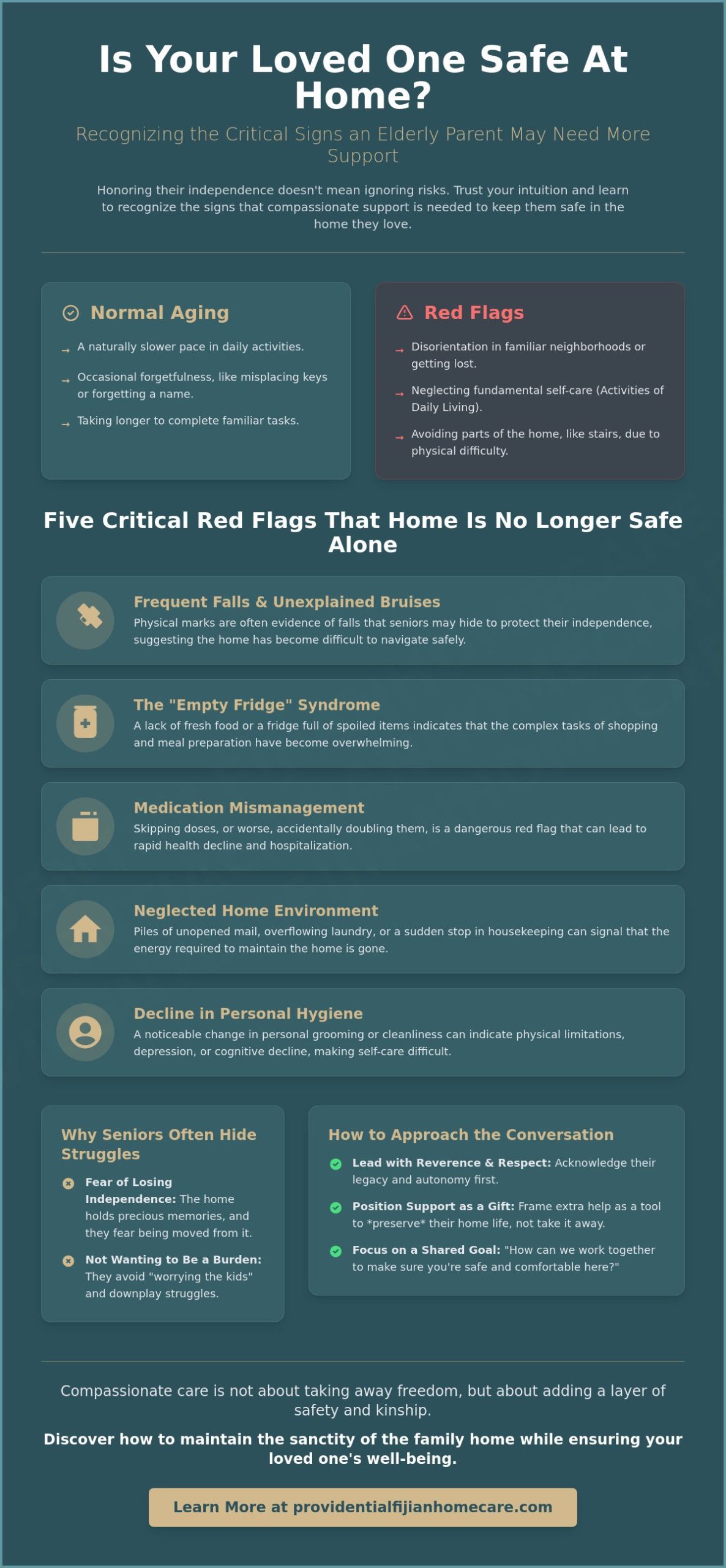
Aging naturally brings a slower pace, but there’s a difference between slowing down and stopping altogether. Physical limitations become safety hazards when a parent avoids the stairs entirely or stops bathing because the tub feels like a mountain. We often see memory slips, like forgetting a neighbor’s name, but disorientation in familiar Sonoma County neighborhoods or getting lost on the way to the local market are significant red flags. Activities of Daily Living, or ADLs, represent the fundamental self-care tasks like bathing and eating that professionals use as the benchmark for determining if a senior can safely manage their own household. When these tasks go unfinished, the domestic sphere is no longer a place of rest, but a place of risk.
Why Seniors Often Hide Their Struggles
Seniors are often masters of the “I’m fine” response because they fear losing the home that holds their most precious memories. They don’t want to be a burden, and the cultural expectation of rugged independence can make admitting a struggle feel like a defeat. During your weekly visits, look past the verbal reassurances. Check for piles of unopened mail, unwashed laundry, or mysterious bruises on their arms. They might be hiding a recent fall to avoid “worrying the kids,” but these hidden struggles are exactly where our support is needed most. Approaching these discoveries with warmth and patience allows us to bridge the gap between their desire for autonomy and their need for safety.
Five Critical Red Flags That Home is No Longer Safe Alone
When the subtle shifts we discussed previously begin to coalesce into tangible hazards, it’s time to look closer at the daily realities of your parent’s environment. Identifying the specific signs an elderly parent shouldn’t live alone is a practice of high regard, ensuring their golden years remain a time of peace rather than a series of managed crises. Planning for Growing Older at Home requires us to be honest about five primary red flags that often signal a need for increased kinship and professional support.
The first warning is often found on the skin. Unexplained bruises or scrapes are frequently the evidence of “falls that didn’t happen” in your parent’s narrative. They may hide these incidents to protect their independence, but these physical marks suggest the domestic sphere has become difficult to navigate. Similarly, the “Empty Fridge” syndrome is a profound indicator of cognitive fatigue. It isn’t just about a lack of food; it’s about the mental energy required for meal preparation and nutrition support. When you find spoiled items or a lack of basic staples, it’s a sign that the complex task of nourishing oneself has become overwhelming.
Medication mismanagement is perhaps the most dangerous red flag. Skipping doses or accidentally doubling up can lead to sudden hospitalizations and a rapid decline in health. This often pairs with a neglected home environment. If you notice piles of unopened mail, overflowing laundry, or a sudden cessation of light housekeeping, the home is no longer a place of order and sanctuary. These lapses are rarely about laziness; they are cries for help from a spirit that is struggling to keep up with the demands of a household.
Physical Mobility and Fall Risks
Watch how your parent moves through their space. Are they “furniture walking,” reaching for the backs of chairs or steadying themselves against the walls for balance? In many older Santa Rosa homes, beautiful area rugs and steep staircases become significant obstacles. Utilizing in-home help for seniors provides the necessary mobility support to navigate these domestic hurdles safely, ensuring that a simple trip to the kitchen doesn’t result in a life-changing injury.
Hygiene and Self-Care Decline
A noticeable shift in grooming or personal hygiene often stems from a deep-seated fear of falling in the shower or simple cognitive confusion regarding the routine. When a parent stops bathing or wearing clean clothes, it erodes their sense of dignity and esteem. These signs of self-neglect require immediate, compassionate intervention to restore their comfort. If you are noticing these changes during your visits, a gentle dialogue about assistance can be the first step toward surrounding your loved one with the protective care they deserve.
The Invisible Dangers: Social Isolation and Cognitive Decline
While physical bruises tell a visible story, the quietest signs an elderly parent shouldn’t live alone are often found in the silence of an empty house. Senior loneliness is a profound burden that impacts more than just mood; it’s a clinical concern linked to declining heart health and a noticeable reduction in cognitive speed. When a parent begins to withdraw from their long-standing social groups or church communities in Santa Rosa and Petaluma, it’s often because the mental effort required to engage has become too taxing. This isolation creates a cycle where the lack of stimulation further accelerates cognitive decline, turning the sanctuary of home into a place of loneliness.
Safety concerns also extend beyond the front door to the local roads. You might notice your loved one becoming increasingly confused or anxious while driving on Highway 101 or local Santa Rosa streets. Getting lost in a familiar neighborhood or experiencing sudden, uncharacteristic mood swings while out in public are significant indicators that the cognitive load of independent living is reaching a breaking point. These personality shifts often signal the early stages of Alzheimer’s, where the world begins to feel unpredictable and frightening, leading to a defensive withdrawal from the community they once loved.
Recognizing Early Signs of Dementia
Professional methods for Assessing Cognitive Impairment often focus on patterns of memory loss that disrupt the rhythm of daily life. You may notice repetitive questioning, where a parent asks the same question minutes apart, or the “Sundowning” effect, where confusion and agitation peak in the late afternoon. If these patterns emerge, seeking specialized dementia care in Sonoma County ensures your loved one receives support tailored to their specific journey. This specialized assistance provides the steady, patient guidance needed to navigate the fog of memory loss with grace.
The Toll of Senior Isolation
In our heritage, we believe no elder should ever feel alone in their sunset years; caregiving is a sacred privilege that honors their life’s work. When a parent stops engaging with their favorite hobbies or friends, companion care acts as a vital bridge back to emotional wellness. It provides the steady, nurturing presence that prevents the domestic sphere from feeling like a place of confinement. By surrounding them with warmth and consistent dialogue, we protect their spirit while ensuring their physical safety remains a top priority. This approach transforms “living alone” into “living supported,” maintaining their cherished independence while removing the fear of isolation.
How to Approach the Conversation with Reverence and Respect
Initiating a dialogue about the signs an elderly parent shouldn’t live alone is one of the most delicate tasks a family will face. It’s a conversation that should never be rushed or held in the wake of a sudden crisis. Instead, choose a quiet, domestic setting where your parent feels most comfortable and respected. By approaching this moment with benevolence and high regard, you transform a potentially frightening discussion into a collaborative effort to preserve their legacy. Validating their fears is the first step toward finding a solution that honors their history while ensuring their current safety.
We believe in the ‘We’ approach, which frames support as a way to keep the entire family unit strong and connected. Rather than focusing on what is being “taken away,” like keys or checkbooks, emphasize what is being gained: security, companionship, and the ability to stay home longer. Sometimes, bringing in a neutral, compassionate perspective can ease the tension. A trusted caregiver agency can provide professional guidance that feels like a natural extension of your own family’s care, helping to bridge the gap between concern and action. If you’re ready to start this dialogue, we invite you to reach out for a supportive conversation today.
Using ‘I’ Statements to Reduce Defensiveness
The language we use determines the emotional outcome of the conversation. Shift from accusatory “you” statements to vulnerable “I” statements to reduce defensiveness. For instance, saying “I worry about your safety when you navigate the stairs alone” is far more nurturing than “You can’t do this anymore.” If you encounter resistance, respond with patience and emotional warmth rather than frustration. Honor their role as the head of the family by asking for their input on how they’d like to be supported. This maintains their dignity and ensures they feel like an active participant in their own care plan.
Planning for the Transition
Successful transitions are built on small, manageable steps rather than sudden, sweeping changes. Start by creating a ‘care circle’ that involves siblings and utilizes local Santa Rosa resources. You might begin with home care givers who assist with simple tasks like meal preparation or transportation to appointments at Montgomery Village. This gradual introduction of support allows your parent to build trust with their caregiver. Before the transition moves forward, ensure you have gathered essential medical records and documents, keeping everything organized to reduce stress for the entire family unit.
Preserving Home Life with Compassionate Support in Santa Rosa
For many families in Sonoma County, the home is more than just a structure; it’s a repository of history and a sanctuary of comfort. While many national resources push for nursing home placements the moment you notice the signs an elderly parent shouldn’t live alone, we believe there is a more compassionate path. Aging in place allows your loved one to remain in the environment they cherish while receiving the high-level care they deserve. This non-medical support fills the vital gap between total independence and facility living, offering a way to maintain dignity without sacrificing safety.
By customizing care plans to include specific tasks like medication reminders, personal hygiene assistance, and transportation to errands, we ensure that the domestic sphere remains a place of order and rest. Our approach focuses on the holistic well-being of the senior, providing meal preparation and nutrition support to combat the cognitive fatigue often associated with living alone. This level of care is designed to surround your parent with a protective layer of kinship, allowing them to age with the high regard they have earned through a lifetime of service to their family.
The Fijian Value of Kinship in Caregiving
At Providential Fijian Home Care, our caregivers view their work as a sacred privilege rather than a simple job. This perspective is rooted in a cultural heritage where elders are revered as the heart of the home. Our team brings a signature triad of warmth, patience, and deep respect to every domestic visit. We don’t just provide a service; we integrate into your family dynamic to ensure the support feels seamless and loving. This benevolence transforms the act of caregiving into a shared journey of kinship, where your parent’s emotional wellness is prioritized alongside their physical safety.
Taking the First Step Toward Peace of Mind
Taking the first step toward securing your parent’s future begins with an unhurried, low-stakes dialogue. During an initial in-home assessment in Santa Rosa or Healdsburg, we take the time to listen to your parent’s stories and understand your family’s specific concerns. We then demonstrate how home care Santa Rosa CA can be tailored to meet your loved one’s unique needs, from light housekeeping and laundry to dedicated Alzheimer’s and dementia care. You don’t have to navigate this transition alone. We are here to act as a compassionate extension of your own support network, providing the steady and reliable presence your family deserves.
Honoring the Sacred Bond of Home and Kinship
Honoring the domestic sanctuary your parent has built is an act of high regard. Recognizing the signs an elderly parent shouldn’t live alone isn’t a betrayal of their independence; it’s a commitment to their safety and dignity. By trusting your intuition and identifying physical or cognitive red flags early, you ensure they remain protected within the home they love. Transitioning to support is about strengthening the family unit through benevolence and respect, allowing your loved one to age with grace.
Since 2016, we’ve served families across Sonoma, Marin, and San Francisco Counties with a mission rooted in kinship and specialized Alzheimer’s and dementia support. We view caregiving as a sacred privilege, offering a supportive presence that feels like a natural extension of your own family. You don’t have to carry the weight of these decisions by yourself. We’re here to walk this path with you, ensuring your parent is treated with the esteem they deserve at every stage.
We invite you to Schedule a Compassionate In-Home Assessment Today to begin a dialogue centered on warmth and respect. Our local team provides the steady, nurturing assistance needed to maintain your loved one’s comfort and your own peace of mind. Your parent’s legacy deserves high-level care, and we’re honored to help you preserve it.
Common Questions About Senior Safety and Home Care
What are the most common signs that a senior can no longer live alone safely?
Common indicators include unexplained bruising from hidden falls, an empty or spoiled fridge, and frequent medication mismanagement. You might also notice a neglected home environment with piles of laundry or unopened mail. These specific signs an elderly parent shouldn’t live alone often suggest that the daily demands of maintaining a household have become a burden rather than a comfort.
How do I tell my parent they need a caregiver without upsetting them?
Choose a gentle, domestic setting for the conversation and focus on “I” statements that express your own worry for their safety. Frame the addition of a caregiver as a way to preserve their independence and keep the family unit strong. By leading with benevolence and high regard, you show them that support is a gift of kinship rather than a loss of autonomy.
Is it normal for elderly parents to refuse help even when they clearly need it?
Resistance is a very natural response rooted in the fear of losing one’s domestic sphere and cherished memories. Many seniors master the “I’m fine” response to avoid worrying their children or risking their independence. Patience and emotional warmth are essential when navigating this resistance, as it allows your parent to feel heard and respected during a vulnerable time.
What is the difference between home care and assisted living for Santa Rosa seniors?
Home care allows your loved one to remain in their own house while receiving support with daily tasks, whereas assisted living requires moving into a residential facility. For many Sonoma County families, home care is the preferred choice because it maintains the senior’s connection to their local community and personal history. It provides a vital bridge between total independence and facility living.
Can my parent stay at home if they have early-stage dementia or Alzheimer’s?
Most seniors with early-stage cognitive decline can remain safely at home with specialized Alzheimer’s and Dementia Care. This support provides the steady, patient guidance needed to manage confusion or “sundowning” effects. By surrounding them with familiar surroundings and consistent kinship, we can slow the emotional toll of memory loss and ensure their physical safety remains a top priority.
What should I do if I notice my parent is neglecting their personal hygiene?
Neglecting hygiene often stems from a fear of falling in the shower or cognitive confusion about daily routines. You should approach this shift with deep respect and offer Personal Care and Hygiene Assistance as a way to restore their dignity. Introducing a professional caregiver can often be less stressful for a parent than receiving this intimate help from their own children.
How much does in-home senior care cost in Sonoma County?
Costs for in-home support in Santa Rosa depend entirely on the level of care required and the number of hours your parent needs each week. While rates vary across Sonoma County, home care is often a more flexible and personalized alternative to full-time facility placement. We recommend a low-stakes dialogue to discuss a customized plan that fits your family’s specific domestic needs and budget.
Are there specific driving signs that indicate a senior should stop driving?
Look for signs like getting lost on familiar roads, increased anxiety when driving on Highway 101, or new, unexplained dents on their vehicle. If your parent is avoiding driving at night or struggling with basic traffic signals, it’s a clear indicator they need transportation support. Providing errands and transportation services ensures they stay connected to the Santa Rosa community without risking their safety.