
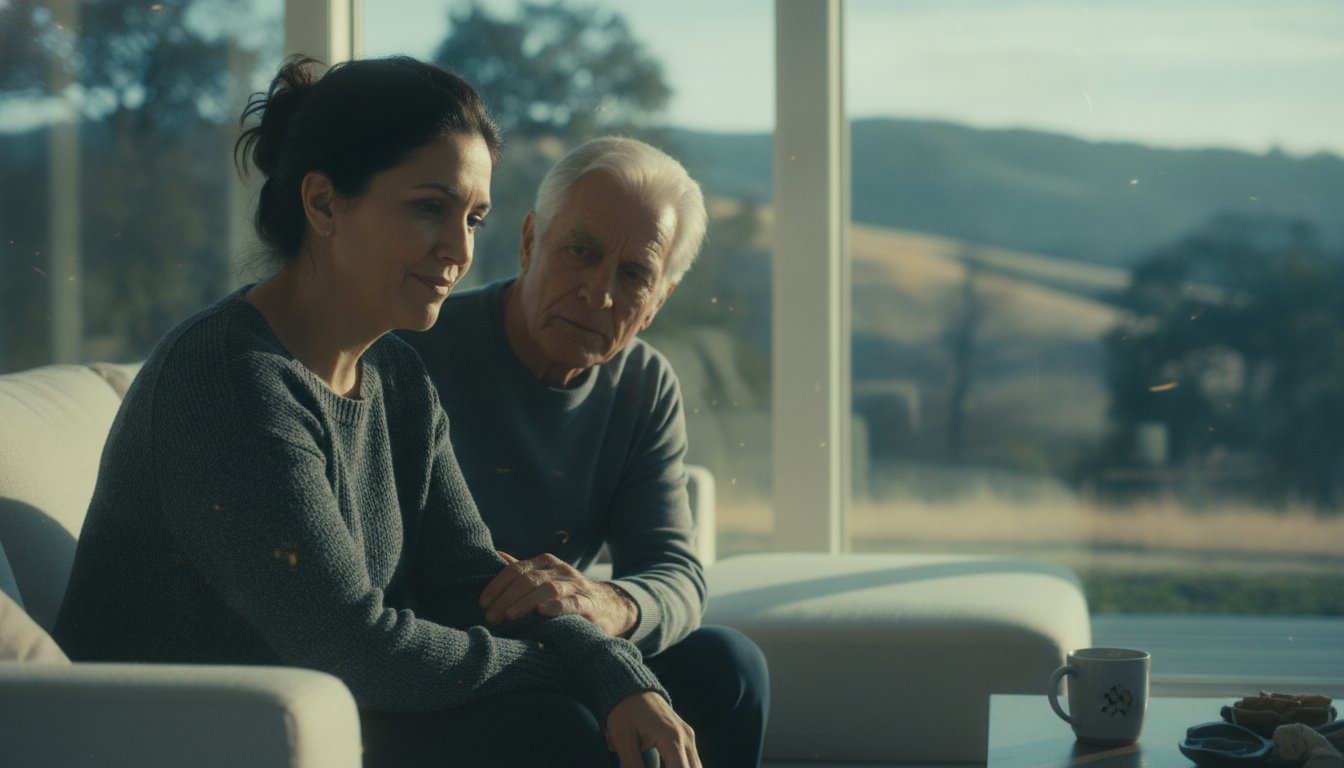
Last Tuesday at 3:00 AM, you might have found yourself staring at the ceiling in your Santa Rosa home, wondering why the deep affection you feel for your parent is suddenly buried under a mountain of resentment. You’re not alone in this struggle. Nearly one in four people in the country now serve as family caregivers, and many feel the same overwhelming weight. It’s vital to recognize that this exhaustion is a physiological response to immense pressure, not a reflection of your character. Learning to identify caregiver burnout symptoms and solutions is the first step toward reclaiming your own health and the sacred bond of kinship you share with your loved one.
We understand the quiet ache of social isolation that often settles over families in the North Bay when caregiving becomes an all consuming role. You deserve to feel like a cherished family member again, rather than a weary taskmaster managing a never ending list of chores. This guide offers a compassionate look at how to spot the early warning signs of exhaustion while providing a clear path toward support in Sonoma County. We’ll preview practical steps to utilize local resources and the expanded 2026 tax credits, helping you restore a sense of peace, vitality, and high regard within your home.
Key Takeaways
- Learn to distinguish between temporary fatigue and the deep-seated exhaustion of burnout by identifying specific physical and emotional warning signs.
- Gain a comprehensive understanding of caregiver burnout symptoms and solutions to move from a place of quiet resentment back to a place of deep-seated affection.
- Discover how the value of reverence can transform your perspective, treating the act of caregiving as a sacred privilege that honors your family’s heritage.
- Explore practical local resources in Sonoma County, including support groups and “micro-self-care” strategies, designed to provide immediate relief and long-term stability.
- Understand how professional respite care allows you to step away from clinical tasks and reclaim your role as a loving daughter, son, or spouse.
What is Caregiver Burnout and Why Does It Happen?
Caregiver burnout isn’t merely a bad day or a week of poor sleep; it’s a state of profound, total depletion that touches every part of your being. It occurs when the sacred duty of caring for a loved one transforms into a cycle of chronic stress that leaves you feeling hollowed out. This emotional and physical collapse, often referred to as Caregiver burden, happens when the demands of care exceed your internal resources. For many families in Santa Rosa and across Marin, this is the reality of the “sandwich generation.” You’re likely caught between the needs of your growing children and the declining health of your elders, trying to hold every piece of your world together with trembling hands.
One of the most painful drivers of this exhaustion is role confusion. When the time you spend with a parent is no longer about sharing stories or enjoying a meal, but is instead consumed by managing medication and hygiene, the sense of kinship begins to fade. You stop being the daughter or the son, and you start feeling like an unpaid, untrained nurse. This loss of your primary identity, combined with a perceived lack of control over the situation, creates a fertile ground for emotional fatigue. Understanding caregiver burnout symptoms and solutions starts with acknowledging that your struggle is a natural response to an immense amount of pressure, not a failure of your love or commitment.
The Difference Between Stress and True Burnout
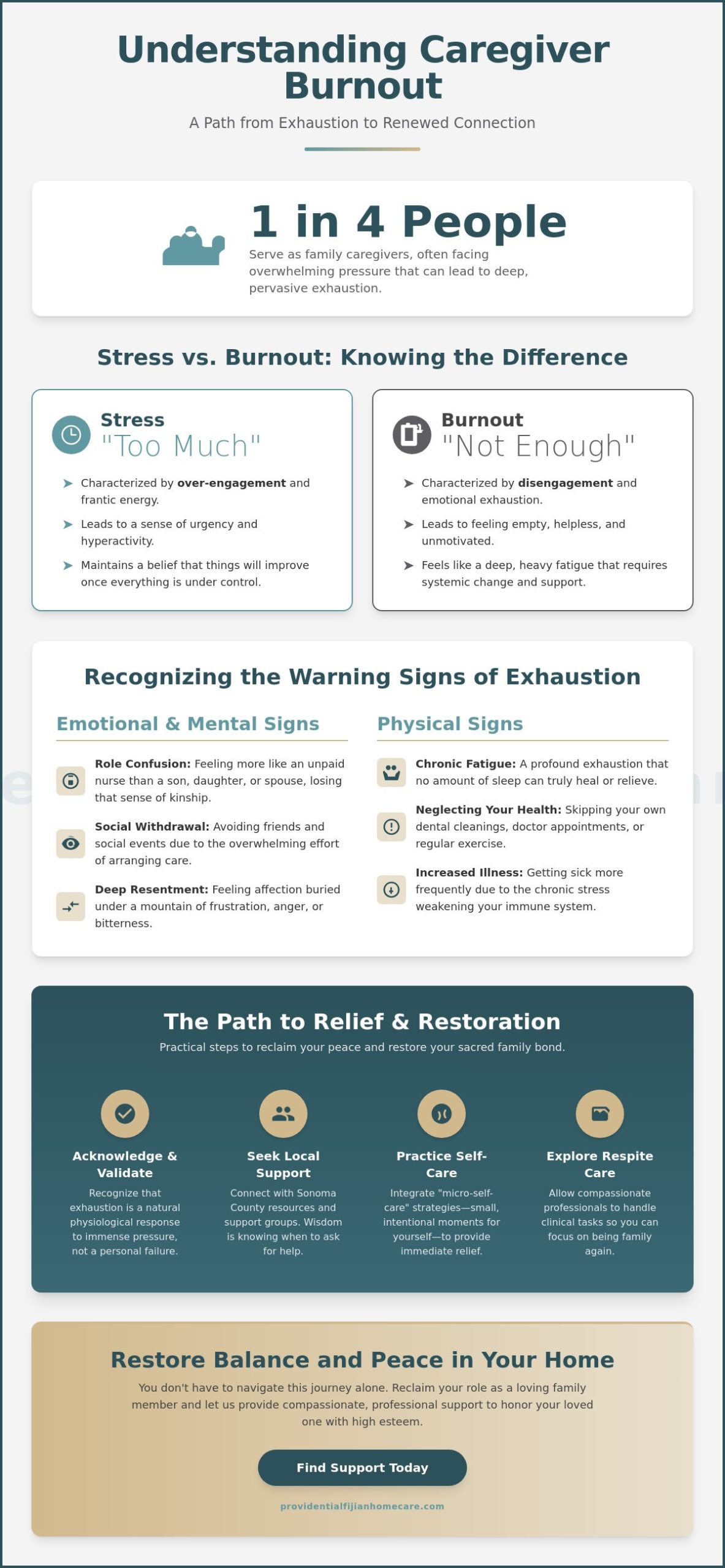
It’s helpful to view stress and burnout as two different stages of exhaustion. Stress often feels like “too much”—too many errands, too many appointments, and too little time. You’re over-engaged and frantic, but you still believe that if you could just get everything under control, you’d feel better. Burnout, however, feels like “not enough.” It’s characterized by a sense of emptiness, where you no longer have anything left to give. While stress might be eased by a long weekend or a few nights of good sleep, burnout requires a systemic change in how care is managed. It is a deep, quiet, and heavy fatigue that permeates your very soul.
Why Sonoma County Caregivers Face Unique Pressures
Families in our local community often face distinct challenges that accelerate this depletion. The sprawling, beautiful properties in rural Sonoma County offer peace, but they can also create a profound sense of isolation for those bound to the home. Many families set exceptionally high standards for themselves, believing that asking for help is a sign of weakness rather than an act of wisdom. There is also a frequent lack of awareness regarding the compassionate support provided by professional home care givers who specialize in preserving the dignity of the elderly. By bridging the gap between clinical need and emotional connection, we can find a path that honors both the caregiver and the loved one with high esteem and enduring respect.
Recognizing the Physical and Emotional Signs of Exhaustion
Recognizing the signs of exhaustion is an act of deep respect for both yourself and your loved one. It’s easy to dismiss a lingering headache or a sharp word as just a “bad day,” but these are often the first whispers of a deeper crisis. When you are looking for Caregiver Burnout Symptoms, you might notice a heavy, chronic fatigue that no amount of sleep can truly heal. This is particularly common when caring for someone experiencing “sundowning,” where late afternoon confusion leads to restless nights for everyone in the home. Understanding caregiver burnout symptoms and solutions allows you to intervene before the flame of your devotion flickers out.
Many families in Santa Rosa find themselves living inside a “caregiving bubble.” You might stop attending community events at Courthouse Square or skip lunch dates with friends in Petaluma because the effort of arranging care feels too great. This social withdrawal is a significant warning sign. It often goes hand-in-hand with neglecting your own health. If you’ve been skipping your own dental cleanings or doctor appointments in Windsor to prioritize your parent’s needs, you’re inadvertently placing your own well-being at risk. True kinship requires two healthy hearts; your health is the foundation of the care you provide.
Sometimes, the exhaustion manifests as a “short fuse.” You might feel a sudden, stinging flash of anger or irritability directed at the very person you love most. This reaction is often followed by a crushing wave of guilt, but it’s vital to understand that this is a physiological response to prolonged stress. If you find yourself trapped in this cycle, reaching out for gentle companion care can provide the breathing room needed to restore your patience and warmth.
Emotional Warning Signals You Should Not Ignore
Burnout often begins in the mind before it settles in the body. You may experience a persistent sense of hopelessness or the heavy belief that nothing you do truly matters. Seeking support from mental health professionals, such as Hope Therapy Center, can be a vital step in processing these feelings before they become overwhelming. Activities you once enjoyed in Sonoma County, like visiting a local vineyard or walking through a park, might suddenly feel like a chore. Compassion fatigue is the sudden, jarring loss of empathy and emotional numbness that occurs when a caregiver is repeatedly exposed to the trauma and decline of a loved one.
Physical Manifestations of Caregiver Burden
The body often speaks when the mind cannot. You might suffer from frequent headaches, digestive issues, or find yourself catching every cold that moves through Santa Rosa. Stress often changes our relationship with food, leading to “stress eating” or skipping meals entirely, which causes noticeable weight fluctuations. Additionally, the physical demands of providing mobility assistance can take a toll on your own back and joints, creating a cycle of pain that makes the act of caregiving feel like a burden rather than a privilege.
Compassion Fatigue vs. Burnout: Knowing the Difference
While we often use the terms interchangeably, there’s a delicate distinction between burnout and compassion fatigue that every family should understand. Burnout is typically a slow, smoldering process where your physical and mental energy is gradually eroded by the sheer volume of tasks. Compassion fatigue, however, can arrive with a jarring suddenness. It’s often described as a “numbness” or a “bruising of the soul” that occurs when you’ve witnessed the suffering of a loved one for too long without respite. Recognizing these caregiver burnout symptoms and solutions is not a sign of a hardened heart; it’s a signal that your capacity for empathy has been overextended.
This secondary trauma is particularly prevalent for those providing dementia care in Sonoma County. Watching a parent’s vibrant personality fade behind the veil of Alzheimer’s is a unique form of grief. You aren’t just exhausted from the chores; you’re emotionally wounded by the loss of the person who is still sitting right in front of you. It’s vital to remember that both conditions are treatable. By leaning on a support system, such as the resources found through the National Family Caregiver Support Program, you can begin to heal the emotional callouses and find your way back to a place of genuine warmth and connection.
The Trauma of Memory Loss
Memory loss doesn’t just affect the patient; it creates a repetitive, rhythmic stress for the caregiver. Answering the same question twenty times an hour or witnessing sudden personality changes can trigger a state of constant high alert. This “grieving the living” is a heavy burden that few understand. In these moments, professional memory care support becomes a necessity. It provides a protective layer of expertise that allows you to step back from the trauma and return to your role as a loving family member, preserving the dignity and high esteem your loved one deserves.
When Empathy Becomes Overwhelming
Many caregivers fall into the “empathy trap,” where they feel their loved one’s pain so deeply that they can no longer function. Our cultural heritage often places a high value on “doing it all” as a testament of love, yet this expectation can lead to a total collapse of empathy. Setting professional boundaries is an act of benevolence, not abandonment. By creating a sustainable structure for care, you ensure that the time you spend together is defined by joy and kinship rather than shared suffering and resentment.
Sustainable Solutions and Coping Strategies in Sonoma County
Finding a path forward requires more than just endurance; it demands a shift in how we view our roles within the family. When we address caregiver burnout symptoms and solutions, we must begin with the understanding that you cannot pour from an empty vessel. In our heritage, caregiving is a sacred privilege, yet it’s one that flourishes best when shared among a supportive community. You can start by practicing radical self-honesty about your current limits. Acknowledging that you’re tired isn’t a betrayal of your loved one; it’s the first step toward ensuring you can continue to care for them with the high esteem they deserve.
One effective method for maintaining your well-being is the “Rule of Three.” This involves delegating three essential but draining tasks, such as meal preparation, light housekeeping, and transportation to errands. By releasing these logistical burdens, you create space to simply be present with your loved one. Additionally, prioritize “Micro-Self-Care” by taking fifteen minute breaks at a local Santa Rosa park like Howarth Park or Spring Lake. These brief moments of connection with nature can provide a vital emotional reset, allowing you to return home with a renewed sense of patience and benevolence. Joining a local caregiver support group in Petaluma or through Sonoma County agencies can also provide a sense of kinship with others who truly understand your journey.
Local Resources for Santa Rosa Families
Sonoma County offers a wealth of community-based support designed to lighten the load for family caregivers. Community centers in Windsor and Healdsburg provide senior social programs that offer engagement for your loved one while you take necessary time for yourself. It’s also beneficial to connect with a local caregiver agency to audit your current workload and identify where professional hands can best support your family’s unique needs. For those struggling with the emotional weight of this journey, seeking individual therapy can be a transformative way to process the complex layers of guilt and grief that often accompany long-term care.
Practical Ways to Lighten the Load
Integrating practical support into your daily routine is essential for long-term sustainability. Utilizing meal preparation services ensures that both you and your senior are receiving proper nutrition without the stress of daily cooking. You should also schedule “non-negotiable” time for your own medical checkups and social connections; these are not luxuries, but requirements for a healthy life. Respite care is defined as a temporary period of relief for a primary caregiver, providing a professional presence that allows you to rest deeply. If you feel the weight of these responsibilities becoming too heavy, we invite you to learn more about our respite care options to see how we can help restore the joy in your home.
How Respite Care Restores the Family Bond
When you finally decide to introduce professional support into your home, something miraculous happens. The heavy weight of being a round-the-clock medical coordinator begins to lift, allowing the tension in your shoulders to finally ease. By stepping away from the “nursing tasks” that have defined your days, you’re given the space to be a daughter, a son, or a spouse again. This transition is the ultimate answer to caregiver burnout symptoms and solutions, as it shifts the focus from mere survival back to the warmth of shared moments. You can stop worrying about the logistics of medication reminders or laundry and start focusing on the beauty of a shared afternoon or a quiet conversation.
Our approach is built on the Fijian value of reverence, which transforms the act of caregiving into a celebration of a life well-lived. In our culture, caring for our elders isn’t a chore; it’s a profound privilege and a sacred duty that brings honor to the entire family. We treat your loved one with the same high esteem we would show our own parents, fostering an environment of safety and deep respect. This cultural heritage ensures that our in-home help for seniors goes beyond mere physical assistance. We prioritize cognitive engagement and emotional security, providing you with the deep peace of mind that comes from knowing a trained, compassionate presence is maintaining the sanctity and tradition of your home.
The Providential Fijian Approach to Kinship
We believe that the elderly are the central, most honored pillars of the domestic sphere. Our caregivers bring a nurturing, family-oriented warmth to every home we enter in Santa Rosa, Petaluma, and beyond. We don’t see ourselves as a distant or clinical agency; we are a local, family-run pillar of the community that values benevolence and high regard above all else. This sense of kinship bridges the gap between professional service and genuine companion care, ensuring that your loved one feels respected, cherished, and deeply heard in every interaction. It’s about more than just filling hours; it’s about extending your family’s own network of love and support.
Starting the Dialogue: Your Path to Relief
Reclaiming your life and your relationship doesn’t require a sudden, jarring change that disrupts your family’s peace. It begins with a quiet, low-stakes conversation about your family’s needs and your personal well-being. We take the time to listen to your story and understand the specific pressures you face in Sonoma County, from the isolation of rural properties to the complexities of dementia. By tailoring our respite care to your unique situation, we help you find a sustainable rhythm that honors everyone involved. Reach out for a compassionate dialogue about your home care needs today, and let us help you restore the joy, vitality, and kinship in your home.
Reclaiming Your Well-being and the Gift of Kinship
Your journey as a caregiver is a sacred privilege, yet it’s one that shouldn’t be walked in isolation. By learning to distinguish between temporary stress and the deeper signs of depletion, you honor both yourself and your elder. We’ve explored how identifying caregiver burnout symptoms and solutions allows you to replace a sense of overwhelm with a structured path toward relief. This process isn’t about stepping away from your heart’s devotion; it’s about inviting a supportive presence into your home so you can return to your most important role: being a loving family member.
Since 2016, we’ve served families across Santa Rosa, Petaluma, and the North Bay with a deep commitment to traditional Fijian values of respect and reverence. Whether you need specialized Dementia and Alzheimer’s support or gentle companion care, our team treats every senior with high esteem and every family with benevolence. Discover how our compassionate respite care can support your family. You don’t have to carry this weight alone. We’re here to walk beside you, ensuring your home remains a sanctuary of joy, peace, and enduring kinship.
Frequently Asked Questions
Is it normal to feel angry at the person I am caring for?
Yes, feeling occasional flashes of anger or resentment is a common physiological response to the immense pressure of long-term caregiving. These emotions don’t reflect a lack of love or a moral failure; they’re a signal that your nervous system is overextended. Acknowledging these feelings is the first step toward finding caregiver burnout symptoms and solutions that restore peace and benevolence to your home.
How do I know if I have caregiver burnout or just a bad week?
A bad week usually feels like you have “too much” to do, while burnout feels like you have “not enough” left to give. If a weekend of rest doesn’t restore your energy or if you feel a persistent sense of numbness toward your duties, you’ve likely moved beyond simple stress. Burnout is a systemic depletion that requires a change in your support structure to heal properly.
What are the first signs that a family caregiver needs professional help?
The first signs often include neglecting your own medical appointments, withdrawing from friends in the North Bay, or feeling a constant “short fuse” during daily tasks. If your own health is declining or if the safety of your loved one is at risk due to your exhaustion, it’s a clear signal to seek assistance. Professional support ensures your parent receives high esteem while you reclaim your well-being.
Can caregiver burnout cause physical illness?
Chronic stress from caregiving can absolutely manifest as physical illness, including weakened immunity, digestive issues, and cardiovascular strain. When your body is in a constant state of “fight or flight,” it lacks the resources to repair itself. Prioritizing your health is an act of kinship, as you cannot provide high-level care if your own body is failing due to prolonged exhaustion.
How much does respite care cost in Santa Rosa, CA?
While costs vary based on the specific level of care required, families in Sonoma County can look to regional benchmarks for non-medical home care to help with financial planning. As of June 2026, the average starting cost for home care in Santa Rosa is approximately $25.85 per hour. We recommend a gentle dialogue with a local provider to understand how these benchmarks apply to your family’s unique domestic situation.
Will my loved one feel abandoned if I hire a caregiver agency?
Most seniors feel more secure and cherished when their primary caregiver is rested and emotionally present. Hiring a companion doesn’t mean you’re stepping away, but rather that you’re surrounding your loved one with a wider circle of support. In our Fijian tradition, this collective care is seen as a way to honor our elders with the highest level of respect and benevolence.
How can I prevent burnout if I am the only person available to provide care?
If you’re the sole provider, it’s essential to utilize “micro-rest” periods and delegate non-caregiving tasks like meal prep or laundry to outside services. You can also explore local resources like the Sonoma County Area Agency on Aging for guidance. Finding caregiver burnout symptoms and solutions early allows you to build a sustainable routine that preserves your health while maintaining your sacred bond of kinship.
What should I do if my parent refuses to let a professional caregiver into the home?
We often suggest introducing a professional caregiver as a “helper for you” rather than a “nurse for them” to reduce resistance. Start with short, low-stakes visits focused on companionship or light housekeeping to build trust and familiarity. This gentle, unhurried progression allows your parent to feel in control while gradually experiencing the warmth and high regard that professional support brings into the home.