

What if stepping away for a few days wasn’t an act of leaving, but a necessary investment in the longevity of the kinship you share with your loved one? We understand the heavy silence of chronic fatigue and the persistent anxiety that a single medication error or a sudden fall might occur the moment you look away. It’s natural to feel that your presence is the only shield against the world, yet learning how to take a vacation when you are a primary caregiver is essential for your own well-being and the long-term quality of the care you provide.
You deserve to experience a restorative break with total peace of mind, knowing that your elder is being held in high regard and receiving the most sincere, benevolent support available in Santa Rosa. In this guide, we will share a step-by-step path to planning a guilt-free getaway that is steadfast, gentle, and attentive. We’ll explore how to establish a clear plan for emergency coverage and how to transition your loved one into the professional hands of those who view caregiving as a sacred privilege rather than a chore.
Key Takeaways
- Recognize the subtle signs of caregiver burnout and learn how to take a vacation when you are a primary caregiver to protect your health and the longevity of your kinship.
- Navigate the delicate process of choosing coverage by comparing the support of family and friends with the reliable, professional safety of in-home respite care.
- Build a detailed Care Bible to ensure every medication and routine is followed with the same sincerity and attention you provide yourself.
- Reframe your time away as a necessary act of benevolence. This allows you to release guilt and return to your role with a refreshed heart and renewed energy.
- Discover how a culture of deep respect for the elderly provides your loved one with a sense of safety and high regard while you enjoy your restorative break.
Why Every Primary Caregiver in Santa Rosa Needs a True Break
The bond between a caregiver and their loved one is one of the most profound expressions of kinship. It’s a journey built on deep affection, tradition, and sacrifice. However, when the days begin to blur and the weight of responsibility feels heavier each morning, it’s a clear sign that your own spirit needs tending. Caregiver burnout isn’t a failure of love; it’s a natural physiological response to constant vigilance. Symptoms such as sudden irritability, disrupted sleep patterns, and a quiet withdrawal from social circles are signals that your internal well-being is at risk. Ignoring these markers doesn’t just hurt you. It eventually impacts the very person you are trying to protect.
Many families in our community try to solve this exhaustion with a “staycation,” but for a primary caregiver, the home is a landscape of endless tasks. You cannot truly reset while looking at a pill organizer or hearing the familiar sound of a walker in the hallway. To truly heal, you must step away from the environment of care. Understanding respite care is the first step in breaking the cycle of compassion fatigue. When your own reservoir is dry, the care you provide can inadvertently lose its warmth and patience. Taking a true break is an act of high regard for your loved one, ensuring they continue to receive care that is patient, present, and joyful.
Learning how to take a vacation when you are a primary caregiver is not an escape; it’s a proactive strategy for health. It allows for a period of detachment that is necessary for your immune system to recover from the toll of chronic stress. By stepping back, you aren’t abandoning your post. You’re ensuring you have the strength to return to it with a refreshed heart.
The Biological Necessity of Rest
Living in a state of constant alert keeps your body flooded with cortisol, which eventually weakens your natural defenses. True rest allows your nervous system to return to a state of safety and equilibrium. This detachment is vital. It creates the mental space needed to return to your domestic duties with a heart full of renewed patience. We view this restorative time as a form of deep respect for the long-term well-being of the entire family unit. It’s a way to honor the sanctity of your relationship by keeping yourself healthy enough to sustain it.
Recognizing the Signs It’s Time for a Break
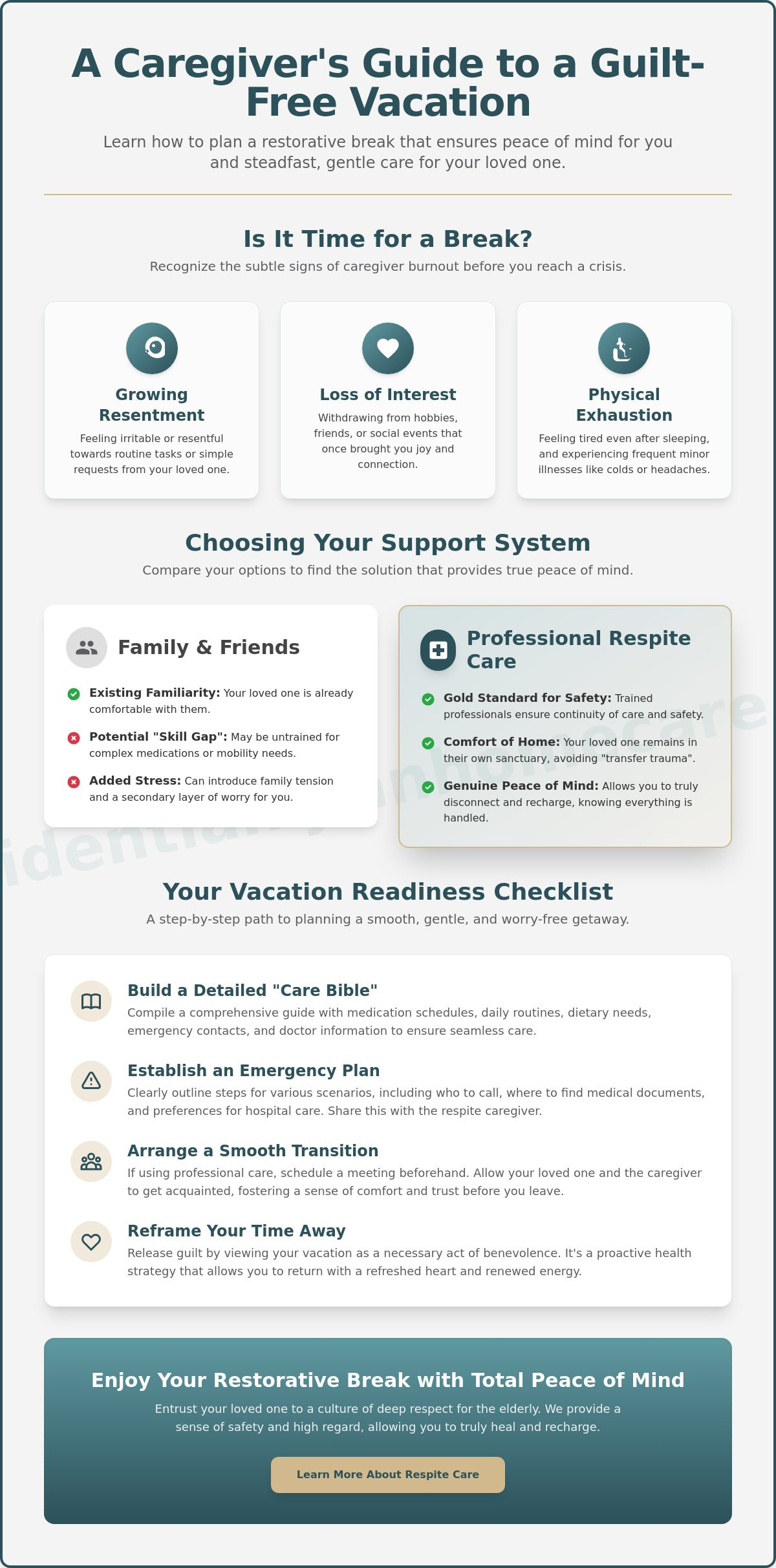
It’s essential to plan for support before you reach a point of crisis. Waiting until you’re at your breaking point makes the transition harder for everyone involved. Look for these emotional red flags in your daily life:
- A growing sense of resentment toward routine tasks or simple requests.
- A loss of interest in hobbies, friends, or community events that once brought you joy.
- Physical exhaustion that sleep doesn’t seem to touch, accompanied by frequent minor illnesses.
By recognizing these signs early, you can learn how to take a vacation when you are a primary caregiver without the frantic pressure of an emergency. Proactive planning ensures a smooth, gentle transition for your esteemed elder. In Sonoma County, professional respite care serves as a proactive health strategy that protects the physical and emotional vitality of local families while maintaining the highest standards of safety and comfort.
Exploring Your Coverage Options: From Family Help to Professional Respite
Deciding who will stand in your place while you are away is a sacred choice. It requires a balance of trust, skill, and deep emotional alignment. Many families first look to the “Family and Friends” model, reaching out to siblings or close neighbors to bridge the gap. While this approach is rooted in love and carries the benefit of existing familiarity, it often introduces a significant “skill gap.” Untrained hands may feel overwhelmed by complex medication schedules or the physical demands of mobility assistance. This can lead to family tension or a secondary layer of worry for you. When you are learning how to take a vacation when you are a primary caregiver, the goal is to find a solution that offers genuine peace, not just a temporary substitute.
Professional in-home respite care is often regarded as the gold standard for safety and continuity. Unlike temporary facility placement, which can cause “transfer trauma” or confusion for an elder, home care allows your loved one to remain in their own sanctuary. The National Institute on Aging describes these services as short-term relief for primary caregivers, ensuring that the rhythm of the household remains undisturbed. For seniors who may feel socially isolated, companion care provides a beautiful opportunity for connection. It brings a warm, attentive presence into the home, transforming a period of your absence into a time of meaningful engagement and high regard.
The Professional Respite Advantage
Professional caregivers bring a level of reliability that protects the sanctity of your loved one’s health. They are trained to manage medication reminders and mobility assistance with practiced ease, reducing the risk of falls or errors that often haunt a caregiver’s mind. Beyond the technicalities, there is the gift of “fresh energy.” A new caregiver, arriving with benevolence and a sincere heart, can revitalize the senior’s daily life. This professional presence ensures that the existing domestic routine is honored, providing a sense of stability that is profoundly comforting to an esteemed elder.
This level of stability is a hallmark of professional providers worldwide; if you have family in the UK or are researching international standards, you can learn more about NeeryVille Care to see how they implement these principles for live-in support.
Choosing the Right Caregiver Agency in Santa Rosa
Selecting an agency requires careful vetting to ensure your family’s values are mirrored in the care provided. You should prioritize providers that conduct rigorous background checks and offer specialized dementia training. Cultural alignment is equally vital; you want a team that views caregiving as a privilege and treats your kinship with the reverence it deserves. We recommend using a framework for choosing the best home care in Santa Rosa to evaluate local agencies. A local provider understands the Sonoma County medical landscape and can respond with the speed and intimacy of a neighbor. If you find yourself needing a supportive presence to guide you through this transition, we invite you to start a gentle dialogue with us to explore how we can support your family’s needs.
The Ultimate Vacation Readiness Checklist for Home Care
Preparing for a restorative break requires more than just packing a suitcase. It involves creating a bridge of trust between your domestic sanctuary and the supportive hands that will stand in your stead. When you are navigating how to take a vacation when you are a primary caregiver, your most powerful tool is a comprehensive “Care Bible.” This document is far more than a simple list of chores; it’s a testament to the kinship you share, capturing the nuances of your loved one’s personality, preferences, and daily needs. By documenting these details, you ensure that the high regard you hold for your elder is maintained even in your absence.
Environmental preparation is equally vital to your peace of mind. Before your departure, take the time to stock the pantry with familiar comforts and organize medications into clear, labeled systems. Check that all safety equipment, such as grab bars and lighting, is in perfect working order. We also recommend establishing a “Trial Run” strategy. Inviting a professional caregiver into your home for a few hours while you are still present allows for a gentle introduction. This period of overlap helps bridge the trust gap, allowing your loved one to feel secure and the new caregiver to observe your attentive routines firsthand. Exploring respite care options early in your planning ensures you have a reliable partner who views this work as a sacred privilege.
Finally, solidify your emergency protocols. Ensure the caregiver has a clear list of primary doctors and preferred local facilities, such as Santa Rosa Memorial Hospital. Having these details ready, along with the contact information for trusted local friends or neighbors, creates a safety net that allows you to truly let go of worry.
Documenting the Daily Rhythm
The beauty of high-quality care often lives in the “hidden” routines. Does your loved one prefer their tea at a specific temperature, or do they find comfort in a particular television program at dusk? These small details are the anchors of their day. For families managing Dementia care in Sonoma County, it’s essential to document specific calming techniques or phrases that provide reassurance during moments of confusion. Pair these insights with a detailed medication log that includes dosages, timing, and clear instructions for “as needed” support to maintain a steady, unhurried pace of care.
The Handover Meeting
The way you introduce a new caregiver can significantly minimize “transfer anxiety” for your elder. Present the caregiver with warmth and sincerity, framing their arrival as a supportive addition to the family circle. During the handover, review the practicalities of your Santa Rosa home, including security systems, gate codes, and the location of spare keys. It’s also the time to set clear boundaries. Define exactly what the caregiver should handle, from light housekeeping to meal preparation, ensuring they feel empowered to provide care with benevolence and confidence while you are away.
Navigating Caregiver Guilt and Staying Connected While Away
The “Guilt Trap” is a heavy burden that many dedicated family members carry. It’s the quiet, persistent voice suggesting that your presence is the only thing keeping your domestic sphere from unraveling. You might feel that only you can understand the subtle nuances of your loved one’s needs. However, learning how to take a vacation when you are a primary caregiver requires a profound shift in perspective. You aren’t stepping away from your love; you’re stepping toward the endurance needed to keep that love vibrant. Reframing this time is essential: you are going away so you can be a better, more patient, and more present caregiver when you return. A rested heart has more to give than one that is running on empty.
Technology can act as a gentle bridge during your time apart, offering a way to stay connected without the physical toll of daily tasks. Simple video calls or photo-sharing apps allow you to maintain a sense of presence and see the safety of your home in real time. Seeing a smile on your loved one’s face through a screen can provide the reassurance you need to finally exhale and enjoy your surroundings. If you are ready to plan this necessary period of restoration, we invite you to reach out to us for a supportive dialogue to see how we can provide the coverage your family deserves.
The Psychology of “Letting Go”
It is helpful to remember that a change in routine can actually be cognitively stimulating for an esteemed elder. Interacting with a new person brings fresh stories, different perspectives, and a new rhythm to the day. This variety can be a gift that prevents social stagnation. You must also prepare for “the call,” those moments when your loved one might ask you to come home early out of habit or temporary loneliness. In these times, stay steady and calm. Remind them of the plan and express your absolute confidence in their safety. It is essential to lean into the trust you have built with the professional in-home help for seniors you have selected. Their presence is a benevolent extension of your own care, ensuring your kinship remains protected while you heal.
Effective Communication Strategies
Achieving a true mental break requires firm boundaries with your digital devices. Instead of constant monitoring, schedule a specific “Update Window” with the caregiver once or twice a day. This structure allows you to receive necessary information without living in a state of digital tethering. Embrace the “No-News-is-Good-News” philosophy. If your phone isn’t ringing, it means the household is flowing in peace and the care is being handled with sincerity. Empower your substitute caregiver to make minor, everyday decisions without calling you. This level of autonomy fosters a more natural environment for the senior and allows you the space to truly disconnect, helping you master how to take a vacation when you are a primary caregiver with grace and confidence.
Entrusting Your Loved One to the Warmth of Providential Fijian Home Care
Finding the right partner is the final, most essential step in learning how to take a vacation when you are a primary caregiver. At Providential Fijian Home Care, we offer more than just a service; we provide a compassionate extension of your own family circle. Our approach is rooted in a unique cultural worldview that places the elderly at the heart of the home, ensuring they are never seen as a burden but as a source of wisdom and grace. This heritage of respect transforms the respite experience from a clinical transaction into a period of sincere connection. When you entrust your loved one to us, you are choosing a team that views caregiving as a sacred privilege, ensuring your esteemed elder is treated with the highest regard while you seek your own restoration.
Our local Santa Rosa expertise allows us to create personalized care plans that mirror the specific domestic rhythms you have worked so hard to establish. We understand that every kinship is unique, which is why our support is never one-size-fits-all. We provide specialized care for complex needs, including Alzheimer’s and dementia support, hospice assistance, and post-surgical recovery. By choosing a family-oriented, community-based agency, you gain the peace of mind that comes from knowing a humble, loyal, and skilled presence is watching over your home. We are here to ensure that your absence doesn’t feel like a void, but rather a quiet interval of professional, benevolent support.
A Heritage of Compassion in Sonoma County
Our caregivers view their work as a vital extension of family, bringing a warmth to the home that is often missing in more clinical models. This deeply emotional approach is particularly effective at reducing transition anxiety for seniors who may be wary of new people. Instead of a stranger entering the home, your loved one is greeted by someone who treats them with the reverence of a family member. Local families in Santa Rosa often share how our respite services allowed them to return from their travels feeling refreshed, only to find their loved ones happy, safe, and well-tended. This atmosphere of safety and deep respect is the hallmark of our professional identity.
How to Start Your Vacation Planning with Us
Beginning your journey toward a restorative break starts with a gentle, low-stakes dialogue. During our initial consultation, we focus on building a custom care plan that honors your existing routines, from meal preferences to specific medication reminders. Our scheduling is designed to be as flexible as your needs require, offering everything from a few hours of companion care to comprehensive, 24/7 respite support. We are committed to maintaining the sanctity of your home while you are away, providing a steady and unhurried pace of care that mirrors your own. Start your restorative journey by contacting our Santa Rosa team today.
Embracing the Gift of Rest for Your Family
Stepping away to refresh your spirit is a profound act of benevolence that ensures you remain the patient, present caregiver your loved one deserves. You now have the practical tools to navigate the delicate transition from constant vigilance to restorative rest. By preparing a detailed Care Bible and establishing clear communication boundaries, you replace lingering anxiety with a deep sense of security. Learning how to take a vacation when you are a primary caregiver is not a sign of leaving; it’s an investment in the longevity of your kinship and the quality of your care for years to come.
Since 2016, our family-run agency has brought heritage-based warmth and deep affection to Sonoma County homes. We specialize in Alzheimer’s and Dementia care, serving families with high esteem in Santa Rosa, Petaluma, and Windsor. Our dedicated team views every act of service as a sacred privilege, providing a compassionate extension of your own support network while you are away. You deserve to exhale and find your center once more. We invite you to Request a Compassionate Respite Care Consultation in Santa Rosa today. Your well-being is the foundation of your family’s strength, and we are here to support you with sincerity and high regard.
Frequently Asked Questions
Is it selfish to want a vacation when my parent needs 24/7 care?
No, seeking a period of restoration is not selfish; it is a vital investment in the longevity of the kinship you share with your parent. When you take the time to heal your own spirit, you return with the patience and benevolence required for high-quality care. Neglecting your needs leads to burnout, which eventually impacts the safety and emotional warmth of the domestic environment you have worked so hard to build.
How far in advance should I book respite care for a vacation?
We recommend beginning your dialogue with an agency at least four to six weeks before your planned departure. This timeframe allows for a sincere, unhurried introduction between the caregiver and your loved one. It also provides ample space to craft a personalized care plan that mirrors your existing routines, ensuring a gentle transition that honors the domestic sanctity of your Santa Rosa home.
What is the safest way to transition a dementia patient to a temporary caregiver?
The safest approach involves a series of gradual introductions where the new caregiver visits while you are still present. This period of overlap allows the dementia patient to build a bond of trust in a familiar setting. By observing your attentive routines firsthand, the professional caregiver can learn specific calming techniques and verbal cues that maintain a sense of safety and high regard for the elder during your absence.
Will my insurance cover the cost of respite care while I am on vacation?
Traditional Medicare typically does not cover the cost of in-home respite care for vacation purposes, although it may provide limited support under hospice benefits. If your loved one has a private long-term care insurance policy, it often includes provisions for short-term relief. We suggest reviewing your specific policy or contacting your provider to understand the domestic coverage options available for your family’s unique situation.
What happens if there is a medical emergency while I am out of the country?
Your pre-established emergency protocol ensures that the caregiver can act with swiftness and confidence if a medical crisis occurs. This plan should list primary physicians and preferred local facilities, such as Santa Rosa Memorial Hospital. Professional caregivers are trained to follow these sincere instructions and will contact your designated local emergency contact immediately to manage the situation while you are traveling.
How do I handle a loved one who refuses to let a “stranger” in the house?
Reframing the caregiver’s presence as a “helper for the house” or a “new friend” can often reduce resistance and fear. Start with a low-pressure companion care session where the focus is on shared activities rather than clinical tasks. This approach allows the elder to experience the benevolence and deep respect of the caregiver, eventually transforming a “stranger” into a trusted extension of the family circle.
Can I hire a caregiver for just a long weekend in Santa Rosa?
Yes, you can certainly hire professional support for a short duration, such as a long weekend. Understanding how to take a vacation when you are a primary caregiver involves utilizing flexible respite care that adapts to your schedule. Whether you need a few days of companion care or more intensive support, local agencies in Santa Rosa are committed to providing steadfast, nurturing assistance for any length of time.
What should be included in a caregiver handover folder?
A comprehensive handover folder should include detailed medication logs, daily rhythmic schedules, and specific likes or dislikes. You should also document “hidden” routines, such as favorite television programs or specific meal preparations. Including a list of emergency contacts and calming techniques ensures the substitute caregiver can provide the high level of esteem and attentive care your loved one is accustomed to receiving.