
Imagine the quiet realization that sets in after the visiting nurse leaves your Santa Rosa home, leaving you to handle the bathing, meal preparation, and sleepless nights alone. It’s a heavy burden to carry, and it’s natural to feel a mix of exhaustion and guilt when you can’t be there every second. You want the best for your elders, but the fear of depleting a lifetime of savings on private assistance is a constant source of anxiety. Many local families reach out to us with the same pressing question: does Medicare cover non-medical home care to provide the daily support their loved ones truly need?
We understand that you’re looking for more than just a service; you’re looking for a way to honor your family’s heritage with dignity. This guide provides a clear look at the specific limits of Medicare coverage for custodial care and explains the strict criteria for homebound status in 2026. You’ll discover the vital differences between clinical home health and the nurturing domestic support that keeps a household whole. We’ll also explore compassionate alternatives in Sonoma County that align with your family values, ensuring your loved ones receive care rooted in deep respect and kinship.
Key Takeaways
- Learn the vital difference between clinical recovery and the domestic “custodial” care that Medicare often leaves for families to handle alone.
- Discover why the answer to does Medicare cover non-medical home care is usually no, and understand the strict “homebound” requirements for any level of support.
- Identify alternative funding paths, such as Long-Term Care insurance and VA benefits, to protect your life savings while securing high-level care.
- See how a kinship-based model of care for Alzheimer’s and hospice support can bridge the gap with deep respect and emotional commitment.
- Gain peace of mind by learning how to find a local Santa Rosa agency that treats your loved one with the esteem and benevolence of a family member.
Understanding the Medicare Gap: Medical vs. Non-Medical Home Care
The distinction between “Home Health Care” and “In-Home Care” is more than just clinical semantics; it’s the difference between treating a medical condition and honoring a whole life. Many families in Santa Rosa find themselves lost in a sea of terminology when a loved one’s needs begin to change. Medicare Parts A and B are fundamentally built on a medical model that prioritizes short-term recovery and “skilled” interventions. While these services are essential for healing, they often overlook the domestic reverence required for a senior to live with dignity and safety within their own home. This disconnect creates what we call the “Medicare Gap,” a space where professional medical treatment ends, but the need for a compassionate, steady presence remains.
A common source of heartache for local families is the realization that the system doesn’t always provide for the heart of the home. When asking, “does Medicare cover non-medical home care,” the answer is often a painful surprise for those already struggling with the weight of caregiving. Medicare is designed to support the patient, but it often fails to support the person. It does not provide for “custodial care” if that is the only assistance required. This means the very tasks that keep a spirit uplifted, such as preparing a warm meal or providing a steady arm for a walk through the garden, fall outside the government’s definition of necessity.
What Medicare Defines as Medical Necessity
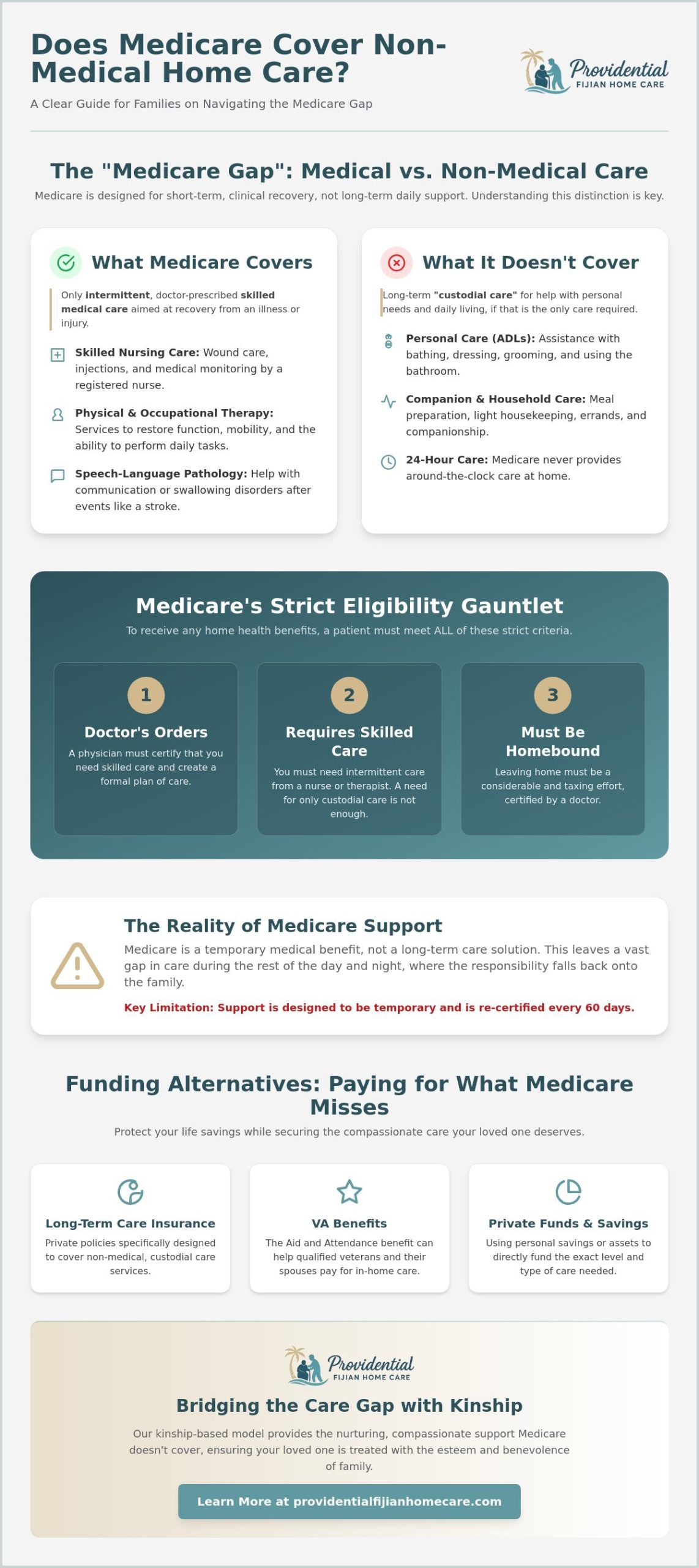
Medicare focuses strictly on tasks that require the expertise of a licensed professional to ensure clinical safety. This includes intermittent skilled nursing care for managing complex wounds or administering injections. It also covers structured physical, occupational, or speech-language therapy sessions aimed at restoring specific bodily functions after an injury or illness. To understand the broader framework of medical vs. non-medical home care, one must recognize that Medicare views the home as a temporary clinical setting. It provides medical social services to assist with chronic illness planning, but it stays focused on the diagnosis rather than the daily domestic experience.
What Counts as Non-Medical (Custodial) Care?
Non-medical care, often called custodial care, is the foundation of kinship and domestic safety. It involves assistance with Activities of Daily Living (ADLs) that preserve a senior’s esteem, such as grooming, hygiene, and mobility. Beyond physical needs, this approach encompasses the emotional wellness found in companion care and medication reminders. These services, including light housekeeping and meal preparation, are viewed by the clinical system as “non-essential.” In our view, they are the very threads that weave security and comfort into the later years. This benevolence ensures that a senior isn’t just surviving a recovery, but is living with high regard in the place they love most.
When Medicare Does Help: The Strict Criteria for Home Coverage
While the broader question of does Medicare cover non-medical home care often leads to a “no,” there are specific, narrow circumstances where the system offers a helping hand. This assistance is strictly clinical, triggered only when a physician certifies that a patient has a “Skilled Need.” This means your loved one must require the expert touch of a nurse or therapist to manage a specific medical condition. It’s not enough to simply need help with the rhythms of daily life; the care must be part of a structured plan aimed at a measurable health outcome. Even then, the support is designed to be temporary. Every 60 days, a doctor must review and recertify the plan of care, ensuring that every visit remains medically necessary under the Official Medicare Coverage Rules.
One of the most difficult realities for Santa Rosa families to accept is that Medicare will never provide 24-hour-a-day care at home. The system is built for “intermittent” visits, usually lasting just an hour or two, a few times a week. This leaves a vast, quiet space during the rest of the day and night where the responsibility falls back onto the family. For those balancing their own careers and children, this clinical rigidity can feel like a heavy weight. If you find yourself overwhelmed by these gaps, understanding the heart of kinship-based care can help you find a more sustainable, nurturing path for your domestic sphere.
Defining the “Homebound” Status
To qualify for any home-based support, Medicare requires the patient to be “homebound.” In a legal sense, this means leaving the house must require a “considerable and taxing effort.” Local physicians in Sonoma County look for specific physical limitations, such as the need for a wheelchair, walker, or special transportation. However, the system does allow for rare, short absences for religious services or participation in licensed adult day care. If your loved one can still attend family gatherings or go to the grocery store without significant struggle, Medicare will likely deny the request for home services, regardless of their medical diagnosis.
The Conditional Coverage of Home Health Aides
Medicare only covers the cost of a home health aide if the patient is simultaneously receiving skilled nursing or therapy. These aides are restricted to providing personal care, such as bathing or dressing, only during their scheduled medical visit. They cannot stay to help with laundry, prepare meals for the week, or provide the companionship that wards off loneliness. Families should also be aware of “Maintenance Care” denials. Despite the landmark Jimmo v. Sebelius ruling, which stated that Medicare should cover care to maintain a person’s current condition, many agencies still struggle to get approval for services that don’t show “improvement,” leaving many seniors without the steady benevolence they deserve.
The Reality of Care in Sonoma County: Why Non-Medical Support is Essential
In the quiet neighborhoods of Santa Rosa and Petaluma, families often face a reality that extends far beyond the brief window of a clinical visit. While a nurse might stop by to check vitals, the hours between those visits are filled with the complex, emotional needs of a loved one who deserves more than just medical monitoring. This is where the limitations of the system become most apparent. When families ask, “does Medicare cover non-medical home care,” they aren’t just looking for financial data; they’re seeking a way to ensure their elders are treated with the patience, benevolence, and high regard they’ve earned over a lifetime. Relying solely on the Medicare’s official home health criteria often leaves a dangerous void in daily supervision and domestic safety.
Non-medical support serves as a compassionate extension of your own family’s presence. It provides the steady hand needed to prevent a fall after a post-surgical procedure and the watchful eye that ensures a warm, nutritious meal is enjoyed rather than forgotten. This level of care is essential for reducing hospital readmissions, as it bridges the gap between a clinical discharge and a true return to domestic wellness. By prioritizing the whole person rather than just the diagnosis, we create an environment where healing is rooted in safety and deep affection.
Memory Care and Safety at Home
For those living with cognitive challenges, the home should be a sanctuary of familiarity rather than a source of confusion. Medicare’s clinical model rarely accounts for the 24/7 supervision required to manage the wandering or anxiety often associated with late-afternoon “sundowning.” Our approach to dementia care in Sonoma County focuses on cognitive engagement and the soothing power of consistent companionship. This nurturing, loyal, and steady presence fills the gaps left by traditional insurance, ensuring that your loved one remains safe within their own domestic sphere while maintaining their sense of esteem and identity.
Hospice Support: Comfort Beyond the Clinical
During the sacred final stages of life, the focus shifts from recovery to the preservation of dignity and peace. While clinical hospice teams provide essential pain management, non-medical support offers a continuous, reverent presence that honors the family’s heritage. We provide the personal hygiene assistance and gentle companionship that clinical teams cannot offer around the clock. This creates essential space for family members to step back from the role of caregiver and return to the role of a loving daughter, son, or spouse. By providing this domestic reverence, we ensure that the final journey is marked by comfort, intimacy, and profound respect.
Funding Alternatives: How to Pay for What Medicare Misses
Finding the means to honor a loved one’s wish to remain at home requires a blend of practical planning and deep affection. Since the answer to does Medicare cover non-medical home care is generally negative, families in Sonoma County often feel a sense of urgency to find sustainable solutions. This search isn’t just about balancing a checkbook; it’s about ensuring a legacy of respect and benevolence remains intact. By exploring paths like veteran pensions and specialized insurance, you can bridge the financial gap and focus on what truly matters: the comfort of kinship. While the clinical system has its limits, these alternatives provide the safety net needed to maintain a nurturing domestic sphere.
For those who don’t qualify for specific programs, private pay remains a common and reliable option. This path offers the ultimate freedom to choose home care givers without the restrictive oversight of government agencies. It allows your family to set the pace of care, ensuring that every medication reminder and meal preparation is handled with the high regard your elder deserves. While Medi-Cal offers the In-Home Supportive Services (IHSS) program, it often comes with strict income caps and long waitlists that don’t always meet the immediate, heartfelt needs of a family in crisis.
Leveraging Veteran Benefits in Santa Rosa
Sonoma County is home to many courageous veterans who may be eligible for the VA’s Aid and Attendance benefit. This tax-free pension is designed specifically for veterans and surviving spouses who require the steady arm of a caregiver for daily activities. These funds can be directly applied to non-medical companion care, providing the emotional wellness and physical safety that does Medicare cover non-medical home care queries often seek. Local resources in the North Bay, including the Sonoma County Veteran Services Office, can assist you in gathering the necessary documentation to access this well-deserved support.
The Role of Long-Term Care Insurance
If your loved one had the foresight to secure a Long-Term Care (LTC) insurance policy, you might have a powerful tool for funding domestic support. Most policies are “triggered” when a senior needs help with two or more Activities of Daily Living, such as bathing or dressing. It’s vital to understand the “elimination period,” which is often a 90-day window where the family pays out-of-pocket before benefits begin. A professional caregiver agency can be a loyal partner during this time, helping you navigate the complex paperwork and providing the detailed care logs required by insurance providers to ensure your claims are approved.
If you’re ready to explore how these options can bring peace and security back to your home, we invite you to reach out for a compassionate dialogue about your family’s unique needs.
The Providential Fijian Approach: Bridging the Care Gap with Kinship
When the clinical system reaches its limit, a deeper form of support must take its place. While the earlier sections of this guide clarify that the answer to does Medicare cover non-medical home care is rooted in strict medical necessity, our approach is rooted in the heart. We believe that caregiving transcends the transactional nature of healthcare; it’s a sacred domestic duty. In the Fijian tradition, the elderly are not viewed as patients to be managed, but as the revered anchors of the family. This cultural worldview of reverence ensures that every interaction is infused with high esteem and sincere affection, creating a supportive presence that no insurance policy can replicate.
Choosing to bring a caregiver into your domestic sphere is a decision of profound trust. We don’t view our work as a series of tasks, but as a privilege to serve those who have spent their lives serving others. This benevolence is the hallmark of our Santa Rosa team. By moving beyond the clinical “home health” model, we provide the emotional commitment and physical safety that allows a senior to truly flourish. Whether it’s through meal preparation that honors a favorite recipe or the steady arm provided during light housekeeping, our goal is to maintain the dignity and spirit of your loved one in the place they feel most secure.
A Compassionate Extension of Your Family
The linguistic and emotional anchor of our brand is kinship. This means we treat every client with the same devotion we would show our own parents or grandparents. Our cultural heritage brings a unique warmth to the domestic sphere, where in-home help for seniors becomes a natural extension of family life. We develop personalized care plans that don’t just check boxes; they honor the individual’s history, preferences, and personal identity. This gentle, loyal, and steady presence ensures that your family member feels seen and valued, reducing the isolation that often accompanies chronic illness or recovery.
Starting the Dialogue in Sonoma County
Transitioning from a Medicare-only clinical plan to a holistic home care strategy can feel like a daunting journey. We’re here to make that path unhurried and clear. For families in Santa Rosa, Petaluma, and Windsor, the process begins with a simple, low-stakes dialogue. This isn’t a commercial transaction, but a supportive conversation to assess your family’s unique needs and anxieties. We understand the confusion surrounding the question, “does Medicare cover non-medical home care,” and we’re committed to helping you navigate the reality of 2026 with honesty and grace. By focusing on kinship rather than just clinical outcomes, we help you build a domestic environment where your loved ones can age with the high regard they deserve.
Honoring Your Family’s Journey with Dignity and Peace
Navigating the complexities of senior support is a journey of deep affection and, at times, profound uncertainty. While the technical answer to does Medicare cover non-medical home care is often a difficult “no,” understanding this clinical gap is the first step toward finding a sustainable path for your domestic sphere. You now recognize the vital distinction between short-term medical visits and the steady, nurturing presence required for safety and emotional wellness. By exploring alternative funding like VA benefits or long-term care insurance, you can protect your life savings while still providing your elders with the high regard they deserve.
Since 2016, our team has served as a loyal pillar of the Santa Rosa community, offering specialized Alzheimer’s and dementia support rooted in traditional Fijian values of respect and kinship. We believe that caring for our elders is a sacred privilege rather than a chore. We invite you to begin a compassionate dialogue about your family’s needs today. Together, we can create a supportive environment where your loved ones feel safe, seen, and deeply valued. You don’t have to walk this path alone; we’re here to offer a steady hand and a sincere heart.
Frequently Asked Questions
Does Medicare Part B cover home health aides for bathing?
Medicare Part B only covers home health aide services like bathing if you’re also receiving skilled nursing or therapy. These visits are strictly intermittent and focused on clinical tasks rather than long-term domestic support. They don’t provide the enduring, nurturing presence that many seniors need to feel secure and respected in their own homes throughout the day.
Can I get Medicare to pay for 24-hour home care?
No, Medicare does not pay for 24-hour care at home under any circumstances. The federal system is built for short, periodic visits, which often leaves families in Santa Rosa feeling overwhelmed during the evening and overnight hours. To ensure 24/7 safety and a constant supportive presence, families typically look toward private kinship-based care that honors the elder’s domestic sphere.
What is the difference between Medicare and Medicaid for home care in California?
Medicare is a federal program focused on clinical medical needs, while Medi-Cal is California’s version of Medicaid that can cover personal care. In Sonoma County, Medi-Cal’s IHSS program provides limited help with domestic tasks for those who meet strict income requirements. This is why the question of does Medicare cover non-medical home care usually leads to a “no,” as it stays focused on medical recovery.
Will Medicare pay for a caregiver if I have dementia but no other illness?
Medicare generally won’t pay for a caregiver for dementia alone because supervision isn’t considered a “skilled medical need.” Because Alzheimer’s care often requires patience and constant companionship rather than clinical injections or therapy, it falls into the excluded custodial category. Our specialized memory care fills this gap, providing the deep affection and cognitive engagement that traditional insurance doesn’t support.
How do I prove to Medicare that I am homebound?
Your physician must certify that leaving your home requires a considerable and taxing effort. This documentation must show that you need a walker, wheelchair, or the physical assistance of another person to move safely. While you can still attend short religious services, your overall condition must show that you’re unable to leave home frequently without significant struggle or risk to your health.
Does Medicare cover meal delivery services like Meals on Wheels?
Original Medicare does not cover meal delivery services. While a few Medicare Advantage plans in Sonoma County may offer limited meal benefits in 2026, these are often temporary and transactional. We believe meal preparation should be an act of benevolence, where a caregiver prepares warm, nutritious food in your own kitchen to maintain the heart and tradition of your domestic life.
What happens when Medicare coverage for home health ends?
Once your doctor determines you no longer need “skilled” clinical care, Medicare coverage ends, and you’re responsible for all costs. This transition can be a vulnerable time for families who still need a supportive presence for their loved ones. Many families then choose to transition to a kinship-based model that focuses on long-term wellness, esteem, and the preservation of the senior’s dignity.
Are medication reminders covered by Medicare?
Medication reminders are not covered by Medicare because the system classifies them as non-medical custodial care. Even though these reminders are critical for safety, Medicare won’t pay for them unless they’re part of a broader, doctor-ordered skilled nursing plan. This is a primary reason why families asking does Medicare cover non-medical home care find that private companion care is the most reliable way to ensure medication wellness.