
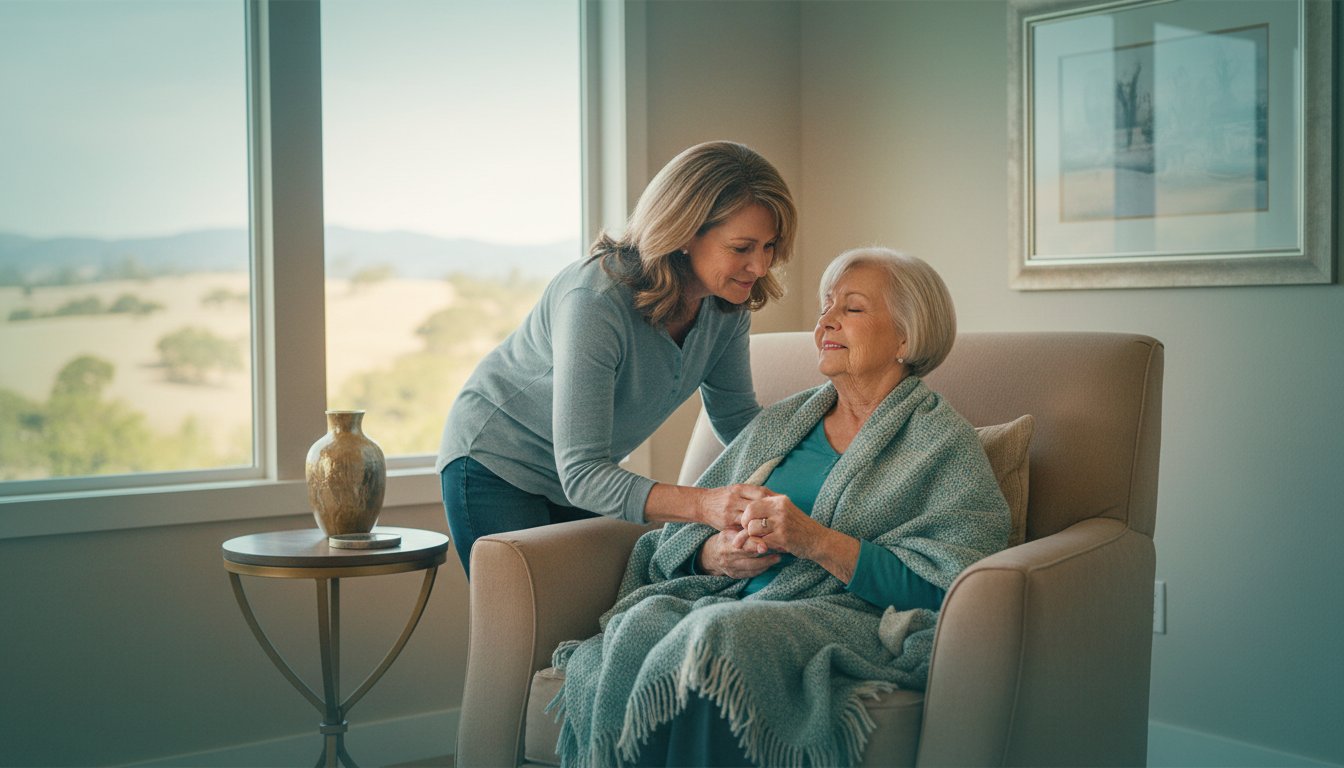
Imagine waking up at 3 AM to the soft creak of a floorboard, your heart racing as you wonder if your mother is heading for the kitchen or the front door. You want more than anything to honor her wish to stay in the place she loves, but the fear of a catastrophic fall or a kitchen fire feels like a constant shadow. Learning how to keep a parent with dementia at home safely is about more than just locks and alarms; it’s about creating a sanctuary where they’re seen and cherished. With 7.4 million Americans living with Alzheimer’s in 2026, you aren’t alone in this delicate balancing act between safety and independence.
We understand the exhaustion that comes from constant hyper-vigilance and the quiet guilt of needing a moment to breathe. You’ll discover practical, room-by-room strategies to mitigate risks and learn how AI-powered ambient sensors can offer peace of mind without invading their privacy. We’ll also explain how programs like the federal GUIDE Model now provide $2,500 annually for respite services, helping you build a sustainable care plan. This guide offers the tools you need to ensure your parent remains the heart of the home, surrounded by the warmth and dignity they deserve.
Key Takeaways
- Learn how dementia shifts sensory perception and why true home safety begins with a deep, empathetic understanding of your loved one’s world.
- Discover how to keep a parent with dementia at home safely by prioritizing modifications in high-risk areas like the kitchen and bathroom while maximizing natural light.
- Address the emotional triggers behind wandering and implement gentle medication management strategies to prevent unnecessary emergency room visits.
- Use the ‘Caregiver Burnout’ metric to evaluate your own needs, ensuring that your parent remains safe because you are rested and supported.
- See how a blend of professional safety protocols and traditional Fijian warmth can transform your home into a place where your loved one feels truly cherished.
Understanding the Journey: Why Home Safety for Dementia Starts with Empathy
Safety isn’t just about deadbolts or hidden stove knobs. It’s an act of profound love. When you’re learning how to keep a parent with dementia at home safely, you’re trying to protect their body while preserving their spirit. This balance of physical security and emotional dignity is the foundation of compassionate care. It’s natural to feel a knot of anxiety in your chest as you watch a parent struggle. With 7.4 million Americans aged 65 and older living with Alzheimer’s in 2026, you’re part of a massive community of families walking this same path. Seeking help isn’t a sign of failure; it’s a step toward providing the highest level of honor to your elder.
We view safety as a gift of love rather than a set of restrictions. When we approach the home environment through the eyes of a “Wise Nurturer,” we see that a locked door isn’t a barrier, but a boundary that provides peace of mind. It’s okay to feel scared about the future. By focusing on empathy, we can transform a house from a place of potential hazards into a sanctuary where your loved one feels safe, seen, and truly cherished.
How Dementia Changes the Way a Parent Sees Their Home
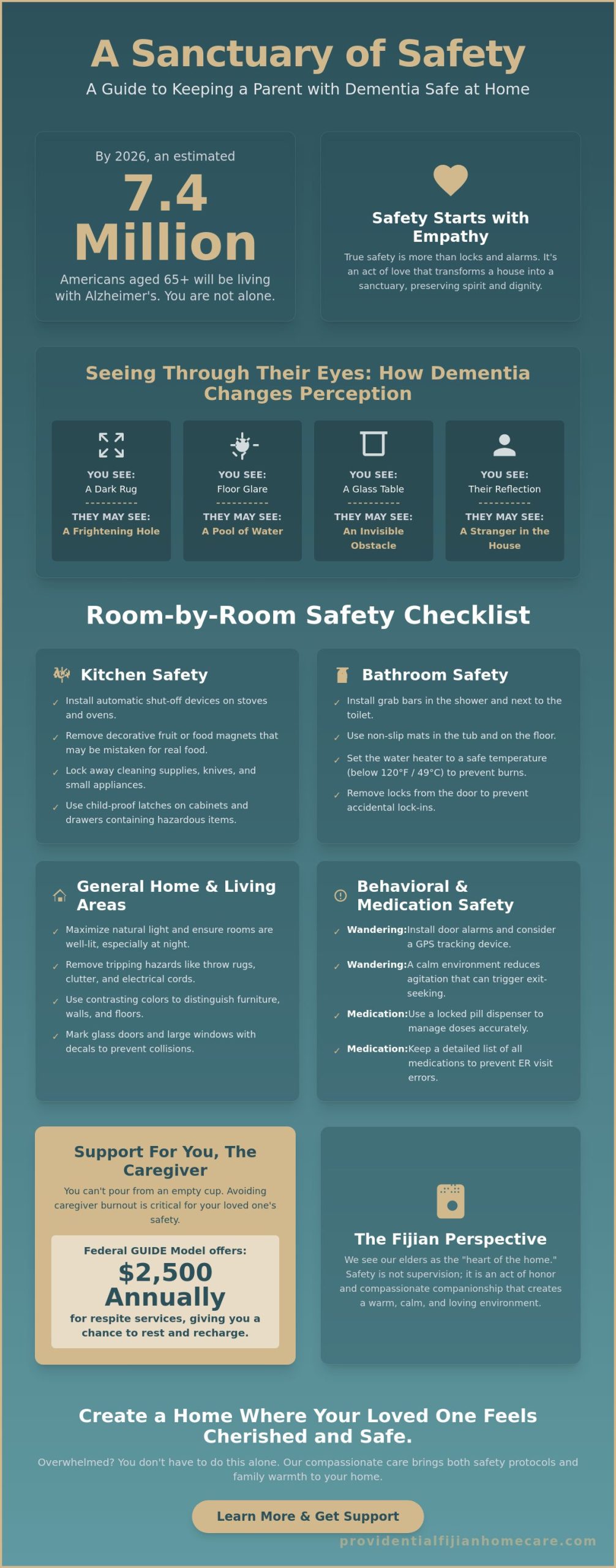
Perceptual changes in dementia patients are a shift in how the brain interprets light and shadow. The familiar living room can suddenly become a landscape of confusing traps. A dark rug in the hallway might look like a deep hole they’re afraid to step over, while a glass coffee table may become invisible, leading to painful bumps. Even the bathroom mirror can become a source of fear if they no longer recognize their own reflection.
In Santa Rosa, as the evening light fades over the hills, many families notice an increase in “Sundowning” behaviors. This is when the dimming light creates long shadows that the brain struggles to process, often leading to increased agitation or a desire to wander. Managing Dementia caregiving means staying ahead of these visual distortions. By keeping the home brightly lit and removing high-contrast patterns, you can help your parent navigate their space with confidence.
The Fijian Perspective: The Elderly as the Heart of the Home
In our culture, we view the elderly as the “heart of the home.” We don’t see safety measures as mere chores; we see them as an honor bestowed upon a cherished elder. This perspective shifts the entire focus of how to keep a parent with dementia at home safely from “supervision” to “companionship.” When a parent feels like they’re being watched by a guard, they become anxious. When they feel they’re being cared for by family, they relax.
A warm, calm environment is the most effective safety tool you have. Agitation is often the root cause of unsafe behaviors like exit-seeking or kitchen accidents. By maintaining a rhythm of unconditional respect and patience, you reduce the stress that leads to these risks. Our approach is rooted in the belief that every person deserves to age in place with dignity, surrounded by the generational traditions and heartfelt dedication that only a family-centered environment can provide.
A Room-by-Room Guide to Dementia-Proofing Your Santa Rosa Home
Transforming your home into a sanctuary requires a practical look at every corner through the eyes of your loved one. When you’re focusing on how to keep a parent with dementia at home safely, you aren’t just removing risks; you’re creating a space where they can move with confidence. In Sonoma County, we often enjoy homes with large windows and open layouts. While these features are beautiful, they can create challenges for those with cognitive changes. Maximizing natural light is essential to keep moods lifted, but you must minimize glare on floors, as a shiny surface can look like a dangerous pool of water to a confused mind.
Open floor plans can also be surprisingly disorienting. Without clear visual cues to separate the kitchen from the living room, a parent may feel lost in their own house. Creating “safe zones” allows your cherished elder to explore freely without hearing a constant stream of “nos” or “don’t touch that.” If you feel overwhelmed by these physical changes, starting a gentle conversation about home support can provide the extra sets of eyes you need to keep the environment stable.
Bathroom and Kitchen: Preventing Scalds, Slips, and Fires
These two rooms represent the highest risk for accidents. To protect your parent, follow these three essential steps:
- Step 1: Set your water heater to exactly 120°F. This simple change prevents accidental scalds during handwashing or bathing, which is critical as skin becomes more sensitive with age.
- Step 2: Install auto-shutoff devices on stoves and move cleaning chemicals to a locked cabinet. These small barriers prevent life-threatening fires and accidental poisonings.
- Step 3: Use high-contrast colors to guide their senses. Placing a bright red sticker on the hot faucet and a blue one on the cold faucet helps bridge the gap created by sensory loss.
Living Areas and Bedrooms: Reducing Fall Risks and Confusion
In the living room, the “Golden Rule” is to keep furniture in familiar places. Rearranging a room might seem like a nice refresh to you, but to a parent with dementia, it can feel like waking up in a stranger’s house. Avoid furniture with sharp corners, and ensure every piece is sturdy enough to support someone who might use it for balance. You should also remove rugs with “busy” or high-contrast patterns. To a brain processing visual data differently, a dark floral pattern on a carpet can look like a cluster of obstacles or even insects, leading to dizziness or hallucinations.
Safety also involves managing the risk of Wandering, which often stems from a desire to find something familiar. Labeling drawers and doors with simple, clear pictures rather than just words can reduce this frustration. A picture of a plate on a kitchen cabinet or a photo of a bed on the bedroom door provides a visual map. This simple act of labeling honors their need for independence while ensuring how to keep a parent with dementia at home safely remains a reality for your family.
Managing Behavioral Safety: Communication, Wandering, and Medication
True safety is found in the softest moments of connection. While we’ve already discussed securing the bathroom and kitchen, the way we speak to our elders is just as vital for their security. When a parent becomes agitated, their physical safety is immediately at risk. They might move too quickly, lose their balance, or try to leave the house in a state of distress. To master how to keep a parent with dementia at home safely, we use validation rather than correction. If your father believes he needs to go to work, don’t tell him he’s retired. Instead, ask him about his favorite part of his job. This honors his reality and keeps his heart calm, preventing the physical outbursts that lead to accidents.
Safe Engagement: Preventing the ‘Exit Seek’
Wandering is often a physical expression of an unmet emotional need for ‘home’. It isn’t just aimless walking; it’s a search for comfort or a sense of belonging. To guide them gently, try creating a “rummage box” filled with familiar items like old photos, fabric scraps, or safe tools. This keeps their hands busy and their minds engaged, reducing the urge to wander. You can also use visual cues like a simple stop sign on exit doors to discourage them from leaving. For a deeper dive into physical modifications, the Alzheimer’s Association Home Safety Checklist offers excellent guidance on securing your perimeter while maintaining a warm atmosphere.
Medication Reminders and Health Monitoring
Medication errors are a leading cause of emergency room visits for seniors. The danger of “double-dosing” is real when memory fades, so securing pill organizers and providing consistent reminders is an act of heartfelt dedication. Hydration is another critical safety pillar. Dehydration often leads to urinary tract infections (UTIs), which can cause sudden delirium and increased fall risks. If managing these daily checks becomes too heavy a burden, seeking in-home help for seniors ensures your loved one stays hydrated and healthy through regular check-ins.
There eventually comes a time when driving is no longer safe. This transition can be painful, as it feels like a loss of independence. We approach this change with unconditional respect, offering companion care transportation to keep them connected to their community. Whether it’s a trip to the Santa Rosa Farmers Market or a visit to a friend, we ensure they remain seen and cherished while staying safe on the road. By focusing on these behavioral elements, you’re learning how to keep a parent with dementia at home safely in a way that respects their dignity and your peace of mind.
Evaluating Your Support System: Is DIY Safety Sustainable?
Caring for a parent is a sacred duty, yet it shouldn’t come at the cost of your own health. The “Caregiver Burnout” metric is a critical tool for every family in Santa Rosa. If you’re sleep-deprived and physically exhausted, your ability to maintain a secure environment diminishes. This directly impacts how to keep a parent with dementia at home safely. When you aren’t rested, you might miss a subtle change in your parent’s gait or forget to double-check the stove. In our Fijian heritage, we believe that caring for an elder is a collective honor. You were never meant to carry this weight on your own.
Professional dementia care in Sonoma County offers more than just supervision. Trained eyes often catch safety risks that family members might overlook because they’ve become accustomed to the daily routine. Whether it’s identifying a trip hazard you’ve walked past for years or noticing a pattern in evening agitation, a professional partner provides a layer of security that honors your parent’s wish to stay home. Shifting from total DIY care to a supported model ensures the home remains a place of peace rather than a source of stress.
Signs It’s Time for Supplemental Support
The “Sleep Test” is often the first indicator that DIY care is becoming unsustainable. Are you waking up at every creak of the floorboards, heart racing as you wonder if your parent is wandering? If so, your hyper-vigilance is a sign of deep love, but it’s also a recipe for exhaustion. Physical strain is another factor. If you can’t safely assist with bathing or mobility without risking a fall for both of you, it’s time to reach out. Look at your parent’s social engagement too. If you’re too tired to do more than provide basic supervision, they lose the meaningful connections that keep their spirit bright.
Respite Care: A Safety Valve for the Family
Respite care is a professional “pause” that allows you to recharge your own spirit. Research shows that even 4 hours of weekly help can drastically improve home safety outcomes by giving the primary caregiver time to rest. Transitioning your parent to a caregiver agency doesn’t have to be a source of distress. By introducing a companion caregiver as a “new friend” who helps with the home, you maintain the warmth of the environment while adding a vital safety net. This support allows you to return to your role as a son or daughter, rather than just a 24/7 monitor.
If you’re feeling the weight of constant vigilance, start a conversation with us today to see how we can help your loved one feel safe, seen, and truly cherished.
Care That Feels Like Family: How Providential Fijian Home Care Protects Your Loved One
Safety is a language of love that we speak every day. We’ve explored the physical modifications and behavioral shifts required for how to keep a parent with dementia at home safely, but the final piece of the puzzle is the human heart. Our caregivers bring a unique blend of rigorous professional protocols and traditional Fijian warmth to homes across Santa Rosa, Petaluma, and Windsor. We don’t just see a client; we see a cherished elder who remains the heart of the home. By combining heartfelt dedication with the state’s required 5 hours of initial safety training and 5 hours of annual education, we ensure your loved one is safe, seen, and truly cherished.
Every home in Sonoma County is different, which is why we create customized safety plans that adapt to your parent’s specific needs. Whether it’s managing the $26.29 average hourly cost of care in Santa Rosa or navigating the federal GUIDE Model’s $2,500 annual respite benefit, we help you build a sustainable path forward. Our goal is to provide a level of care that transcends the clinical, positioning our team as a compassionate extension of your own family. We focus on the small details that preserve dignity, ensuring that your parent can age in place without the $8,810 monthly price tag often found in local memory care facilities.
The Heart of Our Service: Cultural Warmth and Professionalism
Fijian caregivers are renowned for their patience and reverent care of elders. In our culture, caring for a parent is an honor, not a chore. This mindset allows us to de-escalate dementia-related agitation with a calm, steady presence that reduces the risk of falls or wandering. We are committed to non-medical support that respects your parent’s independence while providing the medication reminders and personal care they need to thrive. We bridge the gap between basic safety and a high quality of life, making sure every day is filled with meaningful connections and unconditional respect.
Starting the Conversation in Sonoma County
Taking the first step toward professional support can feel overwhelming, but it starts with a simple, unhurried conversation. We offer a free home safety assessment where we evaluate your living space through the lens of dementia care standards updated in 2025. We’ll look at lighting, floor patterns, and kitchen security to help you understand how to keep a parent with dementia at home safely without turning their house into a clinical environment. From there, we create a flexible schedule that meets your family’s unique needs, whether you need 4 hours of respite or 24/7 companionship.
Contact us today for a compassionate conversation about your parent’s safety.
Embracing a Future of Safety and Dignity at Home
You’ve taken the first brave step by learning how to keep a parent with dementia at home safely. By modifying high-risk areas like the bathroom and adopting a communication style rooted in validation, you’re building a sanctuary for the heart of your home. Remember that nearly 13 million Americans provide unpaid care in 2026; you don’t have to carry this honor alone. True security is a beautiful blend of physical vigilance and the unconditional warmth that prevents agitation before it starts.
Since 2016, we’ve served Sonoma County families with specialized Alzheimer’s and dementia training that honors the person behind the diagnosis. Our approach is built on Fijian values of deep respect and heartfelt dedication, ensuring your loved one feels safe, seen, and truly cherished every day. Whether you need a few hours of respite or daily support, we provide care that feels like family. We’re here to walk this path with you at a pace that feels right.
Start a Compassionate Conversation About Your Parent’s Care today. You have the strength to provide a beautiful life for your parent, and we’d be honored to support your family’s journey.
Frequently Asked Questions
Is it really possible to keep a parent with advanced dementia at home safely?
Yes, it’s possible to honor your parent’s wish to stay home even as their needs increase. Success depends on a combination of physical home modifications, such as those found in the 2025 California residential care standards, and consistent companionship. By utilizing professional respite care and safety technology like ambient sensors, you can create a secure environment that prevents accidents while maintaining the cultural warmth of a family setting.
What are the most common home accidents for people with dementia in Santa Rosa?
Falls remain the leading cause of injury, often occurring in the bathroom or on uneven flooring. Kitchen accidents, including stove-related fires or accidental ingestion of cleaning supplies, are also high risks. In Sonoma County, glare from large windows on shiny floors can disorient seniors, making them believe a dry floor is wet and slippery. Addressing these specific environmental triggers is essential for anyone learning how to keep a parent with dementia at home safely.
Can I use cameras to monitor my parent at home for safety?
You can use cameras, but many families in 2026 are shifting toward AI-powered ambient sensing technology. These wall-mounted sensors monitor orientation and detect falls without using actual video feeds, which preserves your parent’s privacy and dignity. This technology allows you to check in remotely while ensuring your cherished elder feels safe and seen without the discomfort of being constantly watched on a screen.
How do I prevent my parent from wandering out of the house at night?
Installing simple door alarms or smart locks that notify your phone can provide immediate alerts if a door is opened. However, preventing wandering also involves managing the “Sundowning” agitation that often starts as evening light fades. Using high-contrast stop signs on exit doors and ensuring the home is brightly lit during the late afternoon can significantly reduce the urge to seek an exit during the night.
What should I do if my parent refuses to let me make safety changes to the house?
It’s common for parents to resist changes that feel like a loss of independence. Try introducing modifications slowly rather than all at once. Frame a new grab bar as a “sturdy towel rack” or a brighter light as a way to “make the room more cheerful.” This approach respects their autonomy while ensuring you are still learning how to keep a parent with dementia at home safely through subtle, non-threatening adjustments.
How much does professional in-home dementia care cost in Sonoma County?
The average starting cost for in-home care in Santa Rosa is $26.29 per hour as of May 2026. This rate is approximately 4% higher than the California average. For families needing around 130 hours of support per month, the cost typically totals around $3,418. This remains a more affordable and personalized alternative to local memory care facilities, which often cost upwards of $8,810 monthly.
Can a caregiver help with medication reminders and doctor appointments?
Professional caregivers are specifically trained to provide medication reminders and safe transportation to medical appointments. While they don’t provide skilled nursing care, they act as a vital safety net by ensuring your parent takes the right dose at the right time. They can also assist with errands and meal preparation, allowing your loved one to remain the heart of the home while receiving the support they need.
What is the difference between home safety and ‘skilled nursing’?
Home safety involves physical modifications, companion care, and assistance with daily living to prevent accidents. Skilled nursing care, which we do not provide, involves clinical medical treatments like wound care or injections performed by licensed nurses. Our focus is on “unconditional love” and non-medical support, ensuring your parent stays safe and comfortable through personal care, hygiene assistance, and dedicated companionship.