
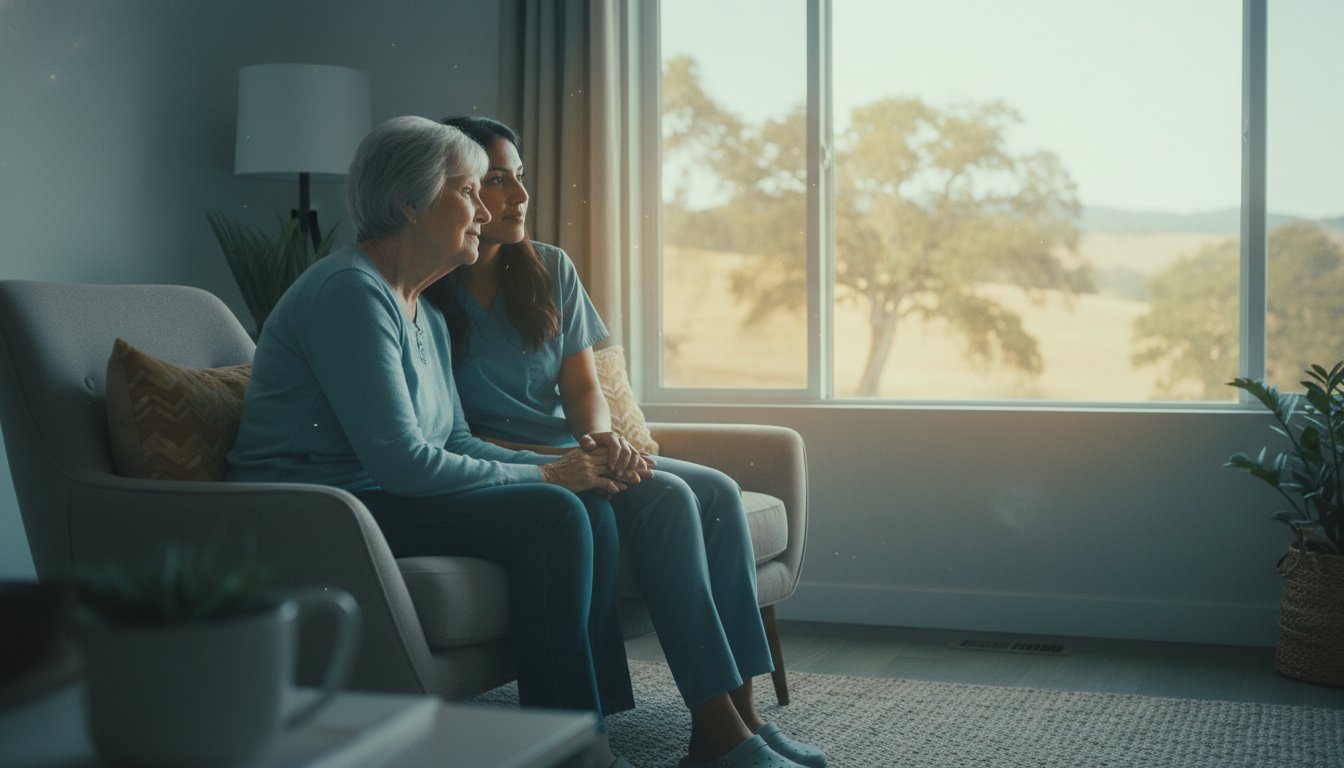
You sit by the window in Santa Rosa, watching your mother, and wonder if she still feels your presence through the heavy fog of memory loss. With 719,700 seniors in California living with Alzheimer’s as of 2023, you aren’t alone in this quiet, difficult space. It’s natural to feel a deep sense of guilt or exhaustion while trying to find meaningful activities for seniors with severe dementia without causing them distress. You might feel like you’ve already lost the person they were, but we believe your loved one remains the cherished heart of the home.
We understand the fear of triggering agitation and the longing for just one moment of soul-deep connection. This guide will help you move away from “doing” and toward “being” through sensory-based interactions that require no memory or logic. You’ll discover failure-free ways to use touch, sound, and the Fijian tradition of “letting it be” to reduce agitation and bring peace to your family’s journey. By focusing on simple moments of comfort, you can learn to honor the person they are today with unconditional love and dignity.
Key Takeaways
- Learn how to shift from task-oriented care to a failure-free philosophy that prioritizes emotional safety and connection over cognitive results.
- Discover how sensory-based activities for seniors with severe dementia, like legacy playlists and tactile rummage boxes, can soothe agitation and spark joy.
- Utilize the unique Sonoma landscape, from local botanical scents to peaceful mountain views, to create a naturally calming atmosphere in your home.
- Understand the Fijian approach to care, where simply being present in the room honors your loved one as the cherished heart of the home.
- Recognize when to seek professional respite support to protect your own well-being and ensure you can continue providing care with unconditional love.
Understanding Severe Dementia: Shifting from Tasks to Connection
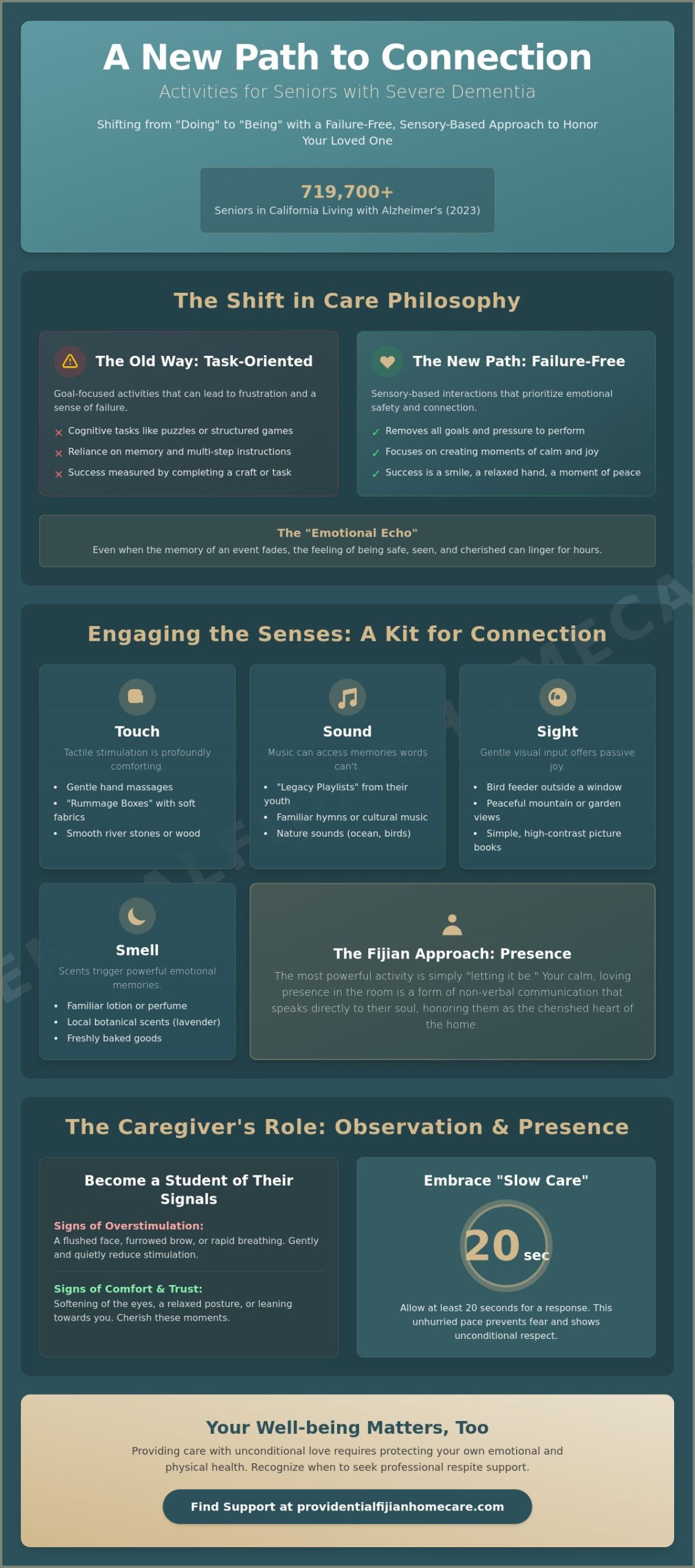
In the late stages of Alzheimer’s, specifically Stages 6 and 7, the world of your loved one narrows to the immediate present. At this level, cognitive tasks like puzzles or structured games often lead to frustration because the brain can no longer process multi-step instructions. Instead, we shift our focus to the “Failure-Free” philosophy. This approach removes all goals from an interaction. Success isn’t measured by completing a craft; it’s found in the simple curve of a smile or the relaxing of a tensed hand. By leaning into Psychological therapies for dementia that focus on sensory and emotional needs, we create a sanctuary of calm. These activities for seniors with severe dementia honor their dignity without the pressure of performance.
Even when the memory of an event disappears within seconds, the “Emotional Echo” remains. If a senior feels safe, seen, and truly cherished during a hand massage, that feeling of peace can linger for hours after the activity ends. In these late stages, your presence becomes a form of non-verbal communication. You aren’t just “passing time.” You’re speaking to their soul through your energy, your scent, and your touch. This heartfelt dedication ensures that even when words are gone, the connection remains vibrant.
The Goal of Engagement in Late-Stage Care
Meaningful engagement serves several vital purposes beyond simple entertainment. It’s a key tool for reducing “sundowning,” that period of increased agitation that often occurs as the sun sets. Gentle stimulation during the day helps regulate their internal clock, leading to better rest at night. These activities also help maintain joint flexibility through subtle, rhythmic movements. Most importantly, they provide a sense of security. In our Fijian tradition, we view the elderly as the heart of the home. Keeping them involved in the family’s rhythm, even passively, ensures they never feel abandoned by the fog of their condition.
Recognizing Sensory Cues in Your Loved One
When words fail, the body speaks. You’ll need to become a student of your loved one’s subtle signals to provide the best care. A flush in the cheeks, a furrowed brow, or an increase in breathing speed can all be signs of overstimulation. Conversely, a softening of the eyes or a leaning toward you indicates comfort and trust. We practice “slow care,” which involves allowing at least 20 seconds for any response. This unhurried pace respects their processing time and prevents the fear that often accompanies rushed interactions. By moving at their speed, you show them that they are worthy of your time and unconditional respect.
Sensory-Based Activities for Late-Stage Connection
Many guides suggest activities like card games or light gardening, but for those in the final stages of memory loss, these tasks can feel overwhelming. We believe in simplifying engagement to the most basic human level: the five senses. These activities for seniors with severe dementia aren’t about achieving a result; they’re about creating a feeling of safety and belonging. When we stop asking them to “do” and simply allow them to “be,” we honor their dignity as the heart of the home. This shift is essential because, by 2025, over 12 million unpaid caregivers will be providing billions of hours of care, often facing the exhaustion that comes from trying to “fix” what cannot be fixed.
Music often reaches parts of the brain that words cannot touch. Creating “Legacy Playlists” filled with familiar hymns or songs from their youth can spark a light in their eyes that was previously dimmed. The Alzheimer’s Association suggests that activities for people with dementia should be tailored to their personal history to be most effective. Even if they can no longer sing along, the familiar rhythm provides a comforting anchor in a world that often feels confusing. It is a way to speak to them through melody when conversation is no longer possible.
Tactile engagement is another powerful way to connect without words. “Rummage Boxes” filled with velvet ribbons, lace, or smooth river stones allow for quiet, safe exploration. For visual comfort, a simple bird feeder outside a Santa Rosa window offers hours of passive enjoyment of the local wildlife. Olfactory memories are equally potent. The scent of rosemary or lavender from a Sonoma County garden can trigger deep, emotional recognition that bypasses the need for cognitive thought. These small moments of recognition are precious gifts in the journey of late-stage care.
Creating a “Sensory Kit” for Home Care
A “Sensory Kit” is a wonderful way to keep comfort within reach at all times. You might include items like a “Comfort Doll” or a soft stuffed animal, which can significantly reduce anxiety and provide a sense of purpose. A gentle hand massage using warm, lavender-scented lotion is a beautiful way to practice tactile bonding and show unconditional love. If you find the weight of planning these moments becoming heavy, starting a conversation with a compassionate caregiver can provide the support your family needs to maintain this level of heartfelt dedication.
The Healing Power of Music and Voice
Your voice is the most soothing instrument your loved one knows. Try reading poetry or scripture in a rhythmic, unhurried tone. This isn’t about the meaning of the words, but the melody of your care. If the household becomes noisy, use white noise or nature sounds to mask distressing sounds. This ensures your loved one feels safe, seen, and truly cherished in their environment, even as their cognitive abilities change. We focus on the spirit of the person, ensuring they remain the center of our cultural warmth.
Leveraging the Santa Rosa Environment for Calm
Santa Rosa is a place of profound healing beauty. We have a unique advantage in Sonoma County because the natural landscape offers a gentle, sensory-rich environment that acts as a soothing balm for the soul. When we look for activities for seniors with severe dementia, we don’t always need to plan complex tasks. Sometimes, the most meaningful engagement comes from simply opening a window or sitting on a porch. The environment itself becomes the activity, providing a failure-free way for your loved one to feel connected to the world around them.
The “Sonoma Scent Palette” is a powerful tool for emotional recognition. Lavender, rosemary, and eucalyptus grow abundantly in our local gardens and carry deep, nostalgic associations for long-time residents. Bringing a sprig of sun-warmed rosemary into the house can trigger a sense of home that words cannot reach. Similarly, passive nature watching offers a peaceful focus. Positioning a favorite chair to face the Mayacamas Mountains or a majestic local oak tree allows for quiet contemplation. The shifting shadows and the movement of the afternoon breeze provide gentle stimulation without the risk of overstimulation or frustration.
Bringing the Sonoma Outdoors Inside
You can bring the essence of Santa Rosa into the heart of the home with very little effort. A small bouquet of fresh flowers from the Santa Rosa Farmers Market provides natural aromatherapy and a splash of familiar color. For auditory comfort, try playing recordings of local birds found in the Laguna de Santa Rosa. These sounds are often more grounding than generic white noise. We also prioritize natural light. Exposure to the bright morning sun is essential for regulating sleep-wake cycles, helping your loved one feel more settled as evening approaches. This unhurried approach ensures they feel safe, seen, and truly cherished.
Safe Local Outings for Seniors with Severe Dementia
While long trips may be difficult, short and wheelchair-accessible outings can be deeply restorative. A visit to Howarth Park offers the sensory benefits of fresh air and the sight of water without the stress of a crowded environment. When planning a trip to a plaza in Petaluma or Windsor, we look for “safe” criteria: low noise levels, plenty of shade, and easy exits. Sometimes, just “people watching” from a quiet bench provides a vital sense of community. If you need assistance with transportation or accompaniment, our team provides In-Home Help for Seniors in Santa Rosa to ensure these outings remain peaceful and dignified for your family.
The Fijian Approach: Presence as the Ultimate Activity
In many clinical settings, success is measured by the completion of a task or the achievement of a goal. In our Fijian tradition, we believe the most profound activities for seniors with severe dementia don’t involve “doing” anything at all. We view the elderly as the “heart of the home.” This means their mere presence is an active service to the family, a source of wisdom that persists even when memory fades. When you sit with your loved one, you aren’t just passing time. You’re participating in a sacred exchange of cultural warmth and unconditional love that honors their lifelong journey. This shift in perspective helps alleviate the heavy guilt many Santa Rosa caregivers feel when they can no longer “entertain” their parent in traditional ways.
The spirit and energy you bring into the room are felt deeply by a person in the late stages of dementia. Even when verbal communication has disappeared, they remain highly sensitive to the emotional atmosphere. We practice the art of “quiet companionship,” which is the intentional act of sitting in silence as a form of deep respect. It’s about honoring the individual’s dignity, regardless of whether they can respond with words. By simply being there, you’re telling them they’re still valued, cherished, and an essential part of the family circle. This silent connection is a powerful way to reduce agitation without the need for medication or complex interventions.
Non-Verbal Connection Techniques
Connecting without words requires a gentle, mindful approach that prioritizes the soul over the symptoms. Our caregivers always seek eye-level contact and use soft physical touch, such as holding a hand with a warm, steady grip. We also utilize mirroring, where we softly reflect the loved one’s facial expressions or breathing patterns. This creates a psychological sense of safety and helps the senior feel “seen” in a world that often feels confusing. In our view, a loving presence is always more important than a finished task. It ensures your loved one feels safe and truly cherished in every moment we share together.
Fijian Values in Memory Care
Our philosophy is rooted in generational tradition and a deep sense of honorable service. We don’t see a patient with a diagnosis; we see a cherished elder who deserves our highest respect. This “Care That Feels Like Family” transforms the home from a site of medical management into a sanctuary of peace. By treating caregiving as a privilege, we naturally reduce the stress and tension that can trigger behavioral issues. You can learn more about how we integrate these heartfelt values into our Dementia Care in Sonoma County. If you’re feeling the exhaustion of providing 24/7 support, let’s have a conversation about how our family can support yours with sincerity and dedication.
Supporting the Caregiver: When to Seek Professional Help
Caring for a loved one in the late stages of memory loss is a sacred duty, but it’s also a path that can lead to profound exhaustion. In 2025, over 12 million family members provided nearly 20 billion hours of unpaid care, often at the expense of their own health. When the simple act of planning activities for seniors with severe dementia starts to feel like an impossible burden rather than a moment of connection, it’s time to pause. Recognizing caregiver burnout isn’t a failure; it’s an honest acknowledgment that even the strongest heart needs support to keep beating with cultural warmth.
Seeking help is an act of love that ensures your parent remains the heart of the home. When you’re running on empty, it’s difficult to provide the unconditional respect they deserve. By bringing in a caregiver agency in Santa Rosa that understands the nuances of severe dementia, you aren’t stepping away from your role. You’re expanding the family circle to include professional hands that can maintain a safe and nurturing environment. This allows you to return to your loved one with a spirit that’s refreshed and ready to share in those quiet, meaningful moments of presence.
Respite Care Options in Santa Rosa and Sonoma County
Respite care offers a vital lifeline for local families. Hourly companion care can provide you with a few hours to attend to errands or simply rest in a quiet park. For those dealing with severe sundowning, overnight support ensures your loved one stays safe while you get the restorative sleep you need. Professional caregivers often bring a fresh perspective, introducing new sensory interactions that might’ve become taxing for you to manage alone. They can help implement the Sonoma scent palette or sensory kits we discussed earlier, ensuring your loved one feels safe, seen, and truly cherished even when you aren’t in the room.
Your Next Steps with Providential Fijian Home Care
We believe every family’s journey is unique, and our support always starts with a gentle conversation. We don’t believe in high-pressure tactics; we believe in providing a warm embrace to families in need. Our trained caregivers are deeply committed to the concept of honorable service, treating each senior with the same dignity they’d their own kin. We’re here to help you navigate the practicalities of care while preserving the emotional bonds that make your family special. If you’re ready to find a sustainable way forward, please schedule a local care consultation with us today. Let us help you carry the weight, so you can focus on the love that remains.
Embracing a Future of Connection and Calm
Finding peace in the late stages of dementia doesn’t require complex plans or perfect results; it requires a heart willing to sit in the quiet. We’ve explored how shifting from cognitive tasks to sensory-based activities for seniors with severe dementia can transform your home into a sanctuary. Whether you’re using the sun-warmed scents of Sonoma lavender or the soothing rhythm of a legacy playlist, these small moments of connection are what truly matter. You’re honoring the person they are today, ensuring they remain the cherished heart of your home.
Since 2016, Providential Fijian Home Care has specialized in providing this level of dedicated Alzheimer’s and dementia care for families across Sonoma County. Our approach is rooted in traditional Fijian values of respect, ensuring your loved one is safe, seen, and truly cherished. Let us bring cultural warmth and expert care to your home. Contact us for a Santa Rosa consultation. You don’t have to walk this difficult path alone. Your dedication is honorable, and we’re here to support your family with sincerity and unconditional love.
Frequently Asked Questions
What are the best activities for someone who can no longer speak due to dementia?
The best activities for non-verbal seniors focus on gentle sensory input rather than verbal communication. You might try softly brushing their hair, offering a warm washcloth scented with citrus, or sitting together to watch the movement of trees in the wind. These failure-free moments prioritize the emotional connection and ensure your loved one feels safe and truly cherished even when words are no longer available.
How do I know if an activity is overstimulating for my loved one?
You can identify overstimulation by watching for subtle physical changes like rapid breathing, flushing of the skin, or a tightened jaw. If your loved one closes their eyes or turns their head away, it’s a clear signal to stop and provide a period of quiet rest. We believe in “slow care,” which means we always prioritize their immediate comfort over completing any specific interaction or task.
Can music therapy really help in the final stages of Alzheimer’s?
Music remains a powerful tool because it engages parts of the brain that often remain intact even in Stage 7 Alzheimer’s. Familiar melodies from their youth can lower cortisol levels and reduce the need for anti-anxiety medications. When you play a cherished hymn or a rhythmic song, you’re offering a bridge to their past that brings profound peace to their present and reduces the feeling of isolation.
Is it okay to use “baby-like” toys or dolls for a senior with severe dementia?
Using comfort dolls or soft stuffed animals is perfectly acceptable if it provides a sense of purpose and security for the senior. Many individuals find deep comfort in holding or “caring” for a doll, which can significantly reduce the frequency of agitation. We always approach this with the highest dignity, treating the interaction with the same respect we’d show any other meaningful form of engagement.
How much time should we spend on activities each day?
We recommend engaging in activities for seniors with severe dementia in short bursts of 5 to 10 minutes throughout the day. Consistency is far more important than the total duration of any single session. By integrating these sensory moments into your daily routine, you maintain a steady rhythm of cultural warmth that prevents the boredom and loneliness that often lead to distress and sundowning.
What should I do if my loved one resists every activity I suggest?
If a senior resists direct engagement, shift your focus to “passive presence” by simply being in the same room with them. You might sit nearby and fold laundry or read aloud in a low, soothing voice without expecting any response. This honors their current state and ensures they remain the heart of the home without the pressure of having to “perform” or respond to a direct request.
Where can I find respite care in Santa Rosa to help with dementia activities?
You can find compassionate respite care right here in Santa Rosa through Providential Fijian Home Care. Our family-run team specializes in dementia support that feels like kin, allowing you to take a necessary break while knowing your loved one is safe and respected. We’ve been serving Sonoma County families since 2016, bringing a unique blend of professional skill and traditional Fijian warmth to every home we enter.